Devon Rex
德文卷毛猫 · Rex / Shorthaired · Devon, England (1959)
The Devon Rex appeared in 1959 in Buckfastleigh, Devon, when a tortoiseshell stray called Buffy produced a curly-coated kitten, Kirlee, in Beryl Cox's yard.
Quick facts
- Weight
- 2.3-4.5 kg (5-10 lb)
- Length
- Small to medium, about 43-46 cm nose to tail base
- Lifespan
- 9-15 years
- Typical price
- USD 1,200-2,500 from a registered breeder
Temperament & lifestyle
About the breed
The Devon Rex appeared in 1959 in Buckfastleigh, Devon, when a tortoiseshell stray called Buffy produced a curly-coated kitten, Kirlee, in Beryl Cox's yard. Kirlee's coat proved to be a different mutation from the Cornish Rex, established a decade earlier about 80 km away: crossed together, the two produced only straight-coated kittens, so they were separate recessive genes. Both, it was later found, sit on KRT71 - different alleles of the same gene.
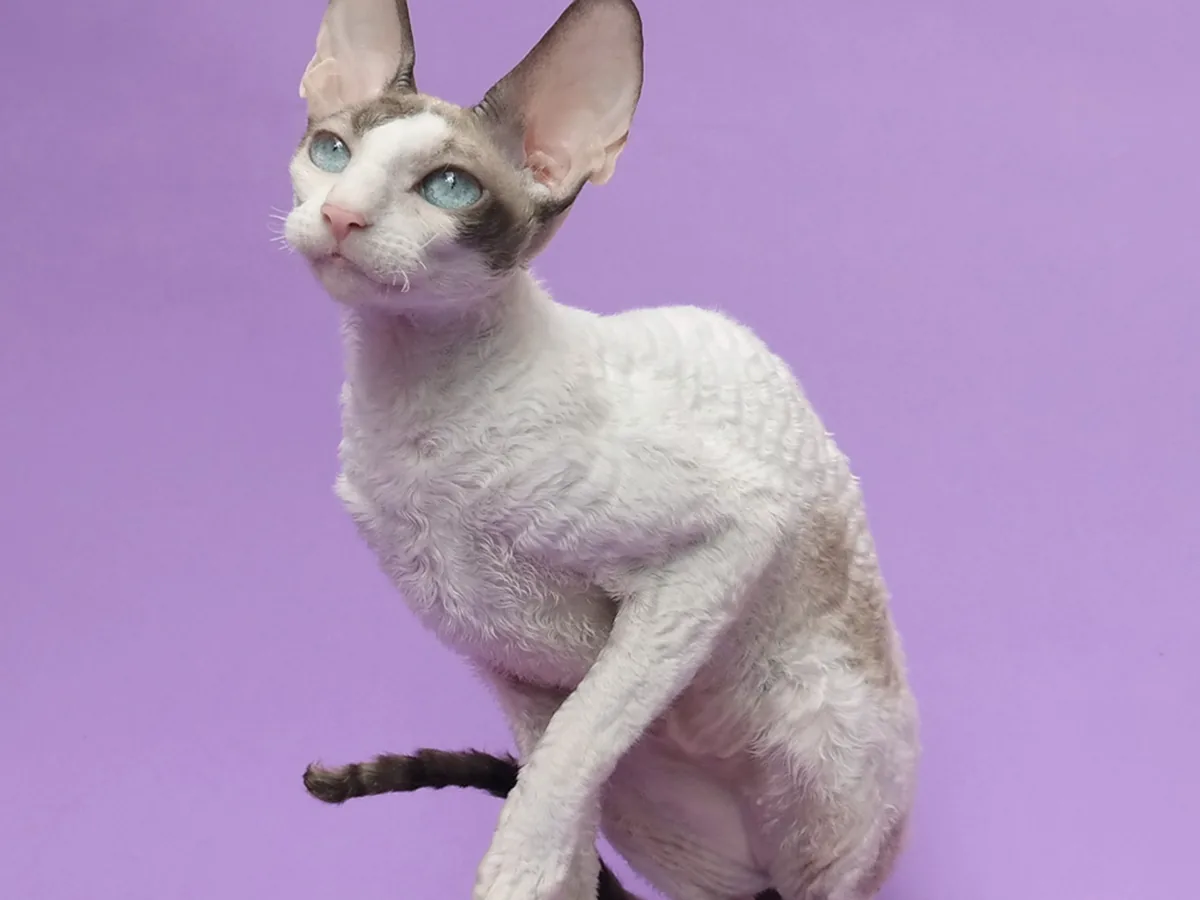
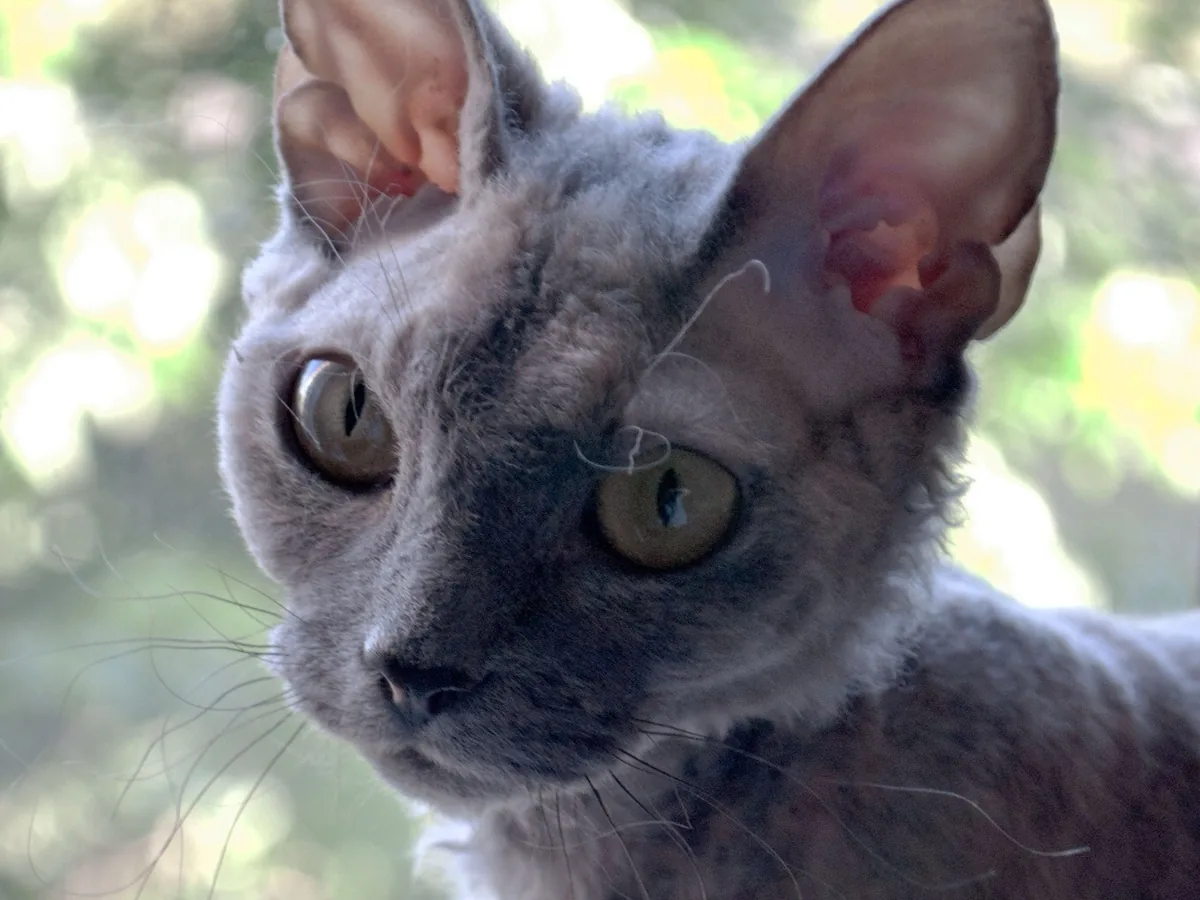
What owners notice first is the head: a broad wedge-shaped skull, huge low-set ears, prominent cheekbones, a short muzzle and very large eyes, usually described as a pixie or alien face. The coat is short, soft and rippled, densest over the body and sparse on the neck and belly - many Devons are close to bald on the chest and behind the ears. Whiskers are short and crimped and eyebrows are often missing. The body is fine-boned but muscular at 2.3-4.5 kg.
Coat structure dictates the care. With few guard hairs, the coat holds body oil instead of shedding it, so it wants gentle wiping rather than brushing, and the ear bases, chin and toe webs collect greasy brown Malassezia debris that has to be cleaned before it builds up. Devons feel warm to the touch, roughly 1-2 degrees above other cats, and seek out shoulders, laps and lamps. They are busy, clownish and socially demanding; a Devon left alone in an empty flat tends to redecorate it.
Care essentials
- Grooming
- No brushing - a rubber mitt or a warm damp cloth once or twice a week lifts surface oil. Wipe the ears, chin and toe webs weekly with a soft pad; greasy brown debris is normal but should not be allowed to cake. Bathe every 4-8 weeks with a mild degreasing shampoo only when the coat feels tacky. The hair is fragile, so rough combing, sticky flea collars and tight collars cause bald patches.
- Exercise & play
- High. Two play sessions of 10-15 minutes a day, plus a tall cat tree and something to chase. Vertical space and a window perch matter more than floor area in a flat.
- Feeding
- Fast metabolism; feed a complete diet measured to body condition rather than free-feeding, and slightly warm wet food, which these cats take readily. Fresh water daily - many Devons drink little and do better with a wet-heavy diet.
- Home setup
- Warm and draught-free, ideally 22-24 degrees C. They lose heat quickly, so provide a covered bed, a heat pad in winter and a sunny spot. They need company: a second cat, a dog or an owner at home most of the day.
Health
- Malassezia dermatitis - greasy, smelly brown build-up in the ear canals, chin, neck and toe webs; the most common day-to-day problem
- Hypertrophic cardiomyopathy (HCM) - screen breeding cats by echocardiogram
- Congenital myasthenic syndrome - rare inherited muscle weakness with megaesophagus; a DNA test (COLQ mutation) exists
- Fragile coat and patchy alopecia from friction, grooming or nutritional gaps
- Patellar luxation reported at low frequency
Ask breeders for HCM echo results on both parents and the COLQ DNA test. Because the coat offers no insulation, Devons are prone to chilling and to burns from radiators, hobs and heat lamps. Keep them indoors; their thin coat and small body size make them poor outdoor survivors.
Health information here is general and not a substitute for veterinary advice. If your cat shows symptoms, contact a vet.
Frequently asked
Are Devon Rex cats hypoallergenic?
No cat is truly hypoallergenic, but Devons produce less of the Fel d 1 protein in saliva and shed very little hair, so many allergic owners report milder symptoms. Reactions vary by person; spend an hour with an adult Devon before committing.
Do Devon Rex cats shed?
Very little. The coat is short and fragile and much of the loose hair breaks off or stays in the coat, which is why weekly wiping matters. You will still find some hair on bedding, just far less than from a normal shorthair.
Why does my Devon Rex have bald patches?
Some baldness is normal - the chest, throat and behind the ears are naturally sparse. New bald spots on the back or flanks usually mean over-grooming, friction from collars, mites or a skin infection, so have a vet look at the skin.
Do Devon Rex cats get cold easily?
Yes. With almost no guard hairs the coat barely insulates, and their body temperature runs slightly high, so they seek warmth constantly. Keep the house above 20 degrees C, give them a covered bed and never leave them outside in winter.