British Shorthair
英国短毛猫 · Large shorthair · United Kingdom
British Shorthairs descend from cats the Romans brought to Britain roughly two thousand years ago, and by the nineteenth century they were the ordinary farm and town cat of the island.
Quick facts
- Weight
- 3-8 kg
- Length
- up to 70 cm including tail
- Lifespan
- 12-17 years
- Typical price
- $800-$2,000 (US, health-tested breeder)
Temperament & lifestyle
About the breed
British Shorthairs descend from cats the Romans brought to Britain roughly two thousand years ago, and by the nineteenth century they were the ordinary farm and town cat of the island. The breed was formalised at the first organised cat show at Crystal Palace in 1871, where British Blues were exhibited. Numbers collapsed around the two world wars as Persian and Siamese fashions took over; breeders rebuilt the breed in the 1950s and 1960s by crossing surviving lines with Persians and then back to shorthairs, which is where the round head and dense coat come from.
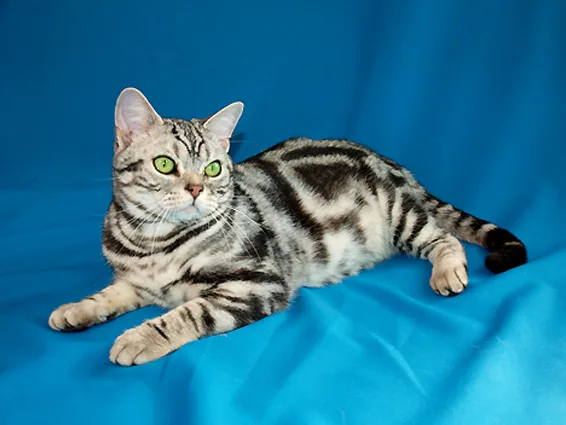
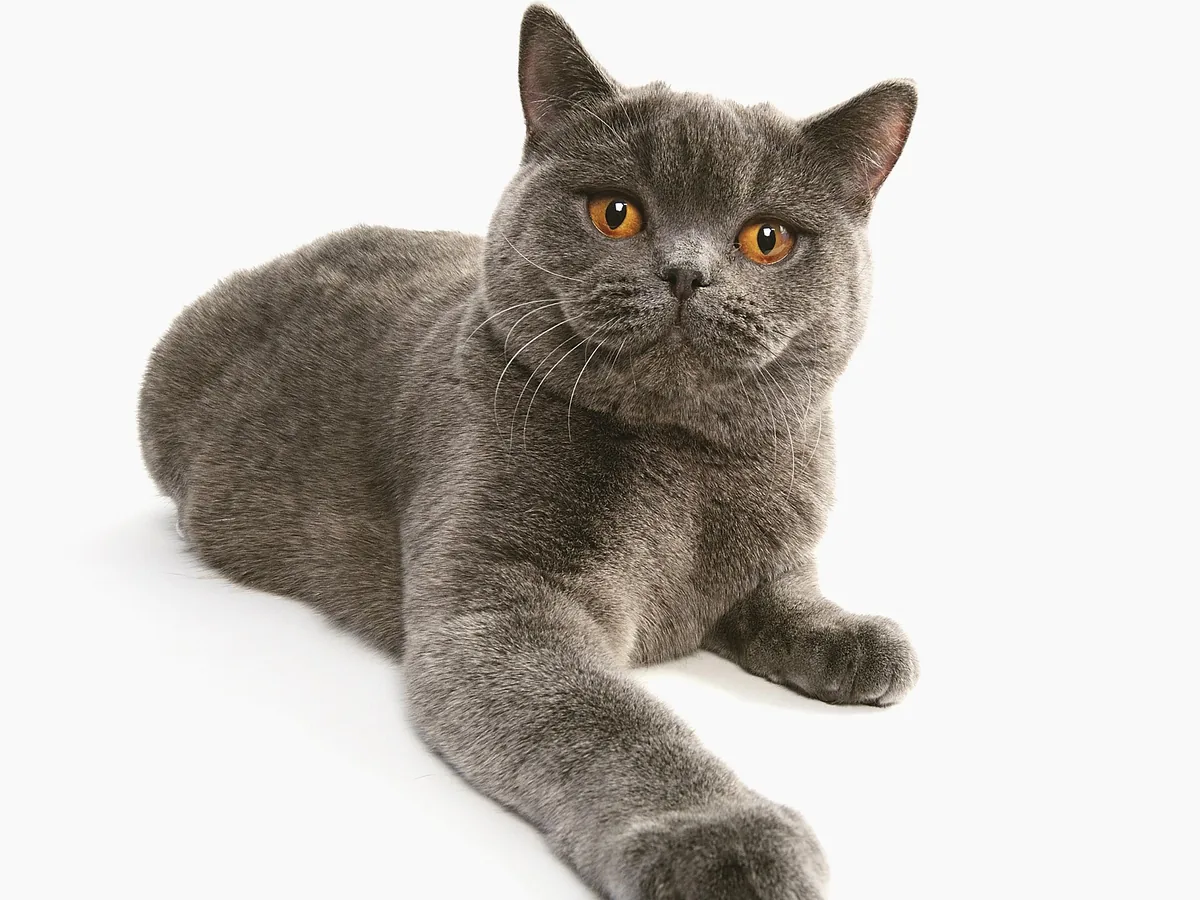
The body is thick-set and muscular with a broad chest, short strong legs and a round head with full cheeks and small, slightly rounded ears. The coat is short but unusually dense — it stands away from the body like plush rather than lying flat. Eye colour is copper or gold in most colours and deep orange in the blue. Blue is the famous colour, but black, cream, silver tabby and tortoiseshell are equally accepted, and the tabby patterns are far more common in China than the solid blue that foreigners picture.
What sells the breed is temperament. British Shorthairs are calm, undemanding and quietly affectionate — the kind of cat that sits beside you rather than on you. They are not lap cats, they do not yowl, and they handle being alone better than most breeds. That easy nature, plus a coat that needs little more than a weekly comb, keeps them among the most popular breeds in Europe and East Asia.
Care essentials
- Grooming
- A rubber curry comb once a week lifts the loose undercoat; the coat is dense but does not mat easily. Shedding peaks twice a year and needs two or three sessions a week then. Bathe only if the coat starts to look greasy.
- Exercise & play
- Needs encouragement rather than opportunity — left alone, this breed would sleep. Two five-minute play sessions and a food puzzle a day is the realistic minimum, plus a weekly weigh-in.
- Feeding
- A strong appetite and a sedentary habit make obesity the main feeding risk. Use measured meals instead of a permanently full bowl, and feed high-protein wet food to protect muscle with age.
- Home setup
- Adapts to flats well and does not need outdoor access. Wants a warm, soft sleeping spot and a scratching post sturdy enough to lean into. Tolerates children who are not rough with it.
Health
- Hypertrophic cardiomyopathy (HCM) — the breed has its own MYBPC3 variant; prevalence in screened catteries is a few percent and higher in unscanned lines.
- Polycystic kidney disease (PKD) — inherited through PKD1 and testable by DNA.
- Haemophilia B (factor IX deficiency) — a bleeding disorder reported in the breed, with a DNA test available.
- Obesity — low activity plus a large appetite makes weight gain almost universal in middle age.
- Dental disease — gingivitis and tartar build up early in many lines.
An echocardiogram every 12-18 months is what separates a responsible breeder from a hobby one. After age seven, ask for a baseline blood panel and a blood pressure check at the annual visit.
Health information here is general and not a substitute for veterinary advice. If your cat shows symptoms, contact a vet.
Frequently asked
Are British Shorthairs lap cats?
Mostly no. They like proximity — a spot on the sofa next to you — and will accept a lap on their own terms and on their own schedule. Expecting a clingy cat leads to disappointment.
Do British Shorthairs get along with other cats?
Usually yes, given a gradual introduction and enough space. They are non-aggressive, but they are not playful enough to entertain a high-energy kitten for long.
How much should a British Shorthair weigh?
Males 4.5-8 kg and females 3-5.5 kg. A cat over 8 kg is almost always overweight rather than big-boned; you should be able to feel the ribs under a thin layer.
Is the British Blue a separate breed?
No. British Blue is simply the blue colour of the British Shorthair. Blue kittens are the most numerous, which is why they are often the cheapest rather than the most valuable.