LaPerm
拉邦猫 · Rex coat · dominant mutation (USA) · United States (Oregon)
In March 1982 a brown tabby barn cat named Speedy, kept for pest control in a cherry orchard at The Dalles, Oregon, produced a litter that included a bald female kitten with a tabby pattern showing through her skin like a tattoo.
Quick facts
- Weight
- 6–10 lb (2.7–4.5 kg)
- Length
- Body 16–19 in (40–48 cm), plumed tail 12–14 in (30–35 cm)
- Lifespan
- 12–15 years
- Typical price
- $800–$2,000 in the US; €700–1,400 in Europe
Temperament & lifestyle
About the breed
In March 1982 a brown tabby barn cat named Speedy, kept for pest control in a cherry orchard at The Dalles, Oregon, produced a litter that included a bald female kitten with a tabby pattern showing through her skin like a tattoo. Linda Koehl named her Curly. Within weeks Curly grew a sparse, curly coat; when bred, she passed the curl to all five of her sons. That pattern — every carrier affected, roughly half of every litter — identified an autosomal dominant rex gene, and DNA work later showed it is not the gene behind the Devon, Cornish or Selkirk rex. Every LaPerm descends from that one litter.
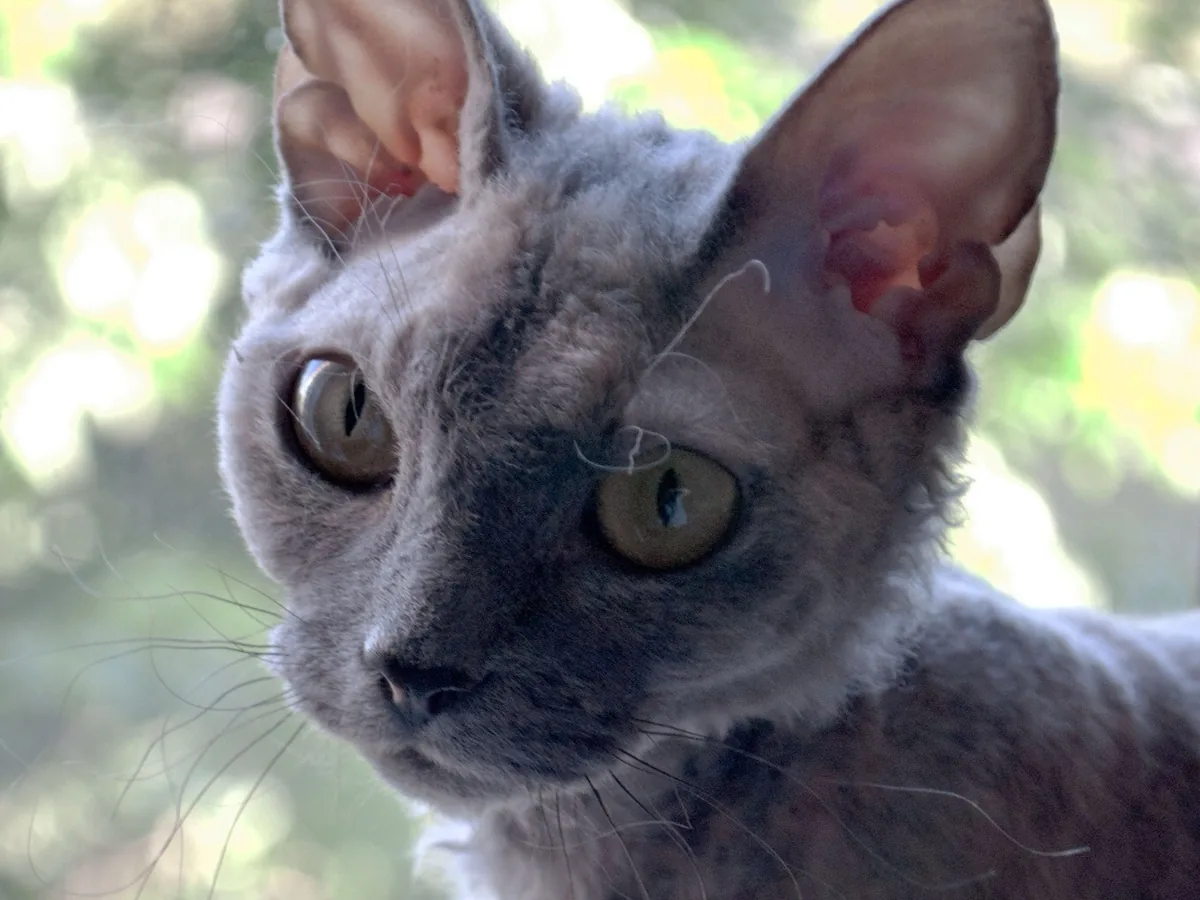
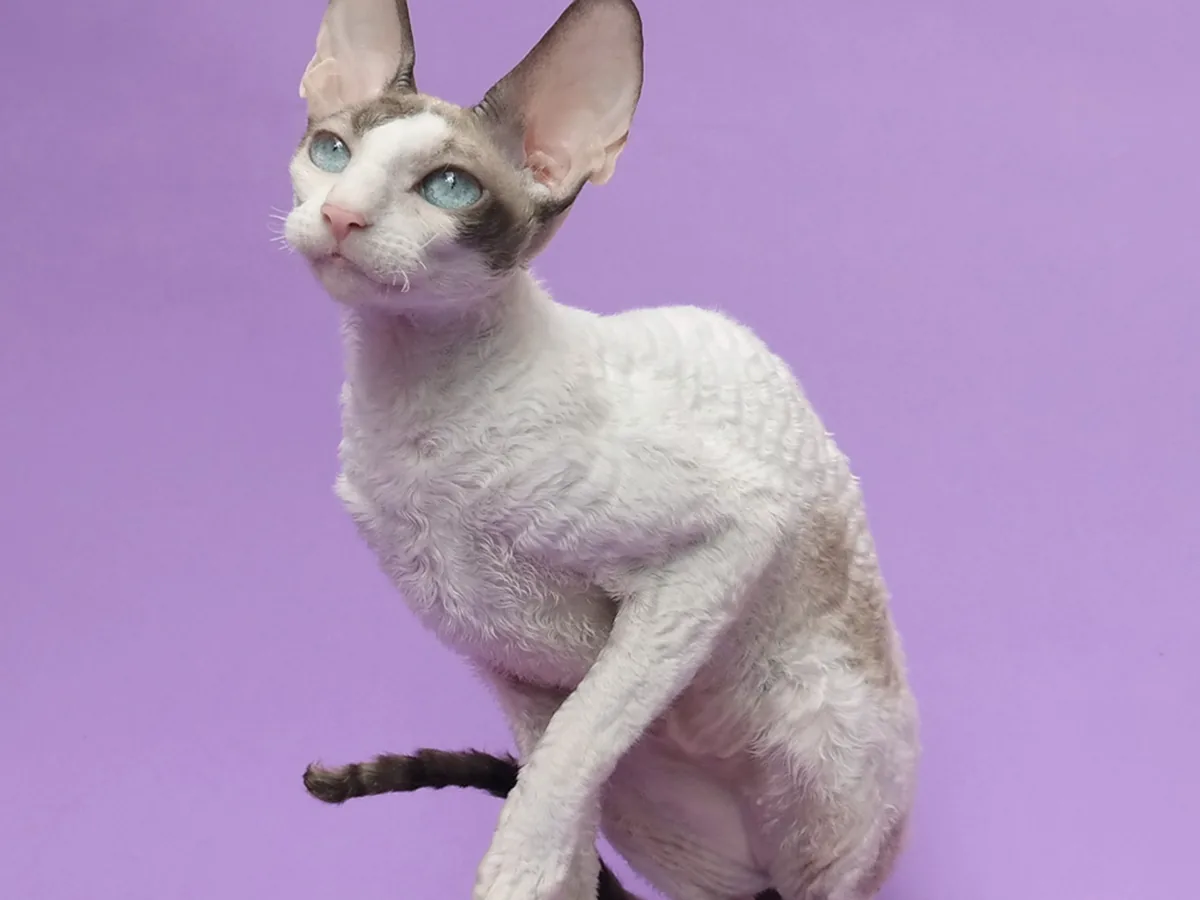
The coat is the whole point: soft, springy waves and ringlets that stand away from the body, tightest at the throat and the base of the ears, with curled whiskers. The texture is closer to mohair than silk, and there is no thick undercoat, so it sheds little and does not mat the way a Persian does. Coat length shifts with season and age, and kittens can go nearly bald before their first full coat comes in.
LaPerms are outgoing, people-oriented cats that want height, company and a role in whatever is happening. The low-shedding reputation is fair; the hypoallergenic one is overstated — no cat is truly allergen-free.
Care essentials
- Grooming
- Comb once or twice a week with a wide-tooth comb and mist lightly with water — wet combing keeps curls defined and prevents the coat from frizzing into a brush. Do not brush hard; the curls lose shape and the coat looks straight for weeks.
- Exercise & play
- Fifteen to twenty minutes of active play a day, plus climbing furniture. It self-exercises more than most breeds and will turn a hallway into a racetrack at night.
- Feeding
- Average appetite, average metabolism: about 1/2 cup dry or 5 oz wet daily, split into two meals. Curly coats hide body condition, so run hands along the ribs weekly rather than trusting the mirror.
- Home setup
- Indoor or secure-cat-proofed garden. It wants company, a warm high perch and toys that move; a scratching post and a window seat cover most of its needs. Two LaPerms usually become a matched pair.
Health
- Hypertrophic cardiomyopathy (HCM) — reported across rex and Oriental breeds; echo-screen breeding cats
- Dental disease — gingivitis and tartar build-up are common and easy to miss under a busy cat
- Coat and skin sensitivity — the sparse undercoat means sunburn on pale ear tips and reaction to harsh shampoos
- No breed-specific genetic disorder is documented, but the foundation population was one litter
The breed's history is a single founder and a dominant gene, so the gene pool is narrow even after decades of outcrossing to approved breeds. Ask about HCM echoes on the parents, keep the cat indoors on sunny days if it is pale, and use a mild cat shampoo rarely — over-bathing strips the oils the curls depend on.
Health information here is general and not a substitute for veterinary advice. If your cat shows symptoms, contact a vet.
Frequently asked
Are LaPerms really hypoallergenic?
No cat is. LaPerms shed less than most breeds and lack a heavy undercoat, so allergic owners often report fewer symptoms, but the allergen (Fel d 1) is in saliva and skin, not in the amount of loose hair. Spend time with the breed before committing if allergies are the reason for choosing it.
How do I keep the curls from going straight?
Comb wet, not dry, and never brush hard. Mist the coat lightly, use a wide-tooth comb, and let it dry into ringlets; harsh brushing, frequent bathing and heavy conditioners all flatten the wave. Some cats look almost straight in summer and tightly curled in winter — both are normal.
Do LaPerm kittens look bald?
Often, yes. Curly herself was born bald with a tabby pattern visible on her skin, and many kittens are born bald or nearly so, then grow a sparse curly coat within weeks. The full adult coat can take a year or more, and some cats moult to near-baldness seasonally.