American Shorthair
美国短毛猫 · Medium shorthair · United States
American Shorthairs are the descendants of working cats that crossed the Atlantic with early settlers.
Quick facts
- Weight
- 3-7 kg
- Length
- up to 75 cm including tail
- Lifespan
- 13-17 years
- Typical price
- $600-$1,500 (US, reputable breeder)
Temperament & lifestyle
About the breed
American Shorthairs are the descendants of working cats that crossed the Atlantic with early settlers. Ships carried them to control rodents, and the cats that survived were selected by function rather than fashion: strong, healthy, efficient hunters. The breed was first registered with the CFA in 1906 under the name Domestic Shorthair, and the name changed to American Shorthair in 1966 to separate it from the random-bred cats it was constantly confused with.
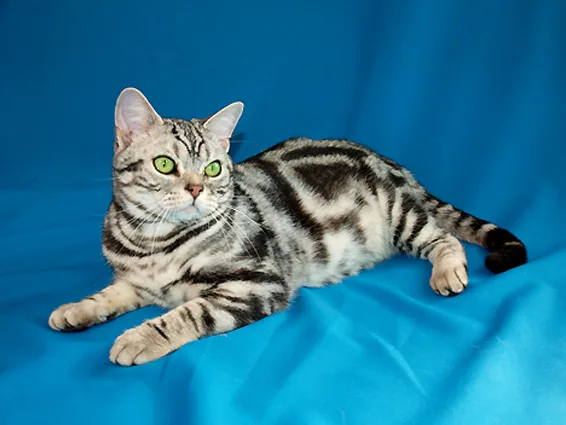
The build is athletic rather than chunky: a muscular, moderately long body, a broad head with a square muzzle, and a short, dense coat that lies flat and sheds dirt and rain. The silver classic tabby is the breed's signature look — black markings on a pale silver ground — but more than eighty colours and patterns are accepted. Females are noticeably smaller than males, and a fit cat should feel hard and muscular under the hand, not soft.
The breed's real selling point is durability. American Shorthairs are among the healthiest purebreds, commonly reaching fifteen and sometimes twenty, and they stay playful into old age. They are adaptable, self-sufficient, equally settled in a flat or a house with a garden, and easy with children without demanding attention. They are not a designer breed and are often passed over at shelters in favour of fluffier cats, which is exactly what practical owners like about them.
Care essentials
- Grooming
- A weekly rub with a rubber glove or soft brush is enough; the dense coat repels dirt and rarely mats. Brush more often during the two annual sheds, when loose hair ends up on every surface.
- Exercise & play
- Genuinely active, so provide a cat tree, window perches and two real play sessions a day. Food puzzles slow down a fast eater, and a harness or catio satisfies the hunting drive safely.
- Feeding
- An easy keeper that gains weight after neutering — measure portions from the start rather than reacting later. High-protein food with a good share of wet suits the muscular build.
- Home setup
- Flexible: flats, houses, families or singles all work. A window with a view matters more than floor space, and safe outdoor access is appreciated if you can provide it.
Health
- Hypertrophic cardiomyopathy (HCM) — the most common heart condition in the breed; screening echocardiograms are recommended for breeding cats.
- Hip dysplasia — less common than in Maine Coons but documented in the breed.
- Obesity — an efficient metabolism plus indoor living leads to weight gain after neutering.
- Dental disease — tartar and gingivitis are common from middle age onward.
- Polycystic kidney disease — rare but recorded, so PKD status is still worth asking about.
Because these cats live long, dental checks and annual bloodwork from age seven matter more than exotic screening. Keeping weight down is the single biggest factor in how long they live.
Health information here is general and not a substitute for veterinary advice. If your cat shows symptoms, contact a vet.
Frequently asked
How long do American Shorthairs live?
Thirteen to seventeen years is typical, and twenty is not unheard of. The reputation for hardiness is deserved, but it still depends on weight control and dental care.
What is the difference between an American Shorthair and a domestic shorthair?
A domestic shorthair is any mixed-breed shorthaired cat. An American Shorthair is a pedigreed breed with a written standard, known ancestry and a specific body type. Most tabby cats in US shelters are domestic shorthairs.
Are American Shorthairs good mousers?
Yes — the breed was built for it, and most still hunt with enthusiasm. That is a good reason to keep them indoors or supervise outdoor time, for the sake of birds and lizards as much as the cat.
Do American Shorthairs do well with dogs?
Generally very well. They are confident and not territorial, so a calm dog introduced properly becomes a companion rather than a threat.