Maine Coon
缅因猫 · Large semi-longhair · United States (Maine)
The Maine Coon is the oldest native American breed and one of the few that developed without human design.
Quick facts
- Weight
- 4.5-11 kg
- Length
- up to 100 cm nose to tail tip
- Lifespan
- 12-15 years
- Typical price
- $800-$2,500 (US, health-tested breeder)
Temperament & lifestyle
About the breed
The Maine Coon is the oldest native American breed and one of the few that developed without human design. In nineteenth-century New England these cats earned their keep as farm and ship's cats, catching rodents in barns and on whaling vessels, and their heavy, weather-resistant coat and wide, snowshoe-like paws are built for long winters. A Maine Coon was exhibited at a New York cat show as early as 1861, but the breed lost ground to Persians in the early 1900s and survived thanks to a small group of New England breeders who revived it in the 1950s. The CFA granted championship status in 1976.
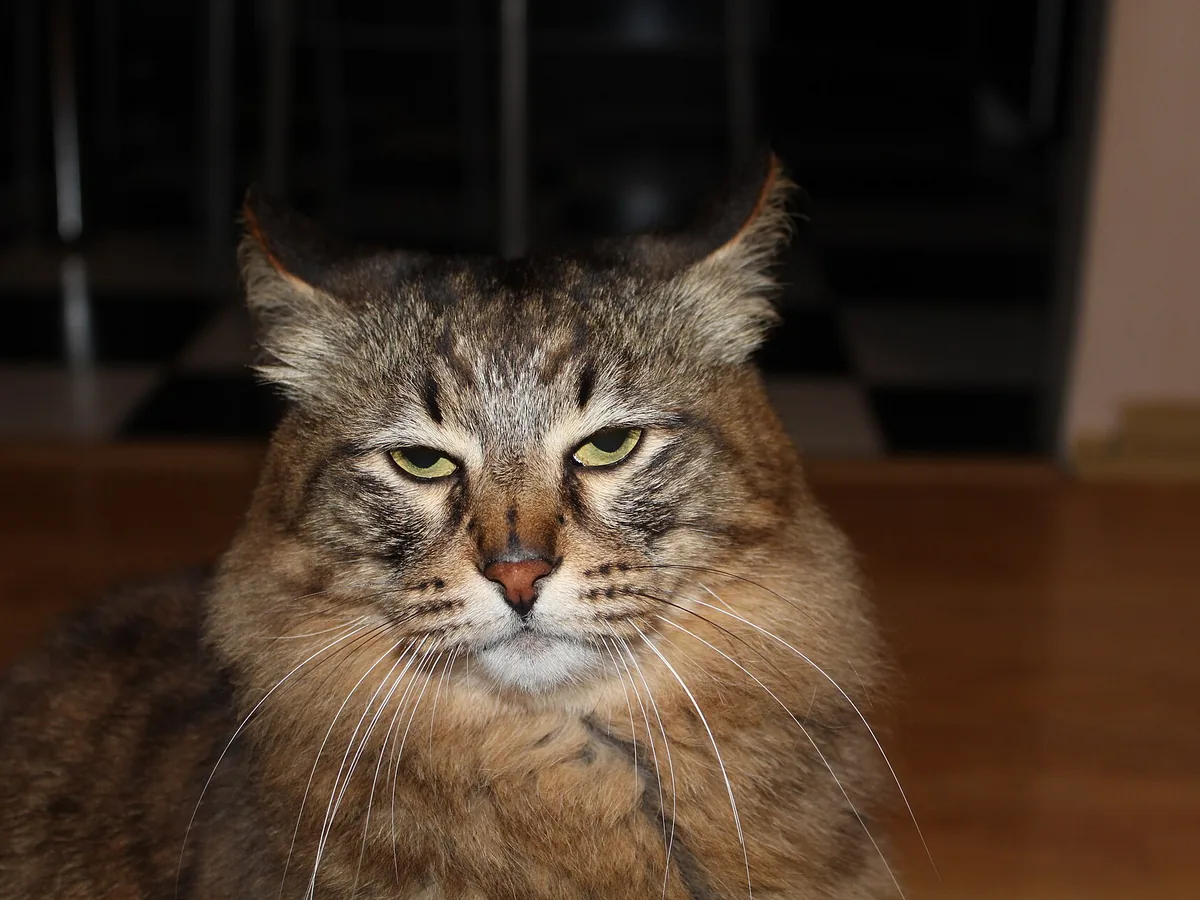
Physically the breed is unmistakable: a long, rectangular body, a square muzzle with a strong chin, large ears topped with lynx-like tufts, and a shaggy coat that is short on the shoulders and long at the ruff, belly and tail. A kitten reaches only about half its adult weight by one year and keeps filling out until three or four. Almost every colour and pattern is accepted except pointed coats, chocolate and lilac.
People are drawn to the combination of size and sociability. Maine Coons greet visitors at the door, follow their owners from room to room, and talk in trills and chirps rather than meows. They are also famously fond of water and will supervise a running tap for twenty minutes. The trade-off is grooming: that coat mats if it is ignored for a fortnight, and the breed is not cheap to buy or to feed.
Care essentials
- Grooming
- Comb two to three times a week with a wide-toothed steel comb, working the armpits, britches and behind the ears where mats start. Shedding peaks in spring, when daily sessions help. A bath every six to eight weeks keeps the coat from turning greasy.
- Exercise & play
- Needs more than the average cat: vertical climbing space, a sturdy tall post and two short play sessions a day. Puzzle feeders and fetch matter because a bored Maine Coon becomes destructive. A catio or harness walks suit the breed well.
- Feeding
- Large breeds grow slowly, so feed a growth diet formulated for large-breed cats until about 15 months instead of free-feeding adult food. Portion control matters once growth stops, because the breed gains weight easily. Wet food helps with water intake and urinary health.
- Home setup
- Wants room to stretch out; a 1.2 m cat tree is a minimum, not a luxury. Provide several resting spots and a litter box at least 60 cm long, since ordinary boxes are cramped. Apartments work if the vertical space is generous.
Health
- Hypertrophic cardiomyopathy (HCM) — the breed's most common heart disease, associated with a MYBPC3 variant; a DNA test exists but covers only one of several mutations.
- Hip dysplasia — unusually common for a cat breed and a cause of lameness in severe cases.
- Spinal muscular atrophy (SMA) — an inherited nerve disorder causing hind-leg weakness, detectable with a direct DNA test.
- Pyruvate kinase deficiency — an inherited anaemia that shows as lethargy, weakness and pale gums.
- Gingivitis and stomatitis — the breed is over-represented in inflammatory dental disease.
Ask for echocardiogram results on both parents from the last 12 months and hip X-ray scores where available. After age five, an annual vet visit with a heart listen catches most HCM cases before symptoms appear.
Health information here is general and not a substitute for veterinary advice. If your cat shows symptoms, contact a vet.
Frequently asked
How big do Maine Coons actually get?
Males usually weigh 5.5-8 kg and females 4-5.5 kg, with the occasional male over 10 kg. Nose to tail tip they often reach 90-100 cm. They keep growing until about three or four years old, so a one-year-old is not finished.
Do Maine Coons get along with dogs?
Usually yes. The breed is unusually social and reads dog body language well. A slow introduction and a dog that respects cats are what matter, and many live happily with large, calm dogs.
Are Maine Coons good apartment cats?
They can be, if you give them vertical space and daily play. They are heavy-footed, active at odd hours, and a bored one will knock things off shelves. A secured balcony or catio makes a real difference.
How much does a Maine Coon cost?
In the US a pet-quality kitten from a health-tested breeder runs $800-$2,500, with show lines higher. In China, reputable catteries charge roughly 5,000-20,000 RMB. Prices far below that usually mean no heart or hip screening.