Ragdoll
布偶猫 · Large semi-longhair · United States (California)
The Ragdoll was created in the 1960s in Riverside, California, by a breeder named Ann Baker, who built the line around a docile white longhaired cat called Josephine and a handful of cats with Persian and Burmese-type ancestry.
Quick facts
- Weight
- 4.5-9 kg
- Length
- up to 90 cm including tail
- Lifespan
- 12-15 years
- Typical price
- $800-$2,500 (US, health-tested breeder)
Temperament & lifestyle
About the breed
The Ragdoll was created in the 1960s in Riverside, California, by a breeder named Ann Baker, who built the line around a docile white longhaired cat called Josephine and a handful of cats with Persian and Burmese-type ancestry. Baker's stories about the breed's origins were colourful and impossible to verify, but the cats were real: large, blue-eyed, colourpointed, and unusually relaxed when handled. Registries were slow to accept a breed with no written pedigree, and it took until the late 1970s and 1980s for the Ragdoll to be recognised widely.
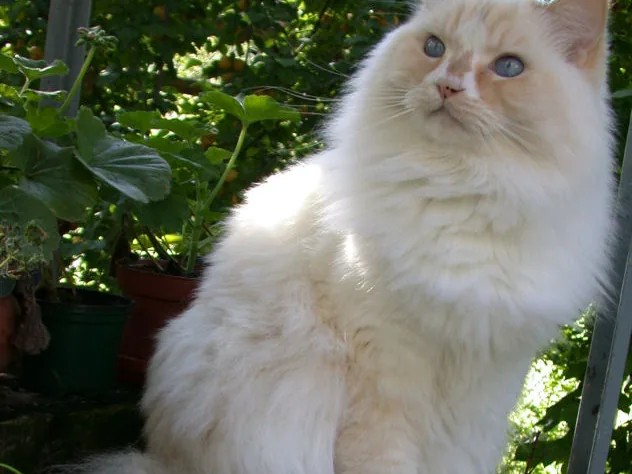
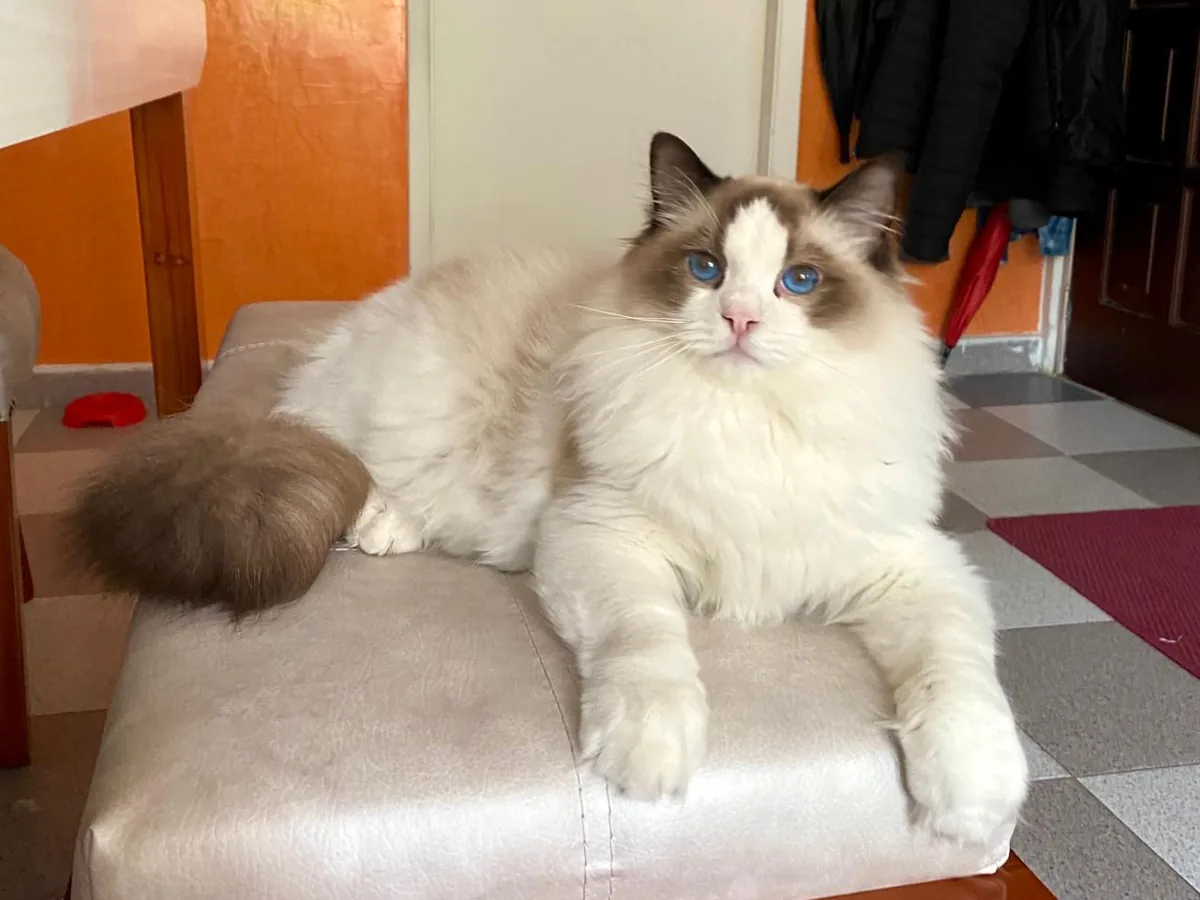
The look is soft rather than extreme. A Ragdoll has a broad, modified wedge head, oval blue eyes, a semi-long silky coat with very little undercoat, and a long, bushy tail. Only three patterns are accepted — colourpoint, mitted and bicolour — in seal, blue, chocolate, lilac, red, cream and tortie, often with lynx striping. Kittens are born white and take up to three years to reach full colour and full size, which is why a young Ragdoll can look disappointingly pale.
What made the breed famous is temperament. Ragdolls tolerate handling better than almost any other cat and often go limp in your arms, which is where the name comes from. They follow their people, greet guests, get along with children and dogs, and ask for attention with a quiet chirp rather than a yowl. The flip side is that they are poor outdoor cats — too trusting, too slow to react — and they cope badly with being alone all day.
Care essentials
- Grooming
- The silky coat has little undercoat and rarely mats, so a comb twice a week is enough, daily during the spring shed. Frequent bathing is unnecessary; one every two to three months at most, and use a light conditioner to keep the coat from drying.
- Exercise & play
- Short wand-toy sessions daily and a stable scratching post keep weight down. Ragdolls are not driven climbers but will use a cat tree if it does not wobble. Puzzle feeders help, because the breed tends toward laziness.
- Feeding
- Prone to obesity, so measure portions and weigh monthly rather than leaving a full bowl down. A wet-heavy diet supports urinary and kidney health. Slow growth means kitten food until 12-15 months.
- Home setup
- Indoor only: the breed's calm reaction time makes traffic and strange dogs genuinely dangerous. It wants soft resting places, a quiet corner and company. Good with gentle children, less so with toddlers who grab.
Health
- Hypertrophic cardiomyopathy (HCM) — a breed-specific MYBPC3 variant (R820W) is well documented; DNA testing plus yearly echocardiograms are standard in good catteries.
- Polycystic kidney disease (PKD) — inherited through the PKD1 gene and detectable by DNA test, so breeding lines can be cleared.
- Feline infectious peritonitis (FIP) — Ragdolls are over-represented in FIP cases, though the reason is not fully understood.
- Calcium oxalate bladder stones — linked to low water intake and dry-only feeding.
- Obesity — the breed gains weight easily and carries it into middle age.
Ask for HCM echo results on both parents and PKD DNA status before buying. Weigh the cat monthly after age two; an extra kilogram on a Ragdoll is a genuine health risk, not just a cosmetic one.
Health information here is general and not a substitute for veterinary advice. If your cat shows symptoms, contact a vet.
Frequently asked
Do Ragdolls really go limp when you pick them up?
Many do, especially if they were handled gently as kittens, but it is a tendency, not a guarantee. Some dislike being held for long and will wriggle. Never assume a Ragdoll cannot or will not jump and run.
Are Ragdolls good with children?
Generally excellent. They tolerate clumsy handling better than most breeds and rarely retaliate. Children still need to be taught not to carry the cat around or dress it up.
Can Ragdolls be left alone while I am at work?
A normal workday is fine, but the breed is sociable and boredom shows up as over-grooming or weight gain. A second cat or a midday visit helps more than a pile of new toys.
How much do Ragdoll kittens cost?
In the US, $800-$2,500 from a breeder who tests for HCM and PKD; in China roughly 5,000-20,000 RMB. Bicolour and mitted kittens usually cost the most because demand is highest.