Cornish Rex
柯尼斯卷毛猫 · Rex / Shorthaired · Cornwall, England (1950)
In 1950, in Bodmin, Cornwall, a cream cat called Serena produced a litter that included a curly-coated kitten, Kallibunker.
Quick facts
- Weight
- 2.7-4.5 kg (6-10 lb)
- Length
- Long and slim, about 45-50 cm nose to tail base
- Lifespan
- 11-15 years
- Typical price
- USD 1,000-2,200 from a registered breeder
Temperament & lifestyle
About the breed
In 1950, in Bodmin, Cornwall, a cream cat called Serena produced a litter that included a curly-coated kitten, Kallibunker. His owner, Nina Ennismore, bred him back to his mother to fix the trait, and the Cornish Rex line began. The wave is a recessive mutation in KRT71; early breeders outcrossed to Siamese, British Shorthair and American Shorthair, and those crosses still show in the breed's long, sighthound-like profile.
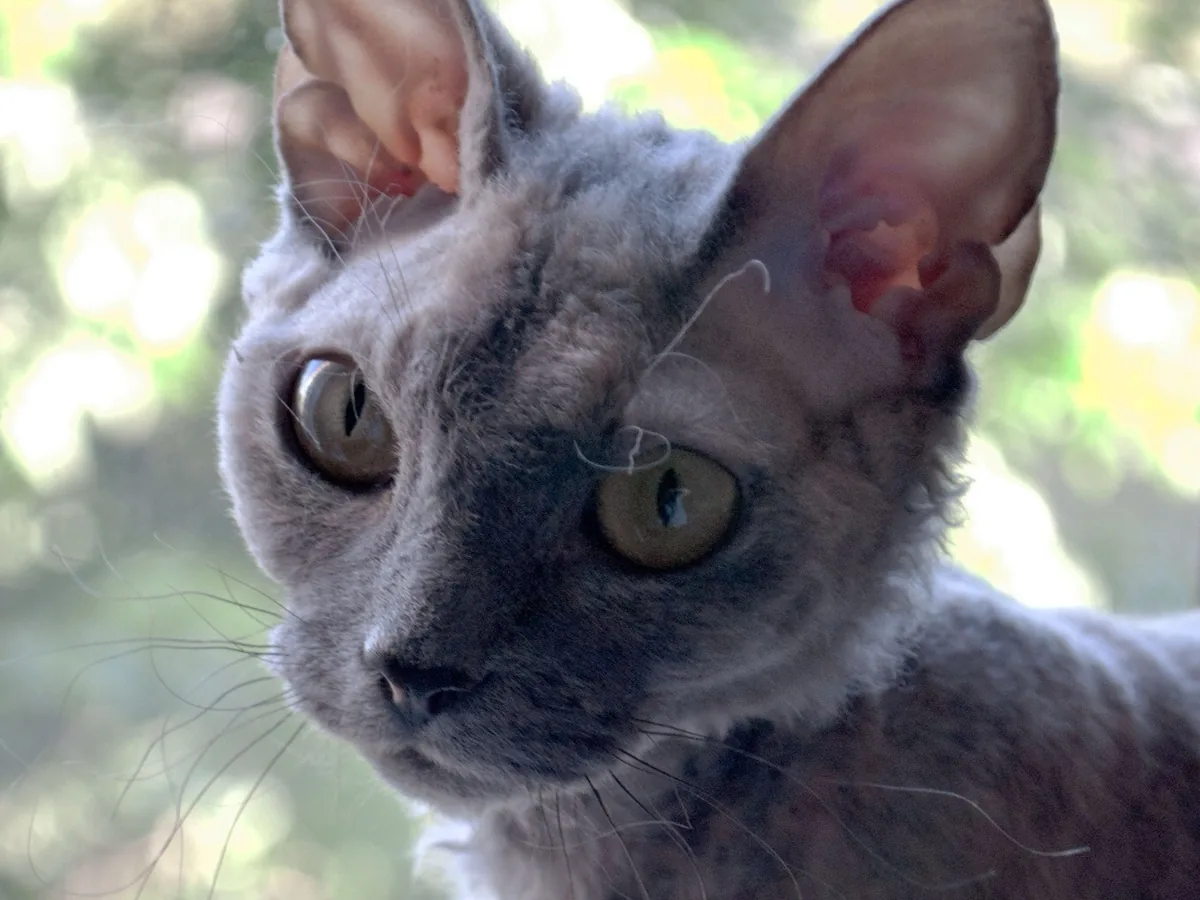
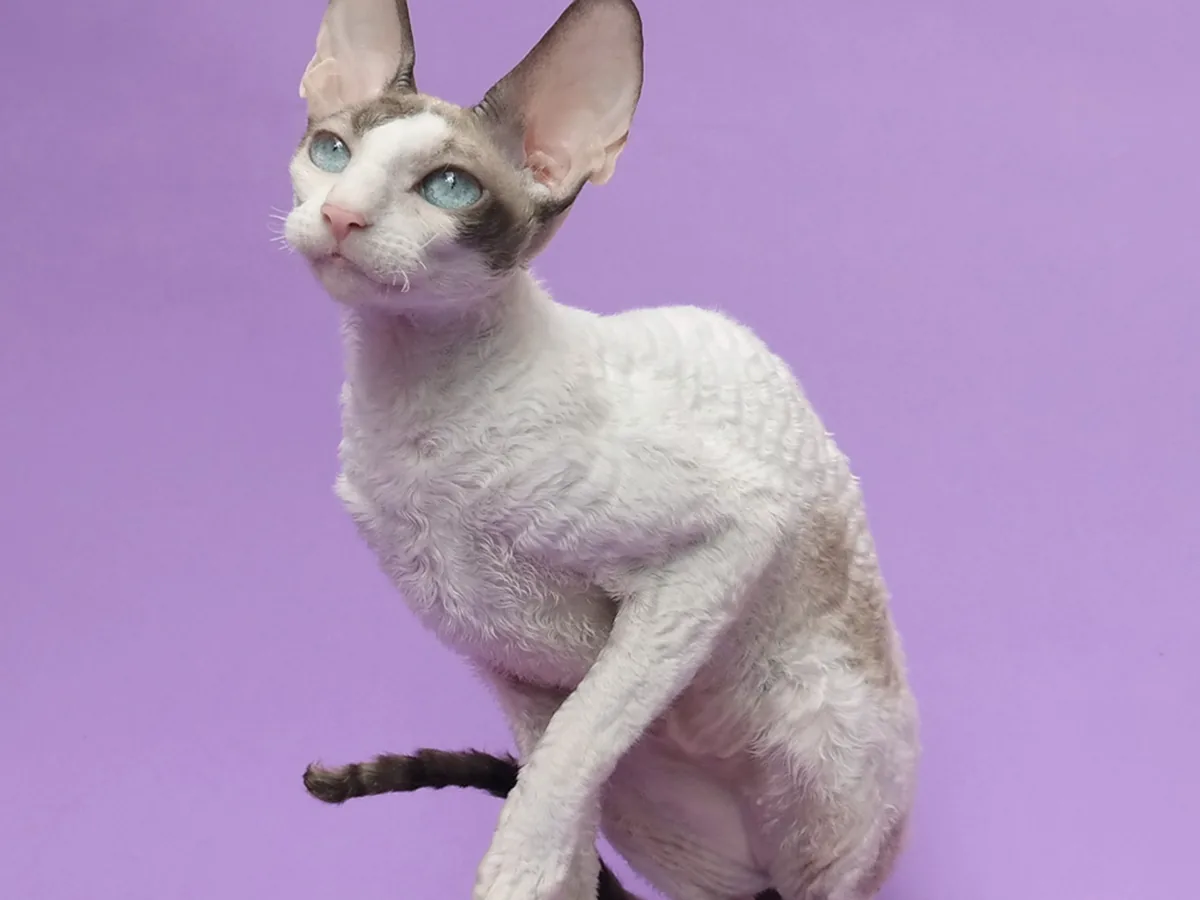
The Cornish coat is the tightest wave in the cat world - soft marcel ripples lying close to the body, with no guard hairs at all, so it feels like chenille or a silk throw. Density varies widely: some cats keep a full ripple, others go nearly bald on the belly, throat and temples, and kittens often shed the wave entirely before regrowing it. The body is long and slim with a tucked-up waist and hard muscle, giving an egg-shaped outline at 2.7-4.5 kg.
Without guard hairs the coat cannot insulate. Cornish Rex lose heat fast, burrow under duvets, sit against radiators and track sun patches across the floor; in winter they need a warm bed and a draught-free room. The coat needs almost no brushing - brushing breaks the wave and scratches thin skin - but the skin is oily, so a weekly wipe with a warm damp cloth plus regular ear and chin cleaning keeps it from turning greasy. They are busy, acrobatic and talkative, and they hate being shut out of a room.
Care essentials
- Grooming
- Skip the brush: it flattens the wave and irritates thin skin. Wipe with a warm damp cloth once a week, clean ears and chin every week or two, and bathe every 6-8 weeks with a mild shampoo if the coat feels greasy. Never use a slicker brush or harsh shampoo, and keep the room warm while it dries.
- Exercise & play
- Very high. Two or three short active sessions daily, a tall cat tree, shelves to traverse and toys that reward chasing. A bored Cornish becomes a nocturnal demolition expert.
- Feeding
- Muscular and highly active, so it needs good-quality protein and more calories than its size suggests; measure portions and adjust weekly by body condition. Warm wet food is taken eagerly, and water intake should be monitored.
- Home setup
- Warm (22-25 degrees C), quiet, and full of vertical routes. Provide a covered bed, a heat pad or heated mat in winter, and a second cat if the household is out all day.
Health
- Hypertrophic cardiomyopathy (HCM) - the main breed concern; echocardiogram screening of breeding cats
- Patellar luxation - kneecaps that slip, seen at low but real frequency
- Hypotrichosis and cyclical baldness - some lines lose coat on the belly, throat and temples
- Cold stress and heat burns - no insulating coat, so radiators, hobs and hot water bottles cause injuries
- Periodontal disease - crowded teeth and oily skin often come with poorer dental health
There is no breed-wide DNA test for Cornish Rex HCM, so pedigree plus echo results are the practical screening tools. Because the skin is thin and the coat sparse, use cat-safe sunscreen on pale cats that sunbathe, and check any small wound early - infections spread fast on exposed skin.
Health information here is general and not a substitute for veterinary advice. If your cat shows symptoms, contact a vet.
Frequently asked
Do Cornish Rex cats need baths?
They do better with occasional baths than most cats. The skin is oily and there is no guard coat to carry oil away, so a bath every 6-8 weeks with a mild shampoo keeps the coat from clumping and smelling. Wipe-downs with a warm cloth handle the weeks in between.
What is the difference between a Cornish Rex and a Devon Rex?
Both are KRT71 mutations but different alleles. The Cornish is longer and slimmer with a tighter, uniform wave and an egg-shaped body; the Devon is broader, with a wider head, bigger low-set ears, a sparser patchy coat and a shorter muzzle.
Are Cornish Rex cats good for allergy sufferers?
Often better tolerated than coated breeds because they shed little and produce less Fel d 1, but no breed is allergen-free. Visit an adult cat first; reactions depend on the person, not the breed label.
Do Cornish Rex cats get cold?
Very easily - the coat has no guard hairs and almost no insulation. They will sit on radiators, crawl under covers and shiver in draughts. Keep indoor temperatures at 22 degrees C or above and give them a covered, padded bed.