Turkish Angora
土耳其安哥拉猫 · Semi-longhair · natural breed · Ankara region, central Turkey
The Turkish Angora comes from the Ankara region of central Turkey — the city Europeans called Angora, which also gave its name to angora wool.
Quick facts
- Weight
- 5–9 lb (2.3–4.1 kg)
- Length
- 15–18 in body (38–46 cm), plus a 12–15 in tail
- Lifespan
- 12–18 years
- Typical price
- $900–$2,500 (US); rare colours and show lines at the top
Temperament & lifestyle
About the breed
The Turkish Angora comes from the Ankara region of central Turkey — the city Europeans called Angora, which also gave its name to angora wool. Long-haired cats of this type were recorded there in the 16th century and shipped to European courts as curiosities; by 1900 the breed had been largely absorbed into Persian bloodlines. The Ankara Zoo began a breeding programme in 1917 with cats gathered from nearby villages, and those animals, exported from the 1960s onward, rebuilt the modern breed. CFA granted championship status in 1973.
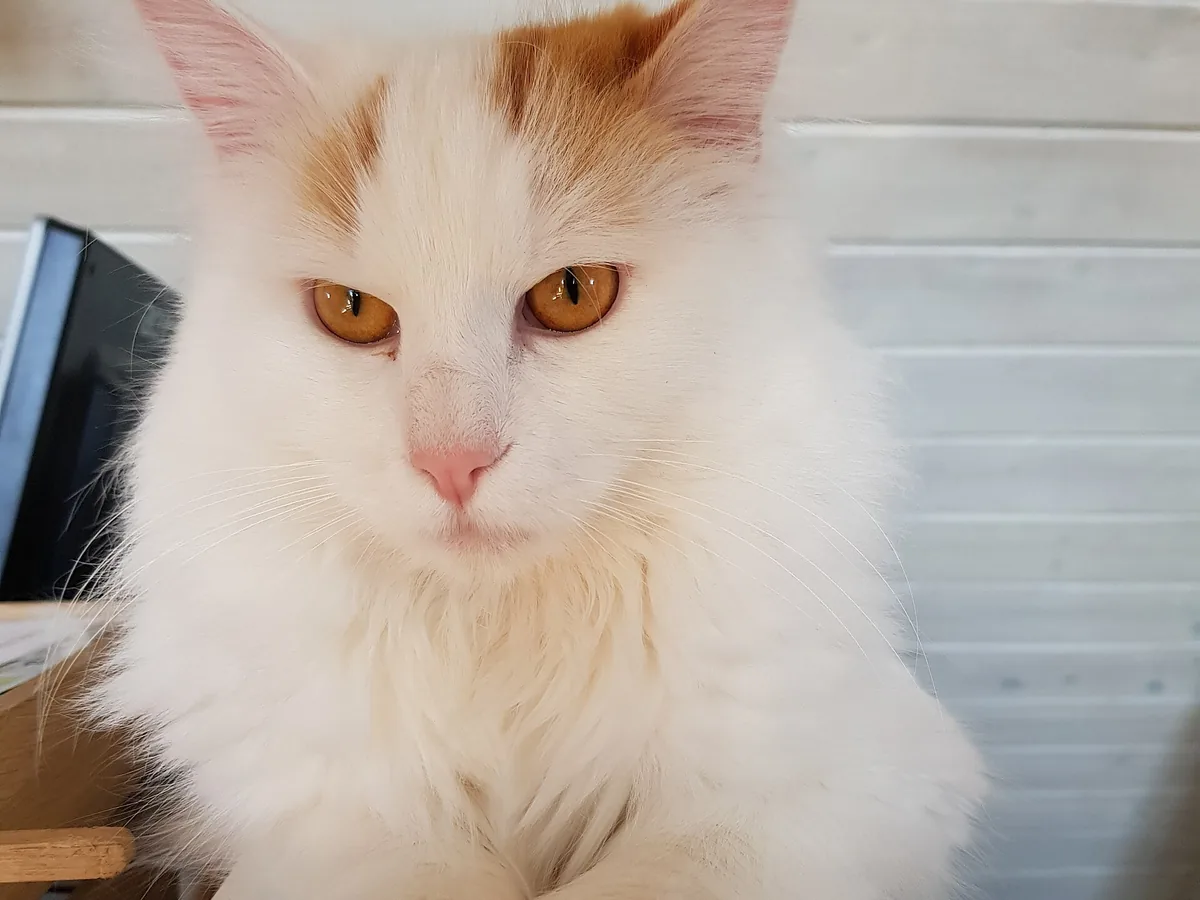
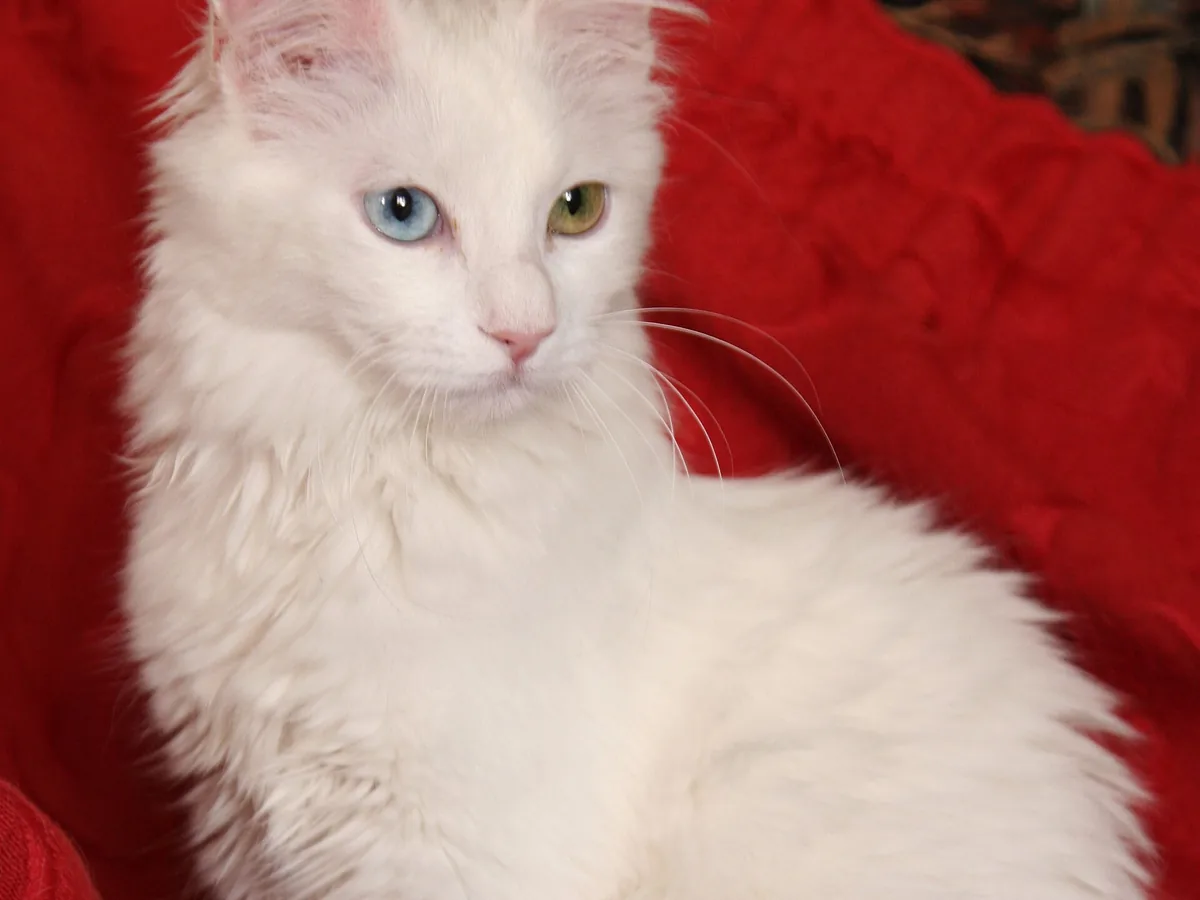
What separates the Angora from other semi-longhairs is the coat: a single, fine, silky layer with no undercoat, so it lies close and is slow to mat. The tail is plumed like a feather duster. White was for decades the only accepted colour, with blue, green or odd eyes, and remains the most common; today all colours are accepted except pointed. The genetic trade-off: roughly two-thirds of white cats with two blue eyes are born deaf, and odd-eyed whites are usually deaf on the blue side. Males reach about 9 lb (4 kg); females are smaller.
Angoras are not ornamental. They are busy, curious and quietly stubborn — following their person from room to room, riding shoulders, opening cupboards, taking a keen interest in running water. Most are talkative in a soft, chirping way rather than loud. They want vertical territory (tall cat trees, shelves, the top of the fridge) and daily interactive play, or they invent their own games. They bond closely with one or two people and tolerate, rather than adore, strangers.
Care essentials
- Grooming
- Comb two or three times a week with a steel comb; the single coat has no undercoat to mat, but the tail and the patch behind the ears tangle. Daily combing in spring. No bathing routine needed — the coat sheds dirt well. White ears and nose need shade in strong summer sun.
- Exercise & play
- Two or three short interactive sessions a day, plus vertical space so it can climb on its own. Fetch, wand toys and puzzle feeders all work; a bored Angora dismantles the house.
- Feeding
- High-protein, moderate-fat food: about 1/2 to 3/4 cup dry or 5–6 oz wet a day for an adult, split into two meals. Neutered males gain easily, so weigh monthly. Many prefer running water — a fountain gets them drinking.
- Home setup
- Tall cat tree, wall shelves, window perches and one quiet room to retreat to. Clear breakables off high edges, because every edge gets tested. Fit window screens: they push at open windows.
Health
- Congenital deafness — around two-thirds of white cats with two blue eyes are deaf; odd-eyed whites are usually deaf on the blue side
- Hereditary ataxia — a recessive neurological disorder reported in the breed; ask whether the line is clear
- Hypertrophic cardiomyopathy (HCM) — present in the breed; breeding cats should be echo-screened
- Thin coat, thin skin — no undercoat means little protection from cold, and white noses and ear tips burn
The breed is generally robust and long-lived, with most serious risk concentrated in white, blue-eyed lines and in the rare ataxia mutation. Reputable breeders check hearing in white kittens before placing them and keep multi-generation health records.
Health information here is general and not a substitute for veterinary advice. If your cat shows symptoms, contact a vet.
Frequently asked
Do Turkish Angoras shed a lot?
Less than most longhairs. With no undercoat, shedding is moderate and mostly seasonal, but the fine hairs cling to fabric. Comb two or three times a week, daily in spring.
Why are white Turkish Angoras often deaf?
The gene combination that produces a white coat and blue eyes also suppresses development of the inner ear. About two-thirds of white cats with two blue eyes are deaf, and odd-eyed whites are usually deaf on the blue side only. Deaf cats manage well indoors but must never roam.
Are Turkish Angoras good with children?
With respectful children, yes — they are playful and robust enough for gentle games. They will not put up with being carried around, though, and they swat when cornered, so toddlers need supervision.
How much does a Turkish Angora cost?
In the US, roughly $900–$2,500 from a reputable breeder, with rare colours and show lines at the top of that range. Note that the breed has no coat pattern to prove itself by: most cheap 'Angora' ads are domestic longhairs.