Norwegian Forest Cat
挪威森林猫 · Northern forest / natural landrace · Norway
The Norwegian Forest Cat is a landrace, not an invention.
Quick facts
- Weight
- Males 4.5-9 kg, females 3.5-5.5 kg
- Length
- Body 45-60 cm; tail 30-35 cm
- Lifespan
- 14-16 years
- Typical price
- US$800-2,500 from a show-line breeder
Temperament & lifestyle
About the breed
The Norwegian Forest Cat is a landrace, not an invention. It took shape over centuries on Norwegian farms, where cats that could not survive wet, freezing winters did not pass on their genes. Norse myth gives it a pedigree older than any registry: the goddess Freya drove a chariot drawn by two huge cats, and farmers left out milk for them at Yule. It was first shown in the 1930s, nearly vanished in the Second World War, and was rebuilt in the 1970s from surviving farm stock to a written standard.
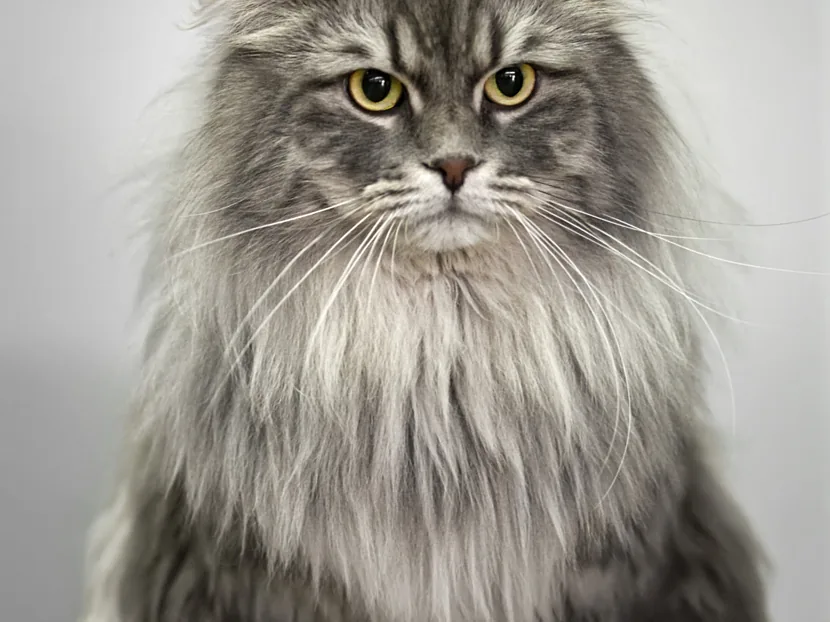
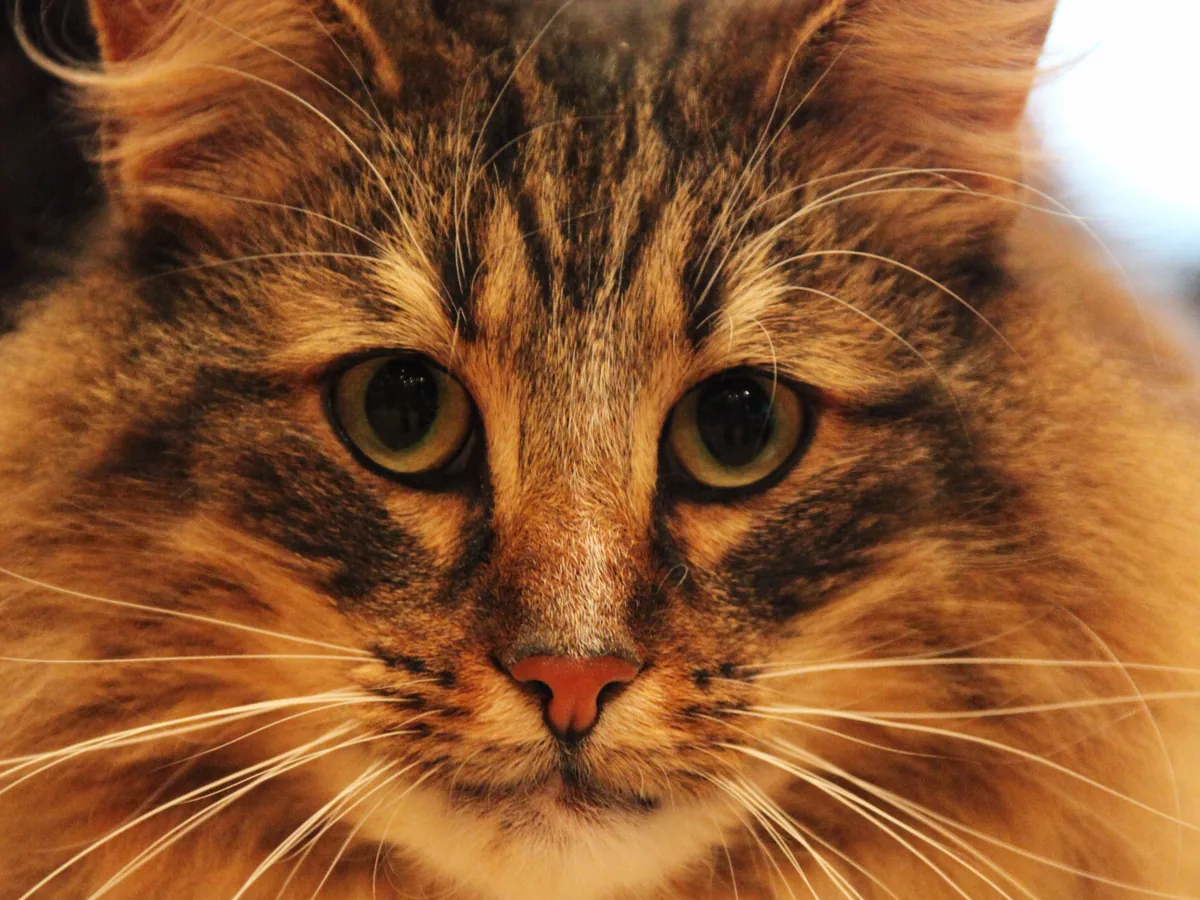
The body is weather engineering. The coat is double: a coarse, slightly oily outer layer that sheds rain, over a dense woolly undercoat that traps warmth. In spring the undercoat blows out in handfuls and the cat looks half its winter size. The frame is long and powerful, with hind legs longer than the front, a deep chest, tufted ears and a bushy tail as long as the torso. Males reach 4.5-9 kg and females 3.5-5.5 kg, but the skeleton fills out until the cat is four or five.
Temperament sits between the Maine Coon's clowning and a feral cat's reserve. Wegies, as fanciers call them, are friendly without being needy, quiet-voiced, and obsessive climbers; expect to find yours on top of a door frame. They tolerate handling but rarely enjoy being carried, and dislike sudden changes in routine. Two things decide whether it thrives: vertical territory, and grooming started in kittenhood, before the first mat forms.
Care essentials
- Grooming
- Comb two or three times a week with a wide-toothed steel comb, working down to the skin at the armpits, belly and behind the hind legs where mats start. During the spring moult, switch to daily sessions for two to three weeks and remove loose undercoat before it felts. Do not shave the coat; the guard hairs regulate temperature and protect the skin from sun. Check ears weekly and trim nails every two to three weeks.
- Exercise & play
- This is a climbing cat, not a running cat. A floor-to-ceiling cat tree with wide platforms, a shelf circuit, or a secured balcony does more for it than any toy. Two short interactive sessions a day with a wand toy, plus puzzle feeders, cover the rest. It will self-exercise on vertical furniture if you give it some.
- Feeding
- Large-boned and slow-growing, so feed kitten formula until 12-15 months rather than switching early. Adults do well on a measured amount of high-protein food split into two meals; the breed's size makes portion creep easy and obesity common after age five. Keep fresh water available, and add a wet-food meal daily to support urine dilution.
- Home setup
- Adapts to flats if given height and a window to watch. It dislikes heat and stuffy rooms, so keep a cool, ventilated space in summer. Provide a sturdy scratching post it can stretch full length on. Because it is a patient, quiet cat that hides discomfort, set up a weekly two-minute hands-on check of weight, gums and coat.
Health
- Hypertrophic cardiomyopathy (HCM) - the main cardiac concern; annual echocardiogram from age three
- Glycogen storage disease type IV (GSD IV) - a breed-specific mutation with a DNA test available
- Hip dysplasia - more common in the large, heavy-framed lines
- Patellar luxation - occasional, usually low grade
- Retinal dysplasia - rare, screened by responsible breeders
Ask the breeder for HCM screening results on both parents and for GSD IV DNA status. GSD IV is inherited recessively, so two carriers can produce affected kittens that fail to thrive; a test avoids the risk entirely. The coat hides weight loss well, so weigh monthly on a kitchen scale rather than judging by eye.
Health information here is general and not a substitute for veterinary advice. If your cat shows symptoms, contact a vet.
Frequently asked
How big do Norwegian Forest Cats get?
Adult males usually weigh 4.5-9 kg and stand around 23-30 cm at the shoulder; females run 3.5-5.5 kg. They are tall and long rather than bulky, and they keep growing until four or five years old, so a young adult can look thin and then fill out considerably.
Do Norwegian Forest Cats shed a lot?
Yes, once a year dramatically. The dense undercoat blows out over two to three weeks in spring - expect tufts on the floor and furniture. The rest of the year shedding is moderate. Daily combing during the moult removes most of it before it lands on your sofa or felts against the skin.
Are Norwegian Forest Cats hypoallergenic?
No. No cat breed is truly hypoallergenic. This breed produces normal amounts of the Fel d 1 protein and has a lot of coat surface area to hold it. If you are allergic, spend several hours with an adult cat of the breed before committing, and do not rely on breeder claims.
Norwegian Forest Cat vs Maine Coon - what is the difference?
The Wegie has a triangular head with a straight profile, hind legs longer than the front, and a slightly drier, more weatherproof coat; the Maine Coon has a square muzzle, a shaggy uneven coat and a heavier, broader body. Temperament differs too: the Wegie is quieter and more independent, the Coon more interactive and clownish.