Somali
索马里猫 · Longhair (Abyssinian family) · United States and Canada, from Abyssinian stock
The Somali is an Abyssinian in a long coat: the same ticked tabby body, the same copper-to-green eyes, plus one recessive long-hair mutation that turns the coat fluffy and the tail into a full brush.
Quick facts
- Weight
- 2.5-4.5 kg (6-10 lb)
- Length
- Body 40-46 cm nose to tail base; tail 30-37 cm
- Lifespan
- 12-16 years
- Typical price
- CNY 4,000-12,000 for a registered kitten in China; imported lines cost more
Temperament & lifestyle
About the breed
The Somali is an Abyssinian in a long coat: the same ticked tabby body, the same copper-to-green eyes, plus one recessive long-hair mutation that turns the coat fluffy and the tail into a full brush. Long-haired kittens kept appearing in Abyssinian litters. The first recorded one, Raby Chuffa of Selene, was born in North America in 1953, and through the 1960s breeders in Canada and the United States began keeping such kittens instead of quietly selling them as pets. American breeder Evelyn Mague coined the name Somali, reasoning that if the border between Abyssinia (modern Ethiopia) and Somalia is a human invention, so is the genetic line between a shorthaired and a longhaired Abyssinian. The CFA granted championship status in 1979; Europe followed in 1982.
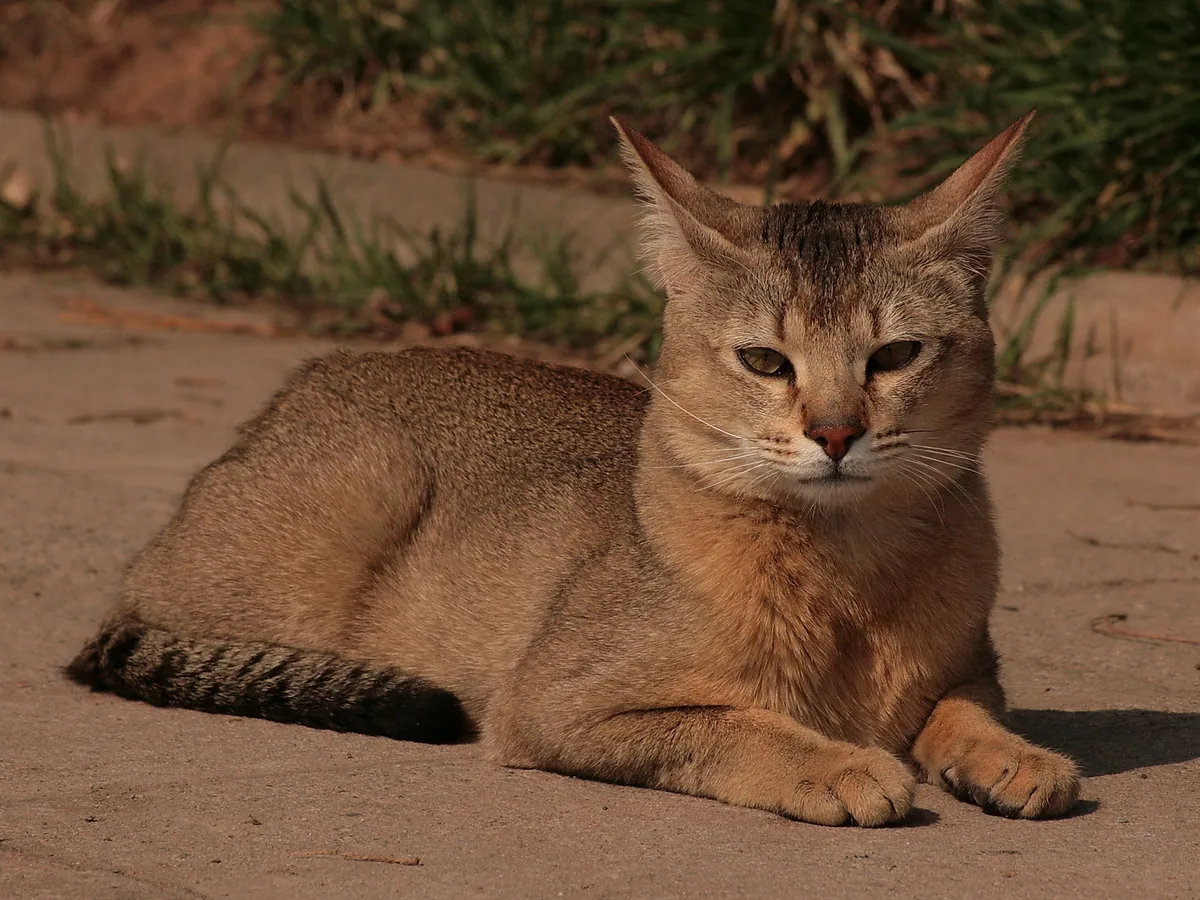
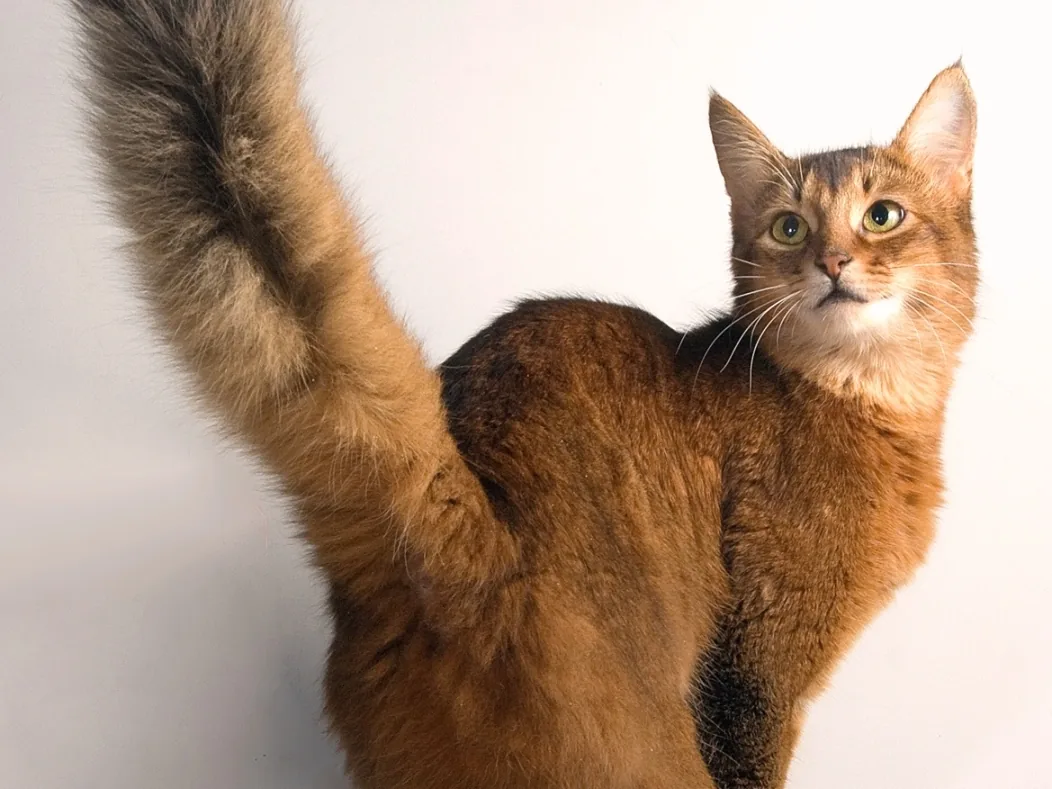
Physically the breed is medium-built rather than delicate: 2.5-4.5 kg, a modified wedge head, large alert ears, and a coat in which a single hair carries four to twenty bands of colour. Registered colours are ruddy (also called usual or tawny), blue, sorrel and fawn, with silver versions in some registries. Ticked is the only permitted pattern; a Somali with clear stripes on its flanks is a fault.
Living with one is a commitment to activity. Somalis climb, investigate, open cupboards and want a role in whatever you are doing. They are not decorative lap cats, and a bored Somali invents its own entertainment, usually at three in the morning. Grooming is easier than the coat suggests, because the semi-long hair has little undercoat and rarely mats.
Care essentials
- Grooming
- One pass a week with a stainless steel comb covers most of the year; during the spring and autumn shed, go to two or three sessions. The semi-long coat has little undercoat and seldom mats, but check the britches, armpits and the area behind the ears. No routine bathing is needed.
- Exercise & play
- High-energy breed. A floor-to-ceiling climbing tree, a window perch and two daily sessions of ten to fifteen minutes of hunting-style play are the baseline. Without vertical space, that energy turns into shelf-clearing and night racing.
- Feeding
- Feed a measured amount twice a day rather than free-feeding: an active 3-4 kg adult needs roughly 170-210 kcal a day. Meat-first, high-protein food suits the breed. Because the Abyssinian family is prone to gum inflammation, include some chunkier texture or brush teeth rather than feeding only smooth pate.
- Home setup
- Keep it indoors. This cat can clear a balcony rail without effort, so windows need sturdy screens and balconies need netting. Provide at least one high perch per cat and rotate toys weekly so the environment stays new.
Health
- Pyruvate kinase (PK) deficiency: an inherited anaemia caused by a PKLR mutation, with a DNA test available for breeding cats.
- Progressive retinal degeneration linked to the rdAc mutation, shared with the Abyssinian; vision loss develops in adulthood.
- Gingivitis and periodontal disease, which run in the Abyssinian family and start early.
- Renal amyloidosis occurs at higher rates in this family of breeds; monitor kidney values from middle age.
Ask breeders for PK deficiency DNA results on both parents and for a recent eye exam by a veterinary ophthalmologist. A short-haired kitten from two Somali parents is normal, not a mix-up: the long-hair gene is recessive, so litters can contain both coat lengths. Budget for a dental check every six to twelve months, and have the teeth scaled when tartar appears rather than waiting for red gums.
Health information here is general and not a substitute for veterinary advice. If your cat shows symptoms, contact a vet.
Frequently asked
Is a Somali just a long-haired Abyssinian?
Genetically, yes. It descends entirely from Abyssinian stock and carries the same recessive long-hair mutation found across many long-haired breeds. Registries keep them as separate breeds so the two coat lengths can be shown and bred on their own standards, but temperament, body type and health risks are essentially shared.
Do Somali cats shed a lot?
Moderately, and mostly in two seasonal bursts in spring and autumn. The coat is fine and low in undercoat, so hair tends to drift rather than form mats on the cat. Ten minutes with a comb twice a week during shedding season keeps furniture reasonably clear.
Are Somalis good with children?
With calm children over about six, usually yes. The problem is handling: Somalis are active and dislike being squeezed or carried upside down, and a startled cat will scratch. Supervise young children and teach them to let the cat come to them.
How much does a Somali kitten cost in China?
Expect roughly CNY 4,000-12,000 for a kitten with registration papers, and more for imported lines or rare colours. The breed is uncommon in China, so most litters come from a handful of catteries and waiting lists are normal. Paying a deposit without PK test results on both parents is a bad trade.