Chausie
乔西猫 · Hybrid · jungle cat × domestic (United States) · United States
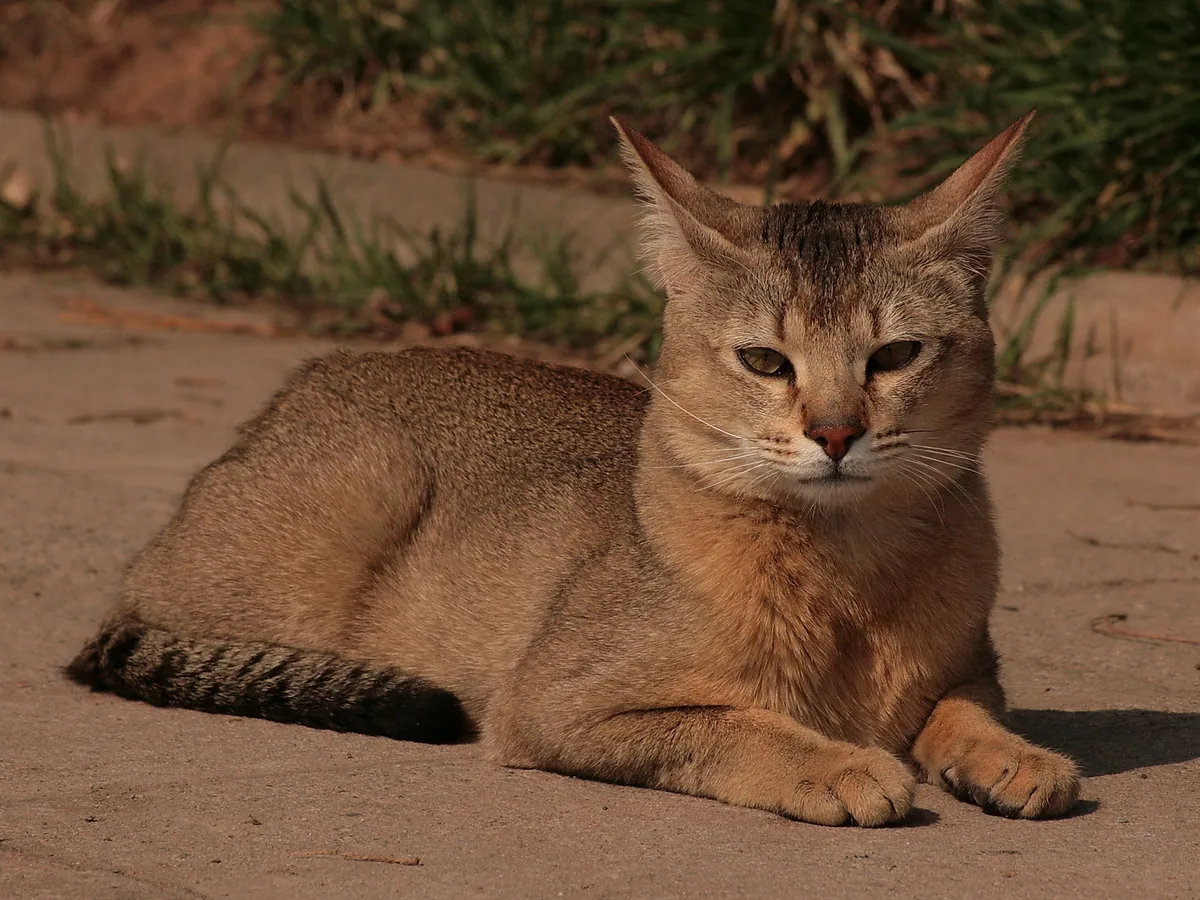
The Chausie is a hybrid of the jungle cat (Felis chaus) and domestic cats, with Abyssinians and Oriental Shorthairs used to hold the body type and the ticked coat.
Quick facts
- Weight
- 10–25 lb (4.5–11.3 kg); males heavier
- Length
- Body 20–24 in (50–60 cm), tail 10–14 in (25–35 cm)
- Lifespan
- 12–16 years
- Typical price
- $1,500–$5,000; early-generation cats cost more; in China ¥12,000–40,000
Temperament & lifestyle
About the breed
The Chausie is a hybrid of the jungle cat (Felis chaus) and domestic cats, with Abyssinians and Oriental Shorthairs used to hold the body type and the ticked coat. Jungle cat hybrids may have existed in Egypt centuries ago, but the breed as a project dates from the 1990s; TICA accepted it for registration in 1995 and granted championship status in 2013. Most cats sold today are fourth generation or later, fully fertile and domestic in temperament.
The look is built for running: long legs, a deep chest, a lean muscular frame, and a small head with large, high-set ears. Males reach 15–25 lb, females about 15 percent lighter. Accepted patterns are ticked tabby in golden or brown, plus a grizzled tabby; TICA also permits solid black. The short coat needs almost no grooming.
Chausies are high-drive cats. They jump from floor to door-top, need vertical space and daily interactive play, and many learn to walk on a harness or play fetch. They bond hard to one or two people and hate being shut out of rooms. Their intestine is shorter than a typical cat's, so rich or high-carbohydrate food often causes loose stool.
Care essentials
- Grooming
- Wipe down with a rubber curry once a week; the short coat has little undercoat and self-cleans well. Check ears weekly — large ears collect wax.
- Exercise & play
- Very high: at least an hour of active play a day, plus a ceiling-height climbing route or a secure outdoor enclosure. A bored Chausie dismantles shelves.
- Feeding
- Feed a high-meat, grain-free diet in two meals; the short gut handles fat well but not large carbohydrate loads. About 1/2 to 3/4 cup dry or 6–8 oz wet for an adult.
- Home setup
- Not a flat cat. It needs vertical territory, a window run or catio, and people who are home in the evening. Check local rules first: some countries and states restrict hybrid ownership.
Health
- Hypertrophic cardiomyopathy (HCM) — the main cardiac concern in hybrid lines; echo-screen breeders
- Inflammatory bowel disease — linked to the shorter intestinal tract
- Food intolerance — rich or high-carbohydrate diets cause chronic loose stool
- Obesity — large frame plus indoor confinement
Hybrid status raises two separate questions: heart disease and gut tolerance. Ask for an echocardiogram on the parents, and confirm the kitten's generation — fourth generation and later are legally domestic in most places and far easier to insure.
Health information here is general and not a substitute for veterinary advice. If your cat shows symptoms, contact a vet.
Frequently asked
Is a Chausie legal to keep?
It depends where you live. Several countries and US states restrict or license hybrid cats, and the rules often turn on generation number. Check with your local agriculture or wildlife authority before paying a deposit, and ask the breeder for the pedigree showing generation.
How big do Chausies get?
Males typically reach 15–25 lb and stand noticeably taller than a domestic shorthair; females run about 15 percent smaller. They mature slowly, filling out until about three years old.
Do Chausies need a special diet?
Most do better on high-meat, grain-free food fed in two meals. Their intestine is shorter than a typical cat's, so large carbohydrate loads and rich table food commonly cause loose stool.