Sokoke
索科克猫 · Shorthair · natural breed (Kenya) · Kenya (coastal Arabuko-Sokoke forest)
The Sokoke comes from a strip of coastal Kenya around the Arabuko-Sokoke forest near Watamu, where local people called the feral cats khadzonzo — roughly, "looks like tree bark" — for a coat that blends into dry woodland.
Quick facts
- Weight
- 5–10 lb (2.3–4.5 kg)
- Length
- body 12–16 in (30–41 cm), tail 10–13 in
- Lifespan
- 12–20 years
- Typical price
- $1,000–$2,500 in the US; €800–2,000 in Europe; in China ¥10,000–30,000
Temperament & lifestyle
About the breed
The Sokoke comes from a strip of coastal Kenya around the Arabuko-Sokoke forest near Watamu, where local people called the feral cats khadzonzo — roughly, "looks like tree bark" — for a coat that blends into dry woodland. In 1978 the wildlife artist and horse breeder Jeni Slater found a litter in a hollow tree on her coconut plantation and hand-reared a pair. A friend, Gloria Moeldrop, took two cats to Denmark in 1983, they were shown in Copenhagen in 1984, and further imports in 1989 and the early 1990s built the foundation. FIFe recognised the breed in 1993; GCCF gave preliminary recognition in 2015.
It was once assumed to be a domestic × wildcat hybrid. Genetic work has not supported that, though the khadzonzo are close to the cats of Lamu island further north. The Sokoke is now the rarest pedigreed cat in the world, with a studbook in the low hundreds.
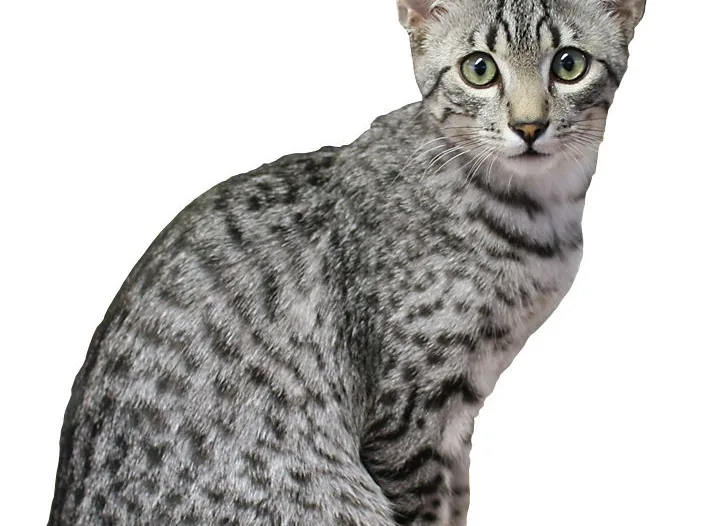
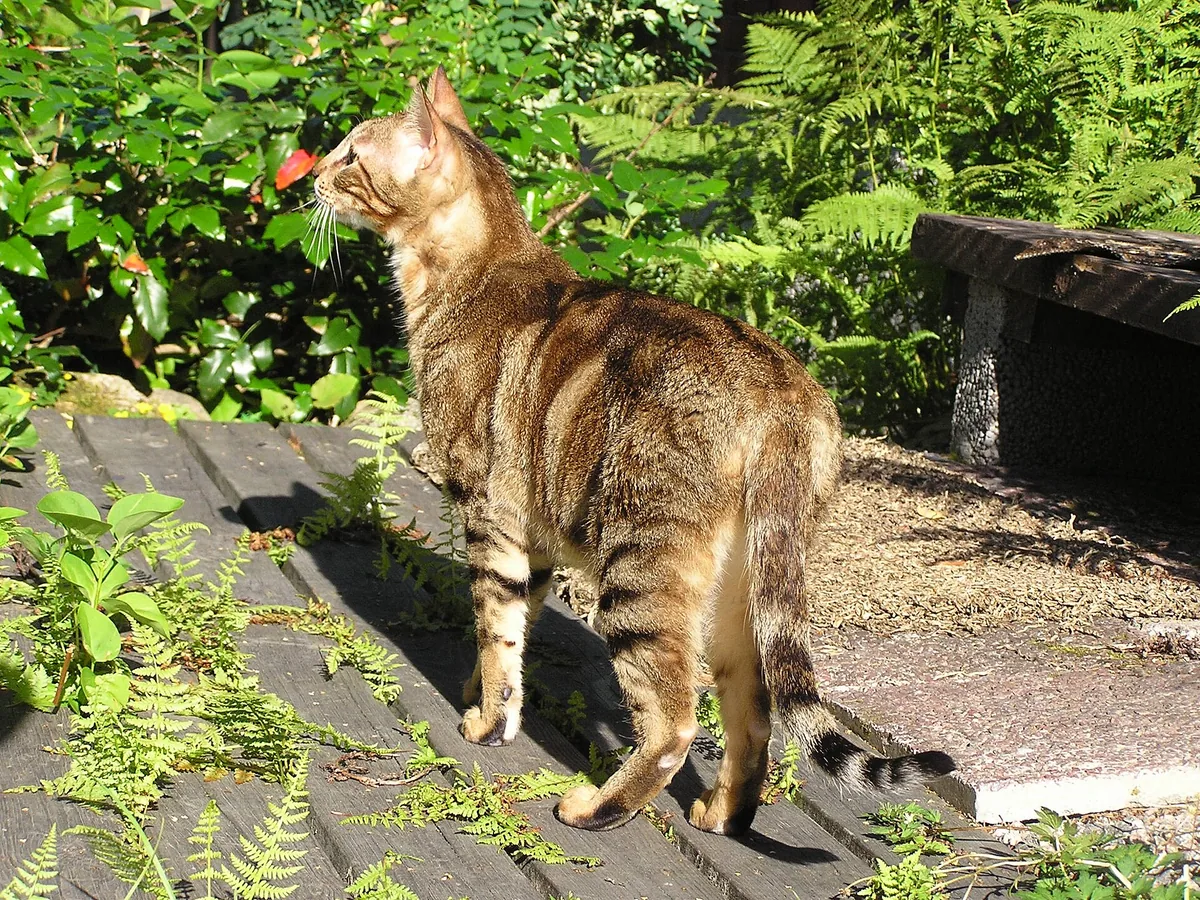
The coat is short, close and glossy: a blotched tabby with ticking in both the ground colour and the pattern itself, so the whole cat looks slightly out of focus, tail tip included. It is leggy and light, and moves with a distinctive tip-toe rear gait that becomes obvious when excited.
Care essentials
- Grooming
- The easiest coat in this batch: a rub with a rubber glove or chamois once a week removes loose hair and keeps the gloss. No matting, no trimming, and shedding is light.
- Exercise & play
- Athletic and tree-minded. A tall climbing structure, high shelves and daily wand play; it will happily spend an hour stalking a windowsill. Secure garden access suits it better than pure indoor life.
- Feeding
- Lean frame, efficient metabolism; feed measured portions of high-protein food and keep it slim, since the breed is naturally light-boned and extra weight shows fast.
- Home setup
- A quiet, stable home with perches and something to hunt. It tolerates flats but wants height and a view. Because the gene pool is tiny, keep it indoors or in a secure run rather than free-roaming.
Health
- No breed-wide inherited disease has been documented — the population is too small and too recently standardised to show one
- Dental disease and tartar, as in most cats; brush teeth and book regular dentals
- Obesity and lower urinary tract disease, the usual indoor-cat risks
- Inbreeding effects from a tiny studbook — reduced litter size and fertility reported by breeders
The Sokoke's health advantage is genetic diversity in the wild population and a short history of selection; its risk is the bottleneck since 1983. Ask for the pedigree with inbreeding coefficients, and expect a breeder to talk about outcross policy rather than health tests, because there are no breed-specific DNA tests. Standard screening still applies: HCM echo, kidney and urine checks, and a dental plan.
Health information here is general and not a substitute for veterinary advice. If your cat shows symptoms, contact a vet.
Frequently asked
Is the Sokoke a wildcat hybrid?
No. That was the early assumption, based on the camouflage coat, but genetic study did not support it, and the long tapered tail and cobby-free build point to an ordinary domestic landrace. It is closely related to the cats of Lamu island off the Kenyan coast, not to any African wildcat.
Why is the Sokoke so rare?
Because the foundation was tiny and the native khadzonzo population was already declining when the breed was formalised in the late 1970s. A handful of cats went to Denmark in 1983 and a few more in the early 1990s; everything alive today descends from those imports, and the studbook runs to a few hundred animals.
What is unusual about a Sokoke's coat?
The ticking runs through both the ground colour and the blotched pattern, so the edges of the markings look soft and slightly blurred — the cat appears faintly out of focus, tail tip included. The effect is camouflage in dry woodland, and it is the breed's defining feature at shows.