Egyptian Mau
埃及猫 · Shorthair · natural spotted breed · Egypt (modern breed developed in Italy and the United States)
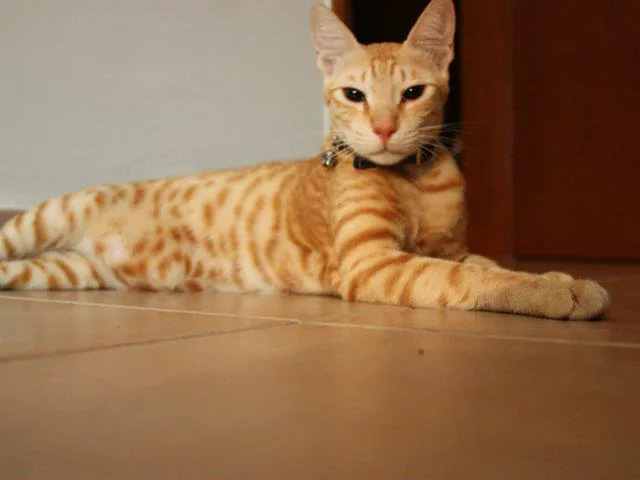
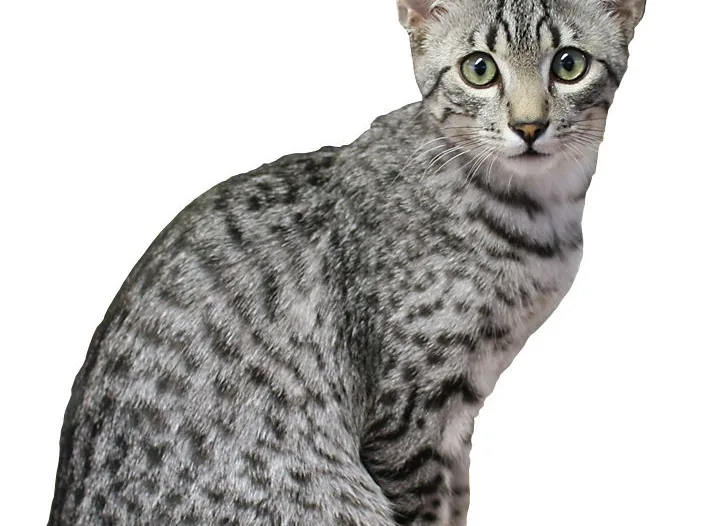
The Egyptian Mau is the only domestic breed with naturally occurring spots — random, distinct spots rather than the broken stripes of a tabby.
Quick facts
- Weight
- 6–10 lb (2.7–4.5 kg); some males to 12 lb
- Length
- 14–17 in body (36–43 cm), tail 10–12 in
- Lifespan
- 12–16 years
- Typical price
- $800–$2,000; silver and smoke cost more
Temperament & lifestyle
About the breed
The Egyptian Mau is the only domestic breed with naturally occurring spots — random, distinct spots rather than the broken stripes of a tabby. The modern breed descends from cats kept in Cairo: in 1953 an exiled Russian princess, Nathalie Troubetskoy, acquired a silver spotted queen and moved cats to Italy and then the United States, where they were registered and given CFA championship status in 1977. The name is simply Arabic for cat. Claims of direct descent from temple cats are romance, not genetics.
Mau markings are unusually precise: a dark stripe down the spine ending in a kink, mascara lines running from the eye corners, an M on the forehead, banded legs and a spotted belly. The coat comes in silver, bronze, smoke, black and blue, with silver and bronze the most sought after; smoke cats show their spots only when the coat moves. This is a small-to-medium, long-legged cat, 6–10 lb (2.7–4.5 kg), built for acceleration — the frequently quoted top speed is around 30 mph (48 km/h).
Maus are alert, athletic and selective. They bond hard to their own family and then hide from visitors, so a household with constant traffic is not ideal. They like height, running water and a fixed schedule, and they talk in chirps, trills and chortles. Expect a cat that notices everything and startles easily; patient, quiet handling when young makes a large difference. They are also startlingly good at fetch, and will demand it.
Care essentials
- Grooming
- Almost none: a weekly rub with a rubber glove removes loose hair. The short coat has little undercoat, and bathing strips the natural sheen. Check ears and teeth weekly instead — that is where the time goes.
- Exercise & play
- High drive: twenty to thirty minutes of fetch, chase and climbing daily, plus somewhere to sprint. A catio or a long hallway matters more than a big toy collection.
- Feeding
- Lean, athletic build — about 1/2 to 2/3 cup dry or 4–5 oz wet a day for an adult, adjusted to condition. They can be fussy about texture and temperature, so rotate proteins early.
- Home setup
- Vertical territory, several hiding places and a predictable routine. Introduce visitors slowly; a covered retreat and a quiet room make a real difference in busy homes.
Health
- Pyruvate kinase (PK) deficiency — reported in the breed; a DNA test exists, so ask for results
- Hypertrophic cardiomyopathy (HCM) — less common than in some breeds but present
- Low genetic diversity — a small founder population, so ask about inbreeding and outcross policy
- Stress-related urinary problems — shy cats are prone to cystitis flares when the household changes
No breed-wide screening programme exists. Good breeders test for PK deficiency and echo-screen breeding cats. Maus are generally healthy, active cats that age well, but the closed gene pool makes a documented pedigree worth more than a fancy colour.
Health information here is general and not a substitute for veterinary advice. If your cat shows symptoms, contact a vet.
Frequently asked
Why is my Egyptian Mau so shy?
It is bred into them: Maus bond closely to their own family and treat strangers as a threat. They need gradual introductions, hiding places and a predictable routine. Forcing interaction makes it worse, not better.
How fast can an Egyptian Mau run?
Around 30 mph (48 km/h) at top speed, the figure usually quoted as fastest among domestic breeds. The build supports it: long legs, a flexible spine and a loose skin fold over the hindquarters that lets the legs reach further.
Do Egyptian Maus have wildcat blood?
No. They are ordinary domestic cats with a natural spotted mutation, and the resemblance to African wildcats is coincidental. The ancient-Egyptian story is marketing history; what is real is the precise, non-tabby spotting.
What health tests should an Egyptian Mau breeder do?
At minimum, DNA testing for pyruvate kinase deficiency and echocardiography for HCM on breeding cats. Ask for the results in writing, and ask how the line manages its small gene pool.