Singapura
新加坡猫 · Shorthair · Singapore / developed in the United States
The Singapura is the smallest recognised pedigree cat.
Quick facts
- Weight
- 4–8 lb (1.8–3.6 kg); smallest recognised breed
- Length
- Small; 14–18 in (36–46 cm) nose to tail base
- Lifespan
- 11–15 years
- Typical price
- $800–2,500
Temperament & lifestyle
About the breed
The Singapura is the smallest recognised pedigree cat. Adults run 4–8 lb, and females are often under 6 lb. The official history says the foundation cats came from Singapore — street cats, in the romantic version — but the modern cat was actually shaped by a breeding programme in the United States. Cats were exported there in the early 1970s, TICA recognised the breed in 1979 and CFA in 1982. Later genetic work suggested some Burmese and Abyssinian ancestry as well, and the exact mix is still argued; what nobody disputes is that today's Singapura descends from a very small number of founders.
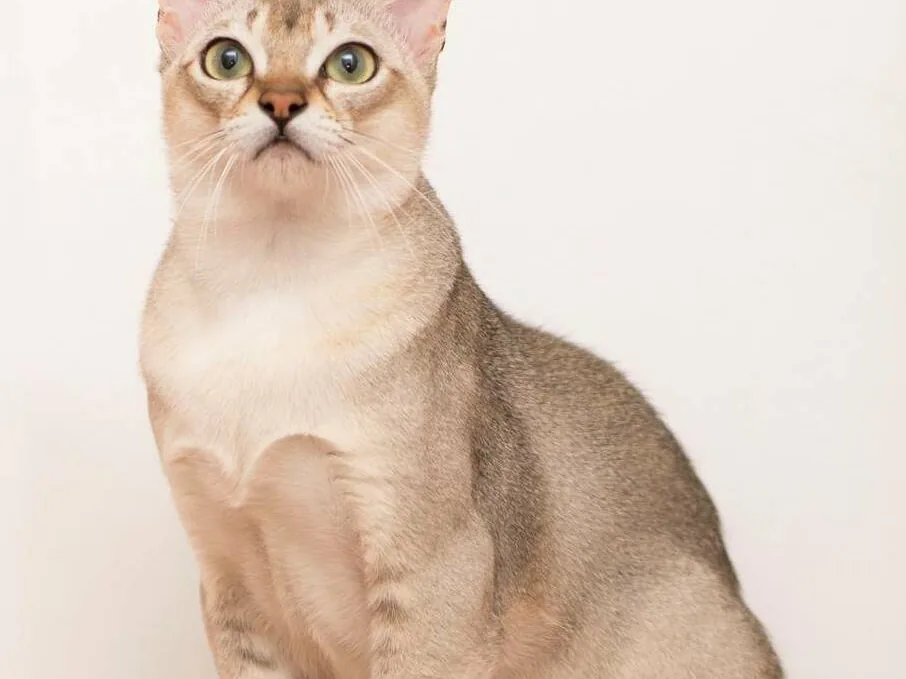
The look is a small, muscular cat with a rounded head, noticeably large eyes and ears, and a short, fine, close-lying coat. Only one colour is allowed: sepia agouti — a warm ivory ground with brown ticking, dark eyeliner and a dark tail tip. The overall effect is a cat that looks permanently alert and slightly surprised.
In the house they are busy, warm and sociable. Singapuras want to be on you, next to you or following you, and they chirp rather than yowl. They are active without being destructive and suit small flats well. The two real cautions are the tiny gene pool and the need for company — a single Singapura in an empty house is a sad one.
Care essentials
- Grooming
- Almost nothing. A weekly rub with a rubber glove or damp cloth removes loose hair; the single coat has little undercoat. Wipe eyes and check ears weekly, brush teeth two or three times a week, and trim claws every two weeks.
- Exercise & play
- High for their size. Two or three short play sessions a day, plus vertical climbing space and puzzle toys. They like height and warmth, so a window perch and a heated bed get used constantly.
- Feeding
- Small stomach, fast metabolism: feed three small measured meals, or use a timed feeder. Because they weigh so little, 500 g of extra weight is proportionally significant — weigh monthly and adjust portions. Wet food helps with water intake.
- Home setup
- Indoor-only; their size makes them vulnerable outdoors. Provide warm sleeping spots, high perches, and either a companion cat or substantial daily human time. Screen windows and block gaps behind appliances, which a cat this small will explore.
Health
- Progressive retinal atrophy (PRA) — late-onset and inherited; a DNA test is available and screening matters
- Uterine inertia and small litters — queens often need veterinary help in labour
- A hereditary myopathy (muscle weakness) has been described in the breed; ask breeders about it
- Pyruvate kinase deficiency and other inherited anaemias reported in related lines
- Very small gene pool — inbreeding depression and reduced immune diversity are real concerns
Ask for PRA DNA results and for the coefficient of inbreeding on the pedigree; a responsible breeder will outcross rather than chase a closed line. Because litters are small, kittens are expensive and waiting lists are normal — anyone with constant availability deserves scrutiny. Have eyes checked by a veterinary ophthalmologist at around one year, since PRA appears late.
Health information here is general and not a substitute for veterinary advice. If your cat shows symptoms, contact a vet.
Frequently asked
Is the Singapura really from Singapore?
The breed's foundation cats were exported from Singapore in the early 1970s and the name is protected there, but the modern breeding programme that fixed the type happened in the United States. Genetic studies have questioned how much local street-cat ancestry remains, suggesting Burmese and Abyssinian influence as well.
How big does a Singapura get?
It is the smallest recognised breed: 4–8 lb (1.8–3.6 kg) as an adult, with females often under 6 lb. They reach full size at around 18 months and stay petite for life.
Do Singapuras get along with other cats?
Yes — they are sociable and usually thrive with a companion. They can be shy with strangers at first but warm up quickly. A second cat is often the easiest way to meet their need for company.
What health problems do Singapuras have?
The main concerns are late-onset progressive retinal atrophy, difficult births with small litters, and a documented hereditary myopathy. The breed's tiny gene pool is the underlying issue, so ask for DNA tests and the inbreeding coefficient.