Oriental Shorthair
东方短毛猫 · Shorthair · United Kingdom
The Oriental Shorthair is a British invention.
Quick facts
- Weight
- 5–10 lb (2.3–4.5 kg)
- Length
- Medium–long; 18–22 in (46–56 cm) nose to tail base
- Lifespan
- 12–15 years
- Typical price
- $400–1,200; show lines cost more
Temperament & lifestyle
About the breed
The Oriental Shorthair is a British invention. In the 1950s and 1960s, UK breeders crossed Siamese cats with domestic shorthairs, Russian Blues, Abyssinians and British Shorthairs to get a cat with the Siamese body and temperament in colours other than the pointed pattern. The GCCF recognised the breed in 1977 and CFA followed the same year, and the gene pool has since widened to more than 300 accepted colour and pattern combinations, including tabbies, torties and solid white.
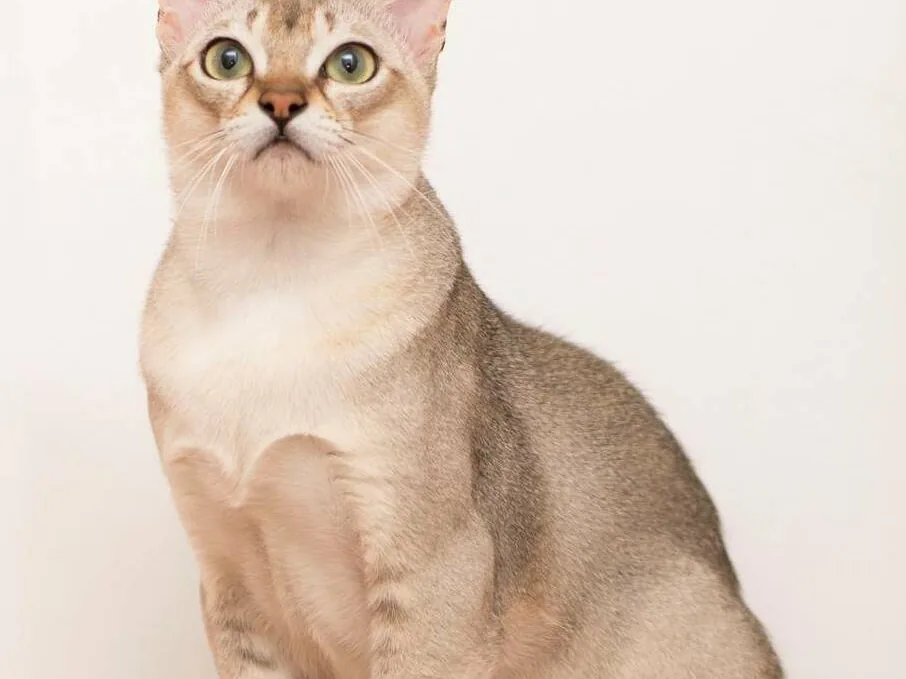
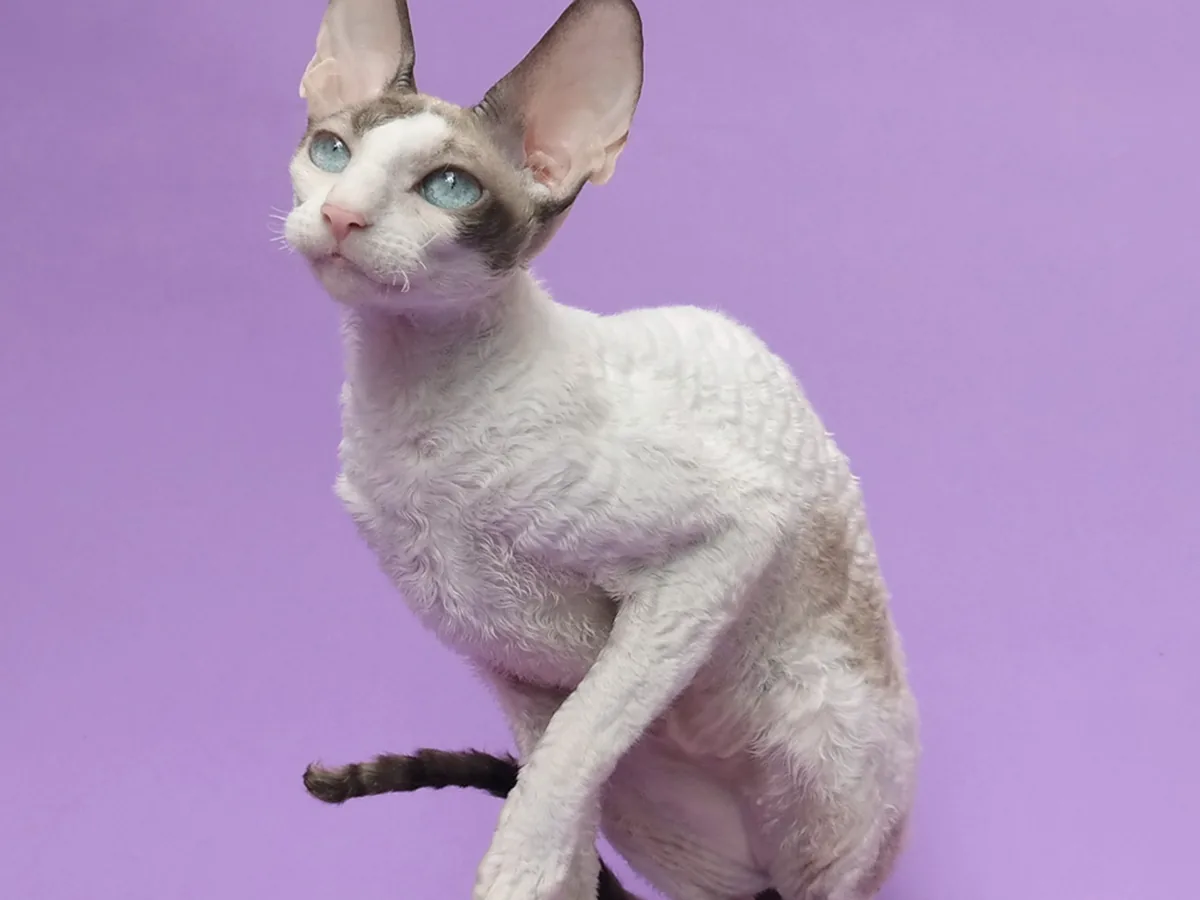
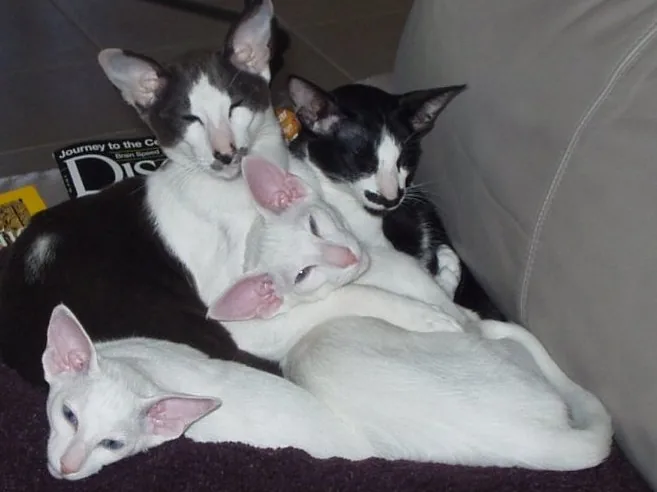
Physically it is the opposite of a cobby cat: a long tubular body, a wedge-shaped head with a straight profile, oversized bat-like ears set low and wide, and almond eyes that sit almost flat in the face. The coat is short, fine and close-lying with almost no undercoat, which makes it cool to the touch and very easy to maintain — a weekly rub with a rubber glove is usually enough.
The personality is intense. Orientals talk constantly in a raspy, carrying voice, follow their people from room to room, and treat shelves, doors and shoulders as furniture to be climbed. They do badly when left alone for long stretches and often bond hard to one person while staying friendly with everyone else. Expect to cat-proof cabinets, and expect a full report when you come home late. This is not a decorative cat; it is a housemate.
Care essentials
- Grooming
- Minimal. The single short coat has almost no undercoat, so a weekly wipe with a damp rubber glove or chamois lifts loose hair. Bathe only when actually dirty — over-bathing dries the skin. Check ears weekly, because the large ear leather collects wax.
- Exercise & play
- High. Two or three focused play sessions a day with wand toys and fetch, plus vertical space (cat trees, wall shelves) to burn energy indoors. A bored Oriental becomes a destructive Oriental.
- Feeding
- Measured portions of complete cat food, split into two or three meals. These cats are naturally slender and can look thin, so judge body condition by feeling ribs and spine rather than by eye. Use puzzle feeders for fast eaters and keep water available.
- Home setup
- Indoor-only or a secure catio — they are escape artists and slip through doors. Provide a companion cat or plenty of daily human time; this is a poor breed for a house that is empty ten hours a day. Keep cabinets and drawers latched.
Health
- Hepatic amyloidosis — a familial protein-storage disease seen in Oriental and Siamese lines; a DNA test exists
- Progressive retinal atrophy (PRA) — inherited; night blindness that progresses to blindness
- Strabismus (crossed eyes) and kinked tails — inherited cosmetic traits, not painful
- Dental disease and gingivitis — common in the breed, so brush teeth and book dental checks
- Lymphoma and other cancers reported at higher rates in Siamese-related breeds
Ask breeders for DNA results on amyloidosis and PRA and for eye certificates on the parents. Because the gene pool was assembled from several breeds, the pedigree matters: the healthiest lines are the ones that screen, not the ones that only win shows. Many of these conditions appear in middle age, so early insurance is worth pricing.
Health information here is general and not a substitute for veterinary advice. If your cat shows symptoms, contact a vet.
Frequently asked
Do Oriental Shorthairs talk a lot?
Yes. They are among the most vocal breeds in the cat fancy — expect a loud, raspy commentary at feeding time, at the door, and whenever they want attention. It is normal behaviour, not distress, but it does carry through apartment walls.
Are Oriental Shorthairs good with children and dogs?
Usually, if the child is old enough to handle a light-boned cat gently and the dog is proven cat-safe. They enjoy company and interactive play, but they will not tolerate rough handling and tend to leave rather than fight back.
How much grooming does an Oriental Shorthair need?
Very little. The short single coat has almost no undercoat, so a weekly rub with a rubber glove or damp cloth is enough. They shed less than double-coated breeds and rarely need bathing.
Can an Oriental Shorthair live in an apartment?
Yes, provided you add vertical space and give two or three play sessions a day, and someone is home most of the time. The bigger problem in a flat is noise and neighbour tolerance, not space.