Himalayan
喜马拉雅猫 · Longhair (Persian division) · United States, 1930s; CFA recognition 1957
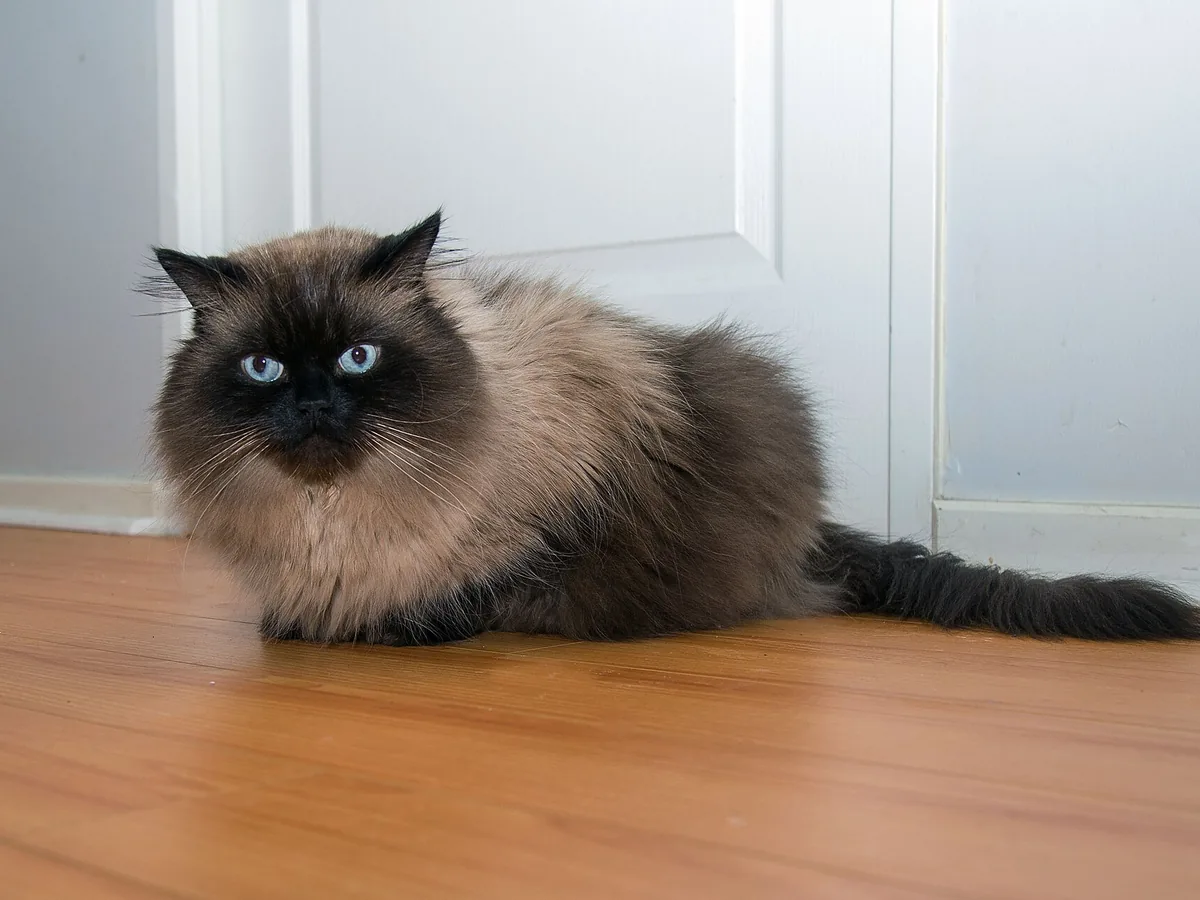
The Himalayan is a pointed Persian: the same cobby body, round head and long, thick coat as a Persian, wearing the Siamese's temperature-sensitive color pattern, which leaves the face, ears, legs and tail darker than the body.
Quick facts
- Weight
- 7–12 lb (3.2–5.4 kg)
- Length
- 14–18 in (36–46 cm) nose to tail base
- Lifespan
- 12–15 years
- Typical price
- $600–$1,500 (US pet quality)
Temperament & lifestyle
About the breed
The Himalayan is a pointed Persian: the same cobby body, round head and long, thick coat as a Persian, wearing the Siamese's temperature-sensitive color pattern, which leaves the face, ears, legs and tail darker than the body. The look was pursued deliberately in the 1930s, when American researchers crossed Persians with Siamese, and the CFA recognized the breed in 1957. Because the early gene pool was narrow, the first Himalayans had serious inbreeding problems; modern breeders outcross to Persians, and the breed is now among the most popular longhairs in the world.
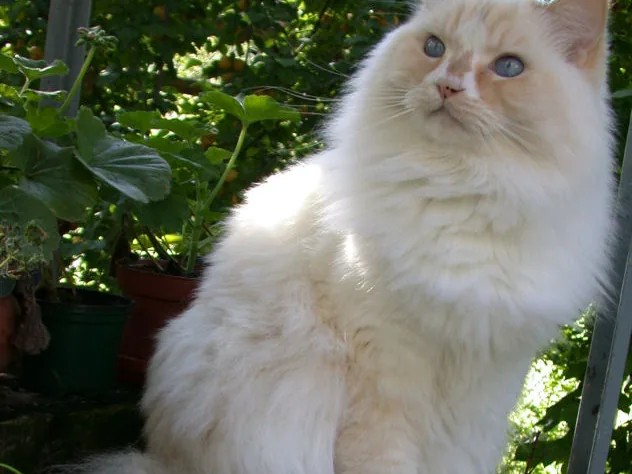
The ideal Himalayan is substantial without being fat — 7 to 12 pounds — with a short, heavy body, a broad round head, small ears set low and wide, and large round blue eyes. Any pointed color is accepted: seal, blue, chocolate, lilac, red, cream, plus the tortie-point and lynx-point versions. The coat is double, dense and long, with a ruff at the neck and a plumed tail. Eye color must be blue; green or copper is a fault.
Temperament is where the Himalayan parts company with its Siamese ancestor. It is quiet, unhurried and extremely people-oriented without being demanding — a cat that follows you from room to room and then settles in your lap rather than announcing itself. It tolerates handling and children well and rarely scratches. The trade-off is maintenance: a daily comb, weekly eye cleaning, and a face that needs wiping because the flat muzzle traps tears against the skin.
Care essentials
- Grooming
- Comb daily with a steel comb — 10 to 15 minutes — paying attention to behind the ears, the armpits and the britches, where mats form within two days of skipping. Bathe every 4–6 weeks with a cat shampoo and dry thoroughly, or the undercoat stays damp and skins over. Wipe the eye area every morning: the flat face blocks tear drainage, so discharge crusts and stains the coat.
- Exercise & play
- Low. Two 10-minute wand-toy sessions a day are enough; Himalayans do not self-exercise and gain weight readily. Food puzzles and scattering kibble work better than a laser pointer, which they lose interest in fast.
- Feeding
- Measured meals twice a day, never free-feeding — this is a sedentary breed and obesity is the most common preventable problem. Roughly 1/2 to 3/4 cup of dry food daily for an average adult, or the wet equivalent. Use a shallow, wide bowl; the short muzzle makes deep bowls awkward and the cat swallows air.
- Home setup
- Indoor only. Keep the home cool in summer — the double coat plus a short airway makes heatstroke a real risk. Provide low-sided litter boxes so an older cat does not have to jump, and avoid homes with many stairs.
Health
- Polycystic kidney disease (PKD) — DNA test available; ask for both parents' results
- Progressive retinal atrophy (PRA) — inherited, can end in blindness
- Brachycephalic airway syndrome — noisy breathing, snoring, poor heat tolerance
- Dental malocclusion and heavy tartar from the shortened muzzle
- Feline lower urinary tract disease, more frequent in overweight indoor cats
PKD is the one to screen for: it is common in Persian-derived lines and cysts can be detected by ultrasound from about ten months. Ask breeders for PKD DNA status on both parents and for an eye certificate. Average lifespan is 12–15 years; keeping the cat lean and cool does more for it than any supplement.
Health information here is general and not a substitute for veterinary advice. If your cat shows symptoms, contact a vet.
Frequently asked
Do Himalayan cats shed a lot?
Yes. The coat is double and long, so loose hair shows up on furniture and clothes year-round, with a heavy shed in spring. Daily combing removes most of it before it lands on the sofa, but no Himalayan is a low-shedding cat.
What is the difference between a Himalayan and a Persian?
Only the color pattern. A Himalayan is a Persian with pointed coloration and blue eyes; the body, head and coat standards are the same, and in most registries Himalayans are shown in the Persian division.
Are Himalayan cats good with children?
Generally yes. They are placid, slow-moving and rarely scratch, which suits calm children. They are not playmates for rough toddlers, and because they are heavy and flat-faced they should not be carried around by the scruff or squeezed.
How much does a Himalayan cat cost?
Expect $600–$1,500 from a US breeder for a pet-quality kitten, and more for a show prospect or a rare point color. Cheap kittens usually mean no PKD testing; the DNA test and an eye certificate are worth the extra money.