Peterbald
彼得秃猫 · Hairless · Russian breed (Oriental type) · Russia (St Petersburg)
The Peterbald has a documented birthday.
Quick facts
- Weight
- 6–14 lb (2.7–6.3 kg)
- Length
- body 16–20 in (41–51 cm), tail 12–15 in
- Lifespan
- 12–15 years
- Typical price
- $1,200–$3,000 in the US; in China ¥10,000–30,000
Temperament & lifestyle
About the breed
The Peterbald has a documented birthday. In the second half of 1994, felinologist Olga Mironova mated a Don Sphynx male called Afinogen Myth to an Oriental Shorthair female, Radma von Jagerhov, in St Petersburg. Four kittens from the first two litters — Mandarin, Muscat, Nezhenka and Nocturne iz Murino — became the entire foundation stock, and the name simply joins the city's nickname to the word bald.
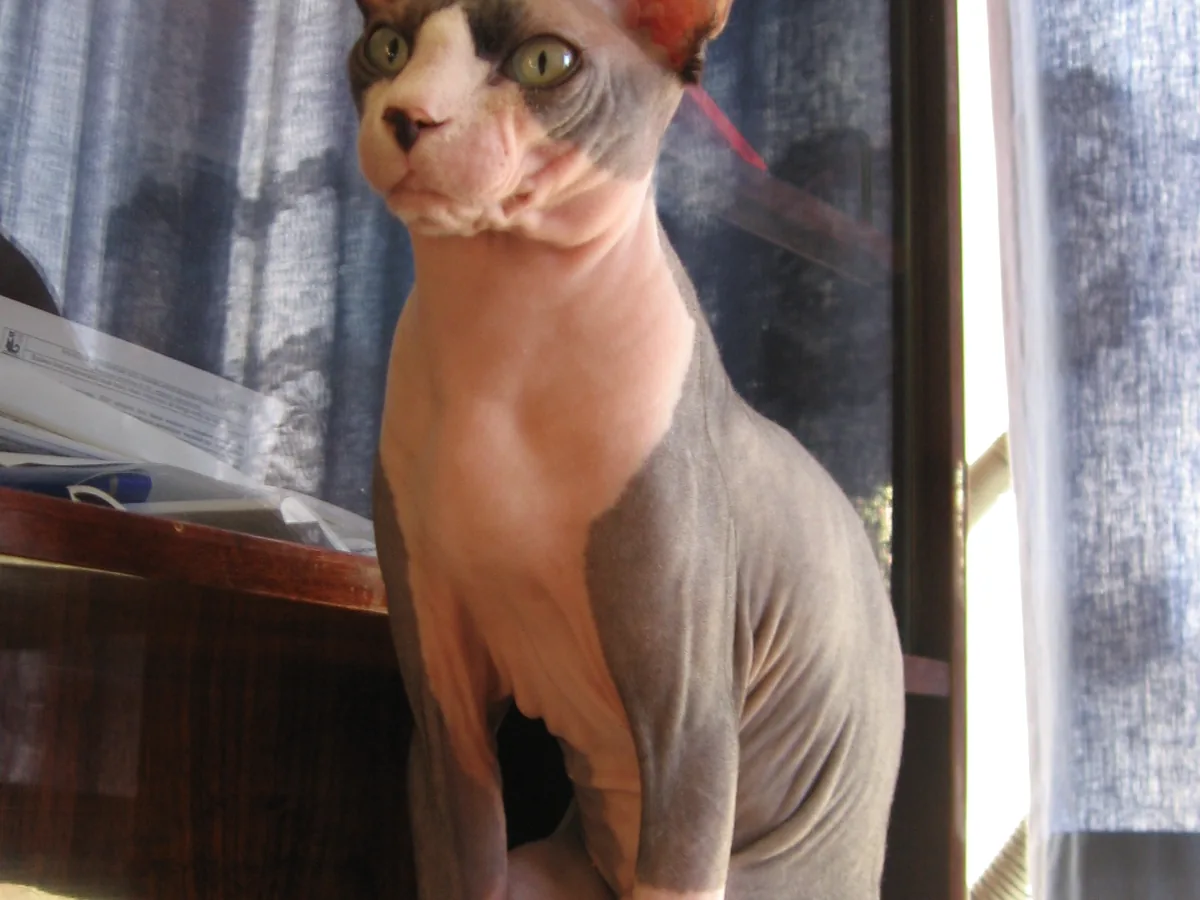
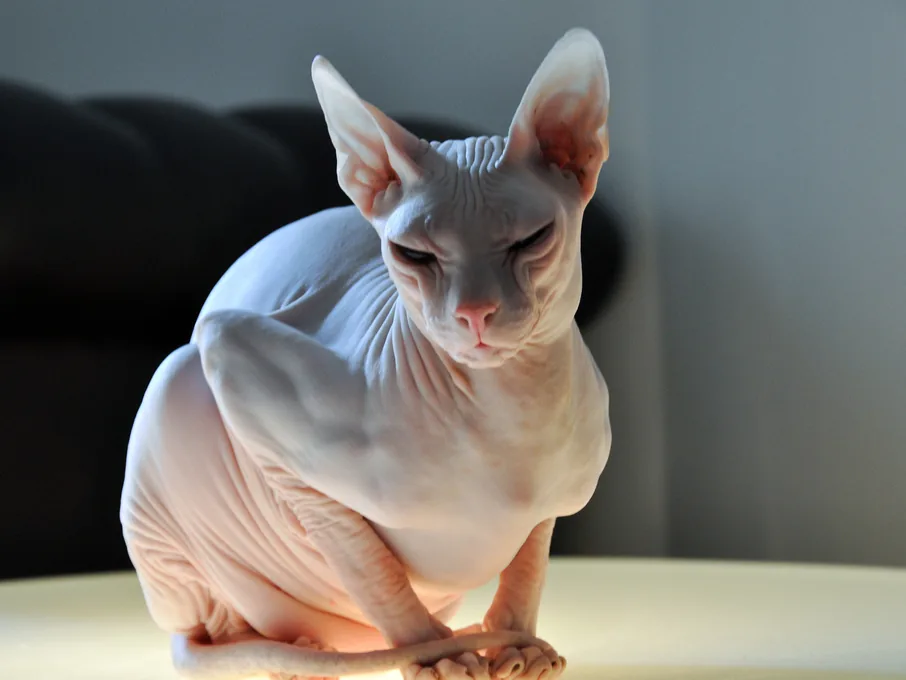
The breed carries the Don Sphynx's dominant hair-losing gene, and one litter can produce five coats: ultra-bald, flock (a fine chamois-like fuzz), velour, brush (wiry and thinning with age), and a fully coated straight coat. Kittens born flocked or velour often shed most of that fuzz within two years. Underneath is a pure Oriental body — long, slim and muscular on high legs, a narrow wedge head, very large low-set ears, almond eyes and a whip tail. Webbed feet with long toes let a Peterbald pick up small objects and hook a lever door handle.
TICA accepted the breed in 1997 and granted championship status in 2009. Because hairlessness itself raises welfare questions, the Netherlands has banned breeding from hairless parent cats since 2014.
Care essentials
- Grooming
- No coat to brush, but more upkeep than it looks: skin oils and brown waxy buildup collect in nail beds, chin and tail base, so a warm wipe-down every week or two and a bath monthly. Clean ears weekly and brush teeth several times a week.
- Exercise & play
- Genuinely active — daily wand play plus a tall cat tree to climb. It is a jumper and a climber, and a bored Peterbald will empty shelves.
- Feeding
- High metabolism from the lack of insulation; most eat more than a coated cat of the same size. Feed measured meals of high-protein food and watch the waistline, since fat is very visible under bare skin.
- Home setup
- Warm, draught-free rooms, soft heated beds and no cold floors in winter. Pale or bald skin burns in direct summer sun, so limit conservatory and balcony time. It wants company and does poorly alone all day.
Health
- Skin problems — oily seborrhoea, chin and tail-base acne, and sunburn on pale or bald skin
- Dental disease, including missing or malformed teeth, which is common in hairless lines
- Cold stress and harder fights with upper respiratory infections; bare skin also tears and grazes more easily
- Hypertrophic cardiomyopathy (HCM) — reported in the breed; echo-screen breeding cats
Hairlessness is a welfare trade-off, not a convenience: the same gene that removes the coat removes the sunblock, the insect barrier and the insulation. In the Netherlands breeding from hairless parents is now illegal on welfare grounds, so ask breeders how they justify it and what they screen for. Insist on a cardiology echo on the parents and a written health record; check teeth at every vet visit, and keep the cat indoors.
Health information here is general and not a substitute for veterinary advice. If your cat shows symptoms, contact a vet.
Frequently asked
Is a Peterbald the same as a Sphynx?
No. Both are hairless, but the Peterbald is half Oriental Shorthair and reads as a slim, high-legged cat with a long wedge head and huge ears, while the Sphynx is cobbier with a rounded head and a pear-shaped body. The Peterbald's gene also comes from the Russian Don Sphynx, not the Canadian Sphynx.
Will a Peterbald kitten grow hair later?
Sometimes, in both directions. Kittens born flocked or velour often lose most of that fuzz by two years old, while brush-coated cats keep a wiry, sparse coat for life. A breeder can usually tell you which coat type a kitten is heading for by eight to ten weeks.
How much grooming does bare skin need?
More than most people expect. Oils and waxy brown residue collect in the nail beds, chin crease and tail base, so wipe the cat down every week or two and bath monthly. Ears need weekly cleaning and teeth several brushes a week, because dental disease is common in the breed.