Sphynx
斯芬克斯无毛猫 · Hairless (natural rex mutation) · Canada (Toronto, 1966)
The Sphynx is not truly hairless.
Quick facts
- Weight
- 3.0–5.5 kg (6.5–12 lb)
- Length
- Body 35–45 cm (14–18 in), tail 30–35 cm
- Lifespan
- 9–15 years
- Typical price
- $1,200–$3,500
Temperament & lifestyle
About the breed
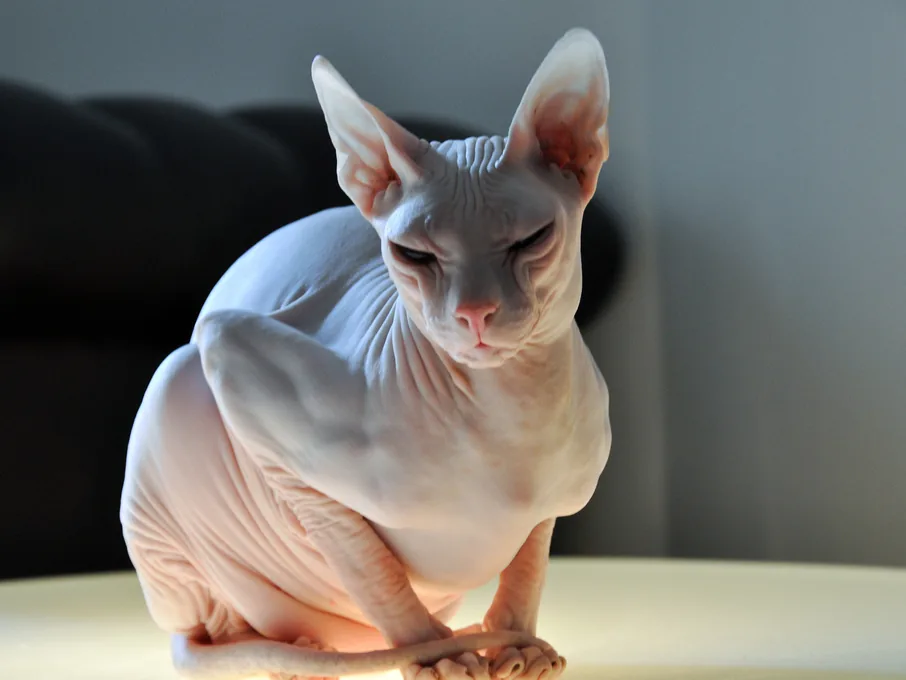
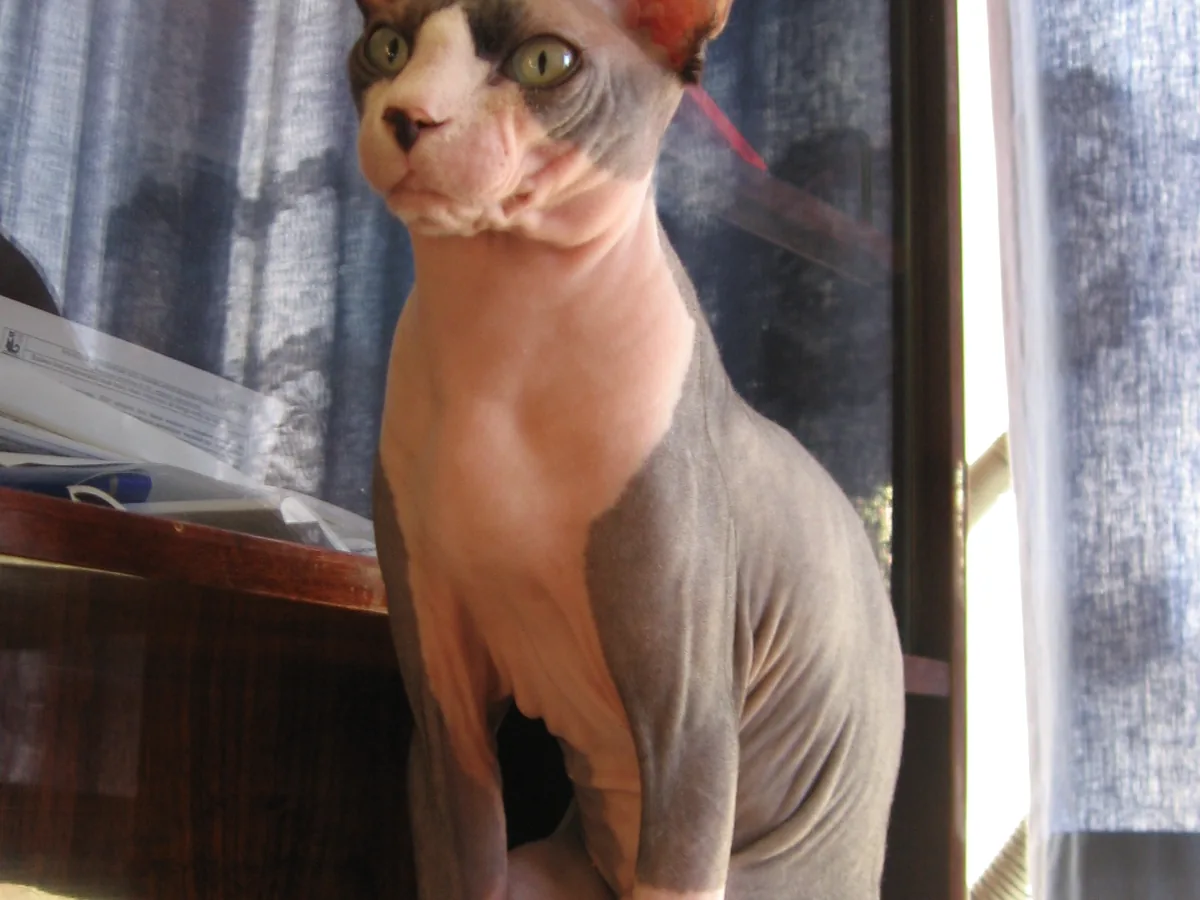
The Sphynx is not truly hairless. It carries a natural recessive mutation — the same family of change seen in the Devon and Cornish Rex — that leaves a fine down on the body, like suede or a warm peach. The founding litter appeared in Toronto in 1966, and the breed was built from that line plus controlled outcrosses to Devon Rex and domestic shorthairs. The skin is wrinkled, especially on the shoulders and head, and the body is muscular and slightly barrel-chested. To the touch a Sphynx feels warmer than a coated cat, simply because there is no fur holding a layer of air.
That missing insulation defines the care. Sphynx cats lose heat fast, hunt warm spots — laps, laptops, radiators, other cats — and need a sweater in a cool house. Their skin produces the oils that fur would normally wick away, so they need a bath every one to two weeks and ears cleaned weekly; skip it and you get greasy flanks, brown waxy ears and stains on bedding. They also sunburn and should never be left in direct summer sun or taken outside unprotected.
Temperament is the trade-off that wins people over. Sphynx cats are extroverted, clingy and almost dog-like: they greet visitors, follow their owner into the bathroom, sleep under the covers and complain loudly when a door is closed. They are poor candidates for long workdays alone, and they do best with a second cat or a home where someone is usually around.
Care essentials
- Grooming
- Bathe every 1–2 weeks with a gentle pet shampoo, focusing on skin folds, then dry completely. Clean ears weekly — the waxy build-up is heavier than in coated cats. Wipe between toes and under the chin; trim nails every 2 weeks. Wash bedding often, since oil transfers to fabric.
- Exercise & play
- Three or four short play sessions a day; they are sprinters rather than endurance athletes. Heat pads and vertical warm spots keep them active in winter. A companion cat is strongly recommended.
- Feeding
- Higher calorie needs than a coated cat of the same size, because body heat is lost constantly. Feed measured meals of high-protein food and weigh monthly. Shallow bowls; keep water available, as skin and kidney health depend on intake.
- Home setup
- Keep the home at 22–24 °C, provide heated beds and sweaters, and block off cold draughts and hot radiators that can burn skin. No unsupervised outdoor access: sunburn, cold and skin injuries are all real risks.
Health
- Hypertrophic cardiomyopathy (HCM) — the breed's most serious concern
- Greasy skin, yeast overgrowth and bacterial dermatitis in skin folds
- Sunburn and skin damage from heat sources
- Dental disease and gingivitis, often early
- Hereditary myopathy (a muscle weakness seen in the breed)
HCM prevalence is high enough that annual echocardiograms from age one are reasonable, and breeding cats should be screened. Sphynx need a warmer anaesthetic environment and lose heat fast under surgery — tell your vet the breed before any procedure.
Health information here is general and not a substitute for veterinary advice. If your cat shows symptoms, contact a vet.
Frequently asked
Do Sphynx cats need baths?
Yes, every one to two weeks. Without fur to absorb skin oils they build up quickly, and the result is greasy skin, blocked pores and brown waxy ears. Use a gentle shampoo and dry thoroughly.
Are Sphynx cats hypoallergenic?
No. They have no coat to trap dander, but the allergen is in saliva and skin, and they spread it directly onto furniture and people. Some allergy sufferers react worse, not better.
Can Sphynx cats go outside?
Only supervised, in mild weather and with protection. Their skin burns in direct sun and they lose body heat fast, so a harness walk on a warm cloudy day is the limit.
Do Sphynx cats get cold easily?
Yes. They seek laps, laptops and radiators, sleep under duvets, and are visibly uncomfortable below about 20 °C. Most owners keep sweaters and a heated bed.