Donskoy
顿斯科伊无毛猫 · Hairless · dominant mutation (Russia) · Russia
In 1987 Elena Kovaleva rescued a blue tortoiseshell kitten in Rostov-on-Don and named her Varvara.
Quick facts
- Weight
- 7–13 lb (3–6 kg)
- Length
- Body 14–17 in (36–43 cm), tail 10–12 in
- Lifespan
- 12–15+ years
- Typical price
- $1,200–$3,000; in Russia and Ukraine typically $600–1,500
Temperament & lifestyle
About the breed
In 1987 Elena Kovaleva rescued a blue tortoiseshell kitten in Rostov-on-Don and named her Varvara. At about four months the kitten began to lose her coat, and when she was later bred to a local tom, some kittens were born bald while others grew fur and shed it the same way. That litter is the entire foundation of the Donskoy — which is why its hairlessness is a dominant mutation, a different gene from the recessive one behind the Sphynx. The WCF recognised the breed first and TICA followed in 2005; the Peterbald was originally created by crossing a Donskoy with Oriental Shorthairs, and the two are no longer interbred.
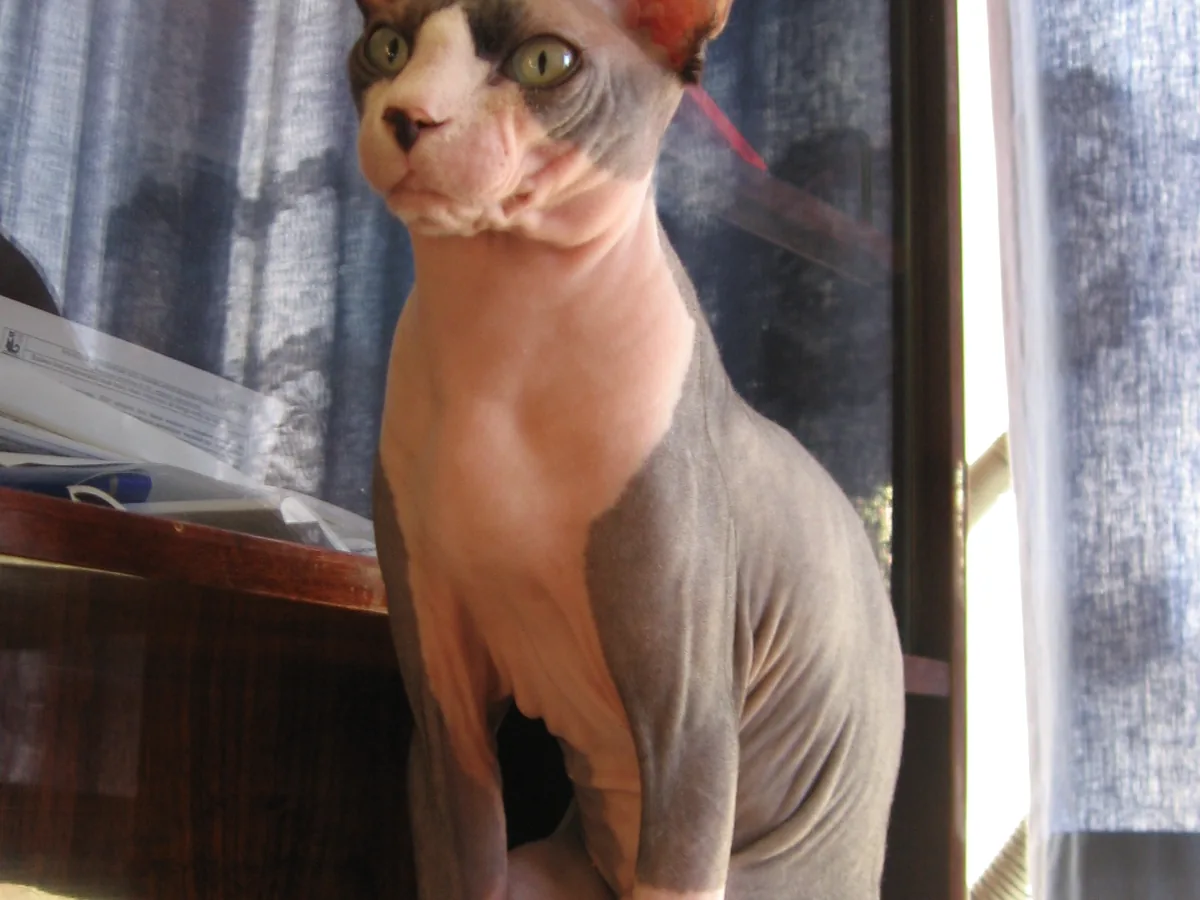
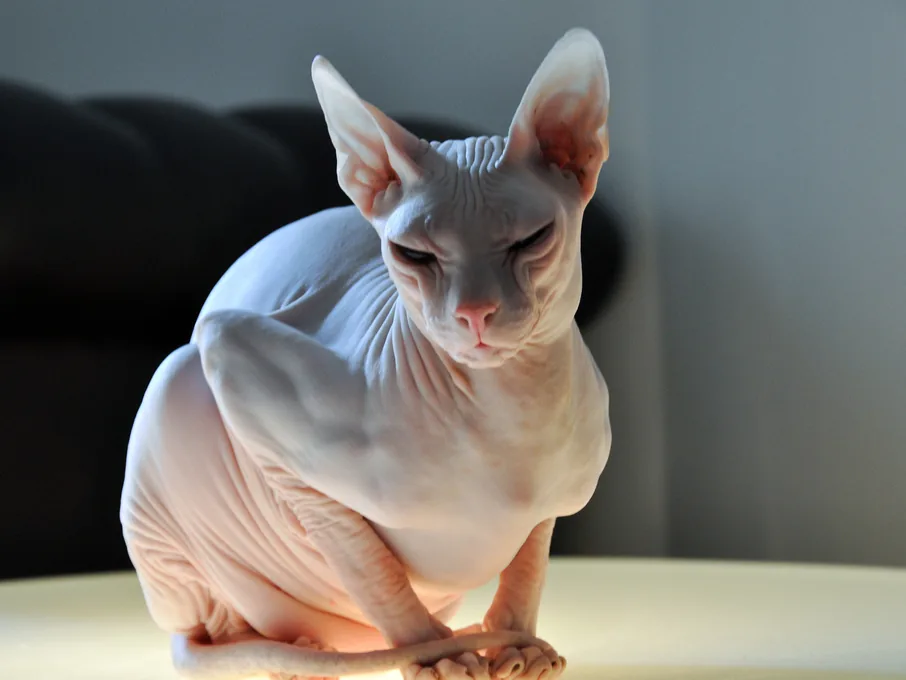
Donskoys come in four coats: rubber bald, flock, velour and brush, the last two often keeping fuzz on the face, legs and tail. The skin is wrinkled, warm and chamois-like, and the body is medium, muscular and heavier than its outline suggests. Adults are 3–6 kg.
The personality is intense and social. This is a cat that wants to be on you, in the conversation and at the centre of whatever is happening; it learns tricks, greets visitors, and does badly when left alone for long days. Expect weekly bathing, and a heated bed on standby in winter.
Care essentials
- Grooming
- Bathe every one to two weeks with a gentle cat shampoo, dry the wrinkles thoroughly, and clean the ears and nail folds. Over-bathing strips the skin barrier and makes the grease worse, so do not overdo it. Wash bedding often.
- Exercise & play
- High — these are busy, climbing cats. Twenty minutes of active play plus puzzle feeders daily; many will also walk on a harness.
- Feeding
- Hairless cats run hot and burn more calories, so expect roughly a tenth to a fifth more food than a coated cat of the same weight. Judge by body condition and ribs, not by how much the bowl holds.
- Home setup
- Warmth is non-negotiable: heated beds, blankets, no cold floors or draughts. They also need company — this breed does poorly alone and will follow one person everywhere.
Health
- Periodontal disease and tooth loss — hairless cats accumulate plaque fast; daily brushing is realistic and worth it
- Seborrhoea and skin-fold dermatitis — oily skin, blackheads and cysts in the wrinkles; weekly bathing and thorough drying
- Hypertrophic cardiomyopathy — reported in the breed; echo-screen breeding cats
- Sunburn and chilling — thin skin and no coat make both a genuine risk on sunny windowsills and in cold rooms
Ask breeders for heart echoes on both parents and for the cat's dental history; both problems are common enough that a breeder should have an answer ready. The breed descends from a single cat found in 1987, so diversity is limited and some registries run documented outcross programmes — worth asking about.
Health information here is general and not a substitute for veterinary advice. If your cat shows symptoms, contact a vet.
Frequently asked
Is a Donskoy the same as a Sphynx?
No. Both are hairless, but the Donskoy's coat loss comes from a dominant mutation found in Rostov-on-Don in 1987, while the Sphynx's is recessive. That difference matters in breeding: the two breeds are managed separately and are no longer crossed.
How often do Donskoys need bathing?
Every one to two weeks, with a gentle shampoo and thorough drying of every wrinkle. Their skin produces oils that have nowhere to go, and over-bathing strips the barrier and makes the grease worse.
Do they cope with cold climates?
Poorly without help. They have no coat and run hot, so they seek heat constantly; heated beds, blankets and draught-free rooms are necessary, and outdoor access in winter is not sensible.