Kurilian Bobtail
千岛短尾猫 · Short/semi-long hair · natural island breed (Russia) · Russia (Kuril Islands, Sakhalin, Kamchatka)
The Kurilian Bobtail comes from the Kuril archipelago, Sakhalin and Kamchatka, where short-tailed cats have been recorded for at least two hundred years.
Quick facts
- Weight
- 9–15 lb (4–7 kg); males heavier
- Length
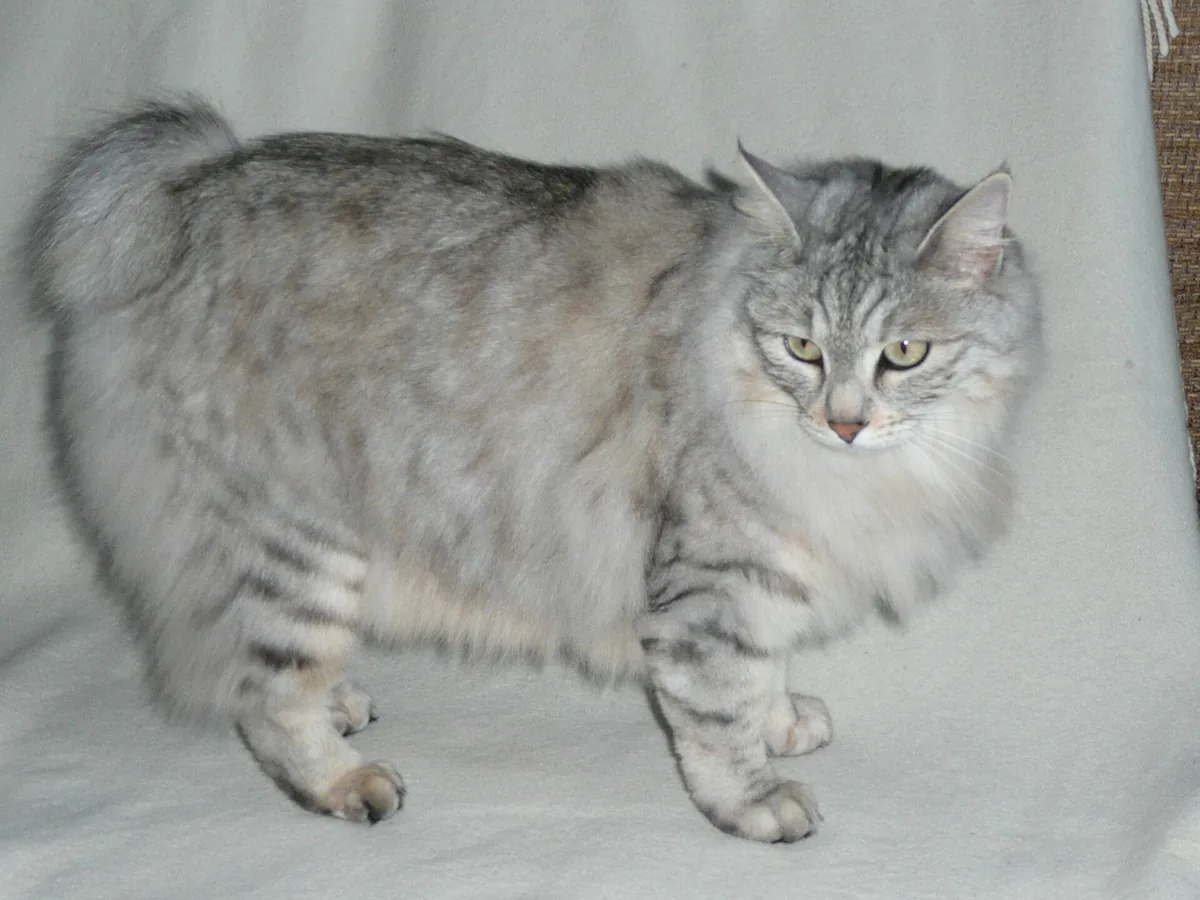
- Body 18–22 in (46–56 cm), pom-pom tail only 2–5 in (5–13 cm)
- Lifespan
- 15–20 years
- Typical price
- $900–$2,500 in the US; €700–1,500 in Europe
Temperament & lifestyle
About the breed
The Kurilian Bobtail comes from the Kuril archipelago, Sakhalin and Kamchatka, where short-tailed cats have been recorded for at least two hundred years. Island populations with limited gene pools tend to fix whatever mutation appears, and a kinked, pom-pom tail did exactly that — independently of the Manx and the Japanese Bobtail, which arose the same way on islands at opposite ends of Eurasia. Russian sailors and settlers valued these cats as rodent hunters, and they were ordinary household animals in the Soviet Union long before any registry noticed them; WCF recognised the breed in 1994, with FIFe and TICA following.
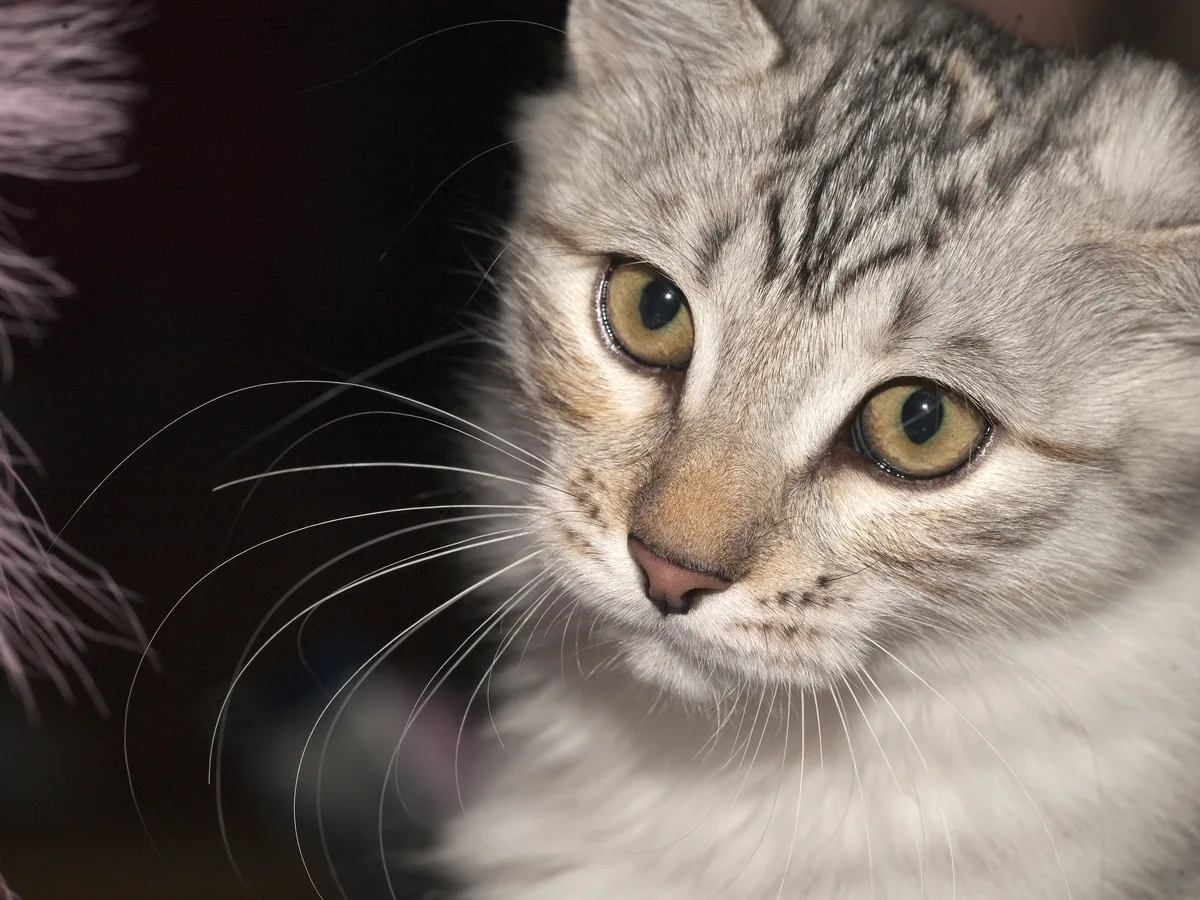
The tail is the signature and no two are alike: two to ten vertebrae, curled, kinked or spiral, carried like a fluffy pom-pom. The body is semi-cobby and muscular with hind legs longer than the front, a slightly arched back and unusual jumping power. All colours except colourpoint are accepted, in short- and semi-long-haired varieties.
These are working cats that never quite retired. They fish, they play in water, they solve puzzle feeders in seconds and they hunt with real intent — yet the wild look is not matched by the temperament, which is calm and gentle. Litters run two or three kittens, which is much of why the breed stays rare and costly outside Russia.
Care essentials
- Grooming
- The double coat needs a comb twice a week, daily in the spring moult; semi-longhairs also need the tail pom-pom and britches checked for knots. The short coat is nearly self-maintaining.
- Exercise & play
- Moderate but genuine: fifteen minutes of stalk-and-pounce play plus something to climb. It enjoys water play and puzzle toys more than sprinting, and will happily supervise a garden from a window.
- Feeding
- Large frame, efficient metabolism, and a habit of begging: 5–7 oz wet or 1/2–2/3 cup dry daily in two meals. Watch males after neutering — they bulk up on the shoulders and ribs first.
- Home setup
- Adaptable to flats if given height and a scratching post it can stretch on. It likes a routine, a warm perch and access to water to play in; a second cat suits it, and it tolerates children who are not rough.
Health
- Hypertrophic cardiomyopathy (HCM) — reported in forest-type breeds; echo screening is advised for breeding cats
- Obesity — a big, calm, food-motivated cat that gains weight easily indoors
- Dental disease — tartar and gingivitis are common from middle age
- Spinal defects linked to short tails have not been reported as in the Manx, because the Kurilian tail is kinked rather than absent
The breed has no well-documented breed-specific epidemic, which is unusual and worth protecting: ask about HCM echo results on the parents, keep the cat lean, and book a dental check yearly. Because the tail is deformed rather than missing, sacrocaudal syndrome has not been an issue, but any kitten with incontinence or a weak hind end should still be examined.
Health information here is general and not a substitute for veterinary advice. If your cat shows symptoms, contact a vet.
Frequently asked
Is the Kurilian Bobtail related to the Japanese Bobtail?
Probably not closely, despite the similar tail. The Japanese Bobtail is lean and angular and arose in Japan; the Kurilian is semi-cobby and comes from islands at the opposite end of Eurasia. Genetic work is ongoing, and the current view is that the Kurilian's bobbed tail is a separate island mutation, possibly with some old Siberian ancestry in the mix.
Do they really like water?
Many do. The island founders hunted fish in shallow water, and modern Kurilians paw at taps, dunk toys and will climb into a shower. It is play, not swimming, but it makes a water bowl with a lid or a fountain a practical purchase.
How does the tail affect health?
Less than you would expect. Unlike the Manx, where taillessness can come with spinal and incontinence problems, the Kurilian keeps a short kinked tail of two to ten vertebrae and sacrocaudal defects have not been a breed issue. No two tails are shaped alike, which is also why judges accept a wide variety.
Care and health guides
Similar breeds
All breeds →