Minuet
米努特猫 · Short-legged hybrid · Munchkin × Persian group (TICA only) · United States
The Minuet began with a newspaper article.
Quick facts
- Weight
- 5–9 lb (2.3–4 kg)
- Length
- Body 12–15 in (30–38 cm) on 2–3 in legs, tail 9–11 in (24–28 cm)
- Lifespan
- 12–15 years
- Typical price
- $1,200–$3,000 in the US
Temperament & lifestyle
About the breed
The Minuet began with a newspaper article. In June 1995 Joe Smith, a longtime Basset Hound breeder, read about the Munchkin and wanted the same short-legged substance in a cat that looked pedigree in both its short- and long-legged versions — because the dwarf gene is not fully dominant, roughly half of every Munchkin litter is long-legged and indistinguishable from a domestic cat. He bought a Munchkin kitten in February 1996, took a Persian breeder's advice, and added Persian-group blood (Persian, Himalayan, Exotic); the first litter arrived late in 1997. TICA registered the breed as Napoleon, renamed it Minuet in 2015, and granted full championship in 2016.
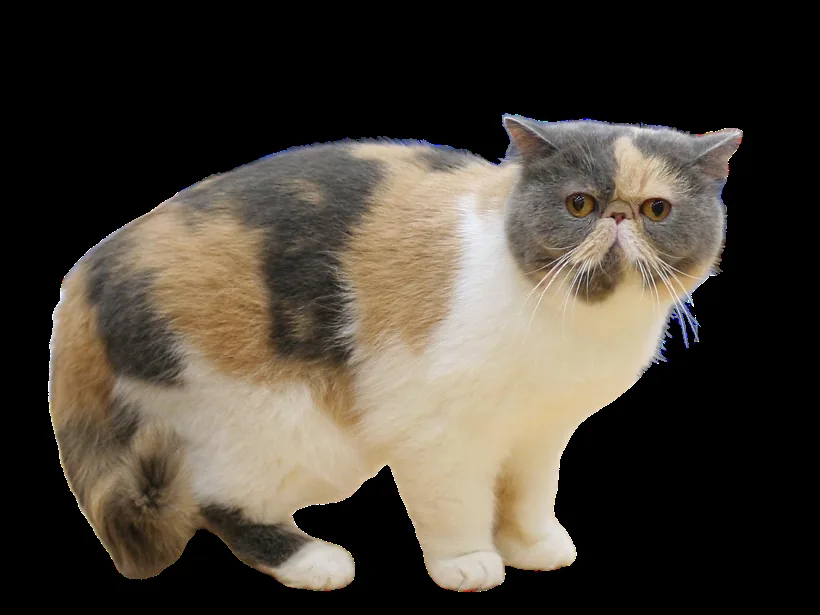
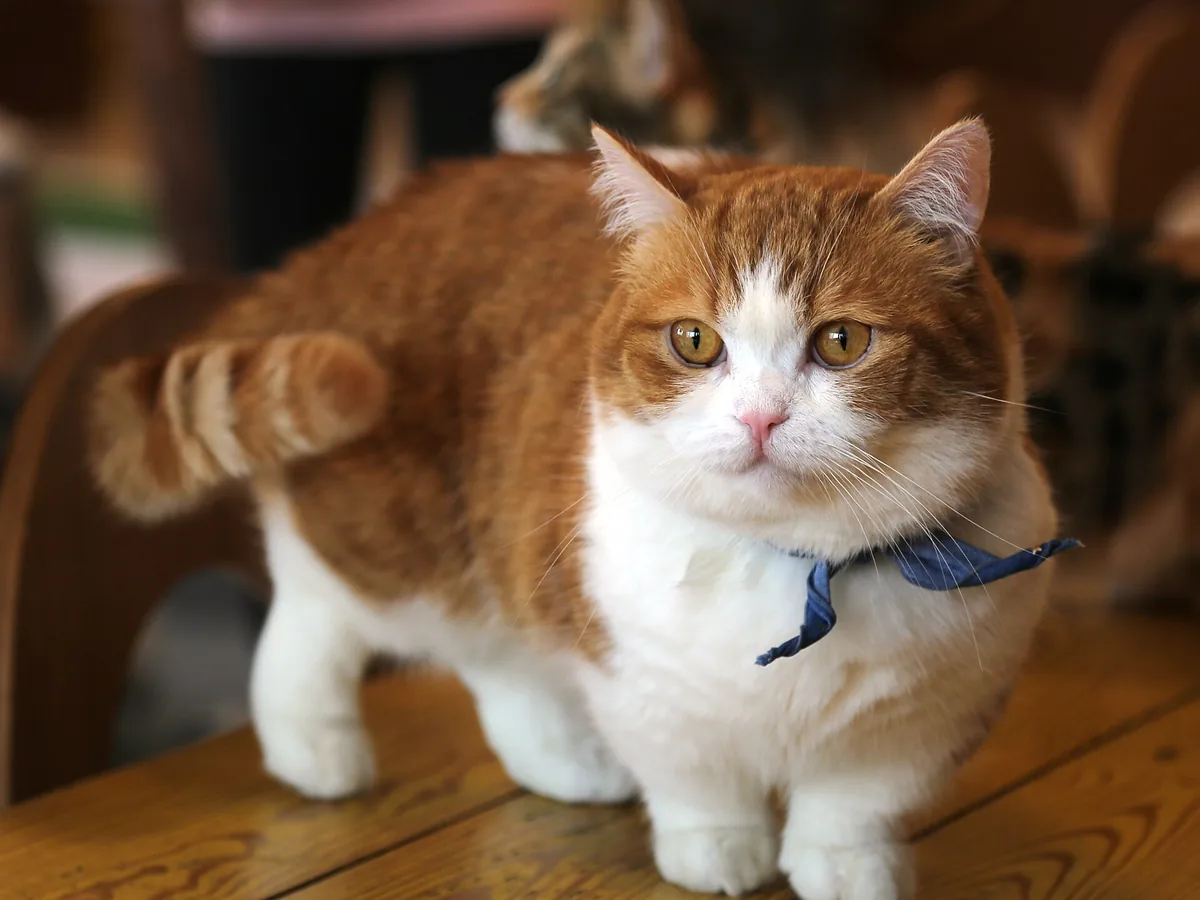
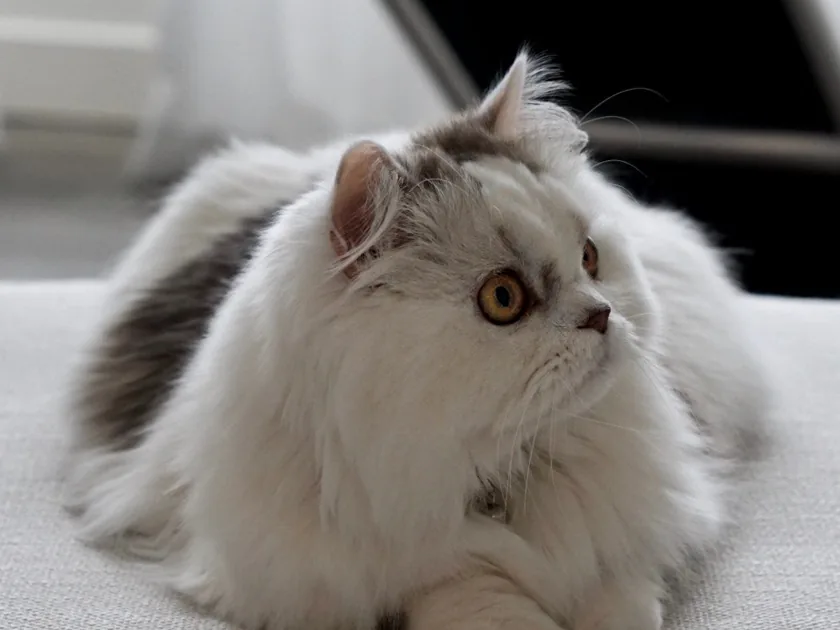
The result is a round, sweet-faced cat on very short, thick-boned legs, in long- and short-haired varieties, plus "talls" that carry the long-legged version of the same pedigree. TICA is the only major registry that accepts it: CFA, FIFe, GCCF and WCF all refuse on welfare grounds, and breeding is banned by law in Victoria, Australia.
The dwarfism brings real risks — lordosis, pectus excavatum, spinal arthritis — and the Persian inheritance adds PKD, HCM and dental disease. This is a breed to buy only from a breeder who screens and shows the paperwork.
Care essentials
- Grooming
- Longhairs need a comb every other day, with attention to the belly, armpits and behind the ears; shorthairs once a week. Wipe the face daily in flat-faced lines, and check under the tail for soiling — short legs make hygiene harder.
- Exercise & play
- Ten to fifteen minutes of floor-level play twice a day, plus ramps rather than high jumps. Keep the weight down: every extra gram loads the shortened legs and the spine.
- Feeding
- Small portions, measured: 1/3–1/2 cup dry or 4–5 oz wet daily, split into three small meals. Low activity plus a stocky build makes obesity the single most damaging and most preventable problem.
- Home setup
- No high furniture, no stairs if avoidable, and ramps or steps to the sofa and bed. Soft bedding, a low-sided litter box and warmth matter; this cat should not be jumping off counters, and it should not be left with rough children.
Health
- Lordosis — an exaggerated inward curve of the spine, seen in short-legged lines; can compress the spinal cord
- Pectus excavatum — a concave chest that can crowd the heart and lungs in severe cases
- Spinal osteoarthritis and disc disease — the cost of a long back on short legs
- Polycystic kidney disease (PKD) — inherited from the Persian side; DNA test and ultrasound available
- Hypertrophic cardiomyopathy (HCM) — Persian-group inheritance; screen breeding cats
The dwarf mutation is lethal in homozygous embryos, so every short-legged Minuet carries one copy and roughly a quarter of conceptuses are lost. Ask for PKD DNA status, HCM echoes and spinal X-rays on the parents, and see both parents move. Registries that refuse the breed cite exactly these risks, so a breeder who dismisses them is a reason to walk away.
Health information here is general and not a substitute for veterinary advice. If your cat shows symptoms, contact a vet.
Frequently asked
Is the Minuet the same as the Napoleon?
Yes — Napoleon was the original name, chosen for the short-leg association. TICA voted to change it to Minuet in January 2015, partly because the Napoleonic reference was seen as undignified and partly to give the breed its own identity. The Rare and Exotic Feline Registry still uses Napoleon.
Why do other registries refuse to recognise the Minuet?
Because of the dwarfism. CFA, FIFe, GCCF and WCF do not register Munchkin-derived breeds, citing lordosis, pectus excavatum and spinal disease; FIFe and GCCF ban Munchkins outright, and Victoria, Australia, prohibits breeding them by law. TICA is the only major registry with a Minuet standard.
Can a Minuet live a normal life?
Most do, with management: ramps instead of jumps, strict weight control, and early screening for spine, kidney and heart problems. The breed's own founders describe them as active and able to climb; the limits are the spine and the chest, so keep furniture low and have any reluctance to move examined promptly.