Exotic Shorthair
异国短毛猫 · Shorthaired (Persian type) · United States (1960s)
The Exotic Shorthair was built in the United States in the 1960s by crossing Persians with American Shorthairs, with Burmese and Russian Blue in some lines.
Quick facts
- Weight
- 3.2-6 kg (7-13 lb)
- Length
- Cobby and low-slung, about 40-45 cm nose to tail base
- Lifespan
- 10-15 years
- Typical price
- USD 1,000-2,500, flat-faced (peke-face) kittens at the top
Temperament & lifestyle
About the breed
The Exotic Shorthair was built in the United States in the 1960s by crossing Persians with American Shorthairs, with Burmese and Russian Blue in some lines. The aim was a Persian face on a shorter, easier coat. Persian breeders who had used shorthairs to improve body type liked the result, and CFA recognised the breed in 1967, first as the Sterling before settling on Exotic Shorthair.
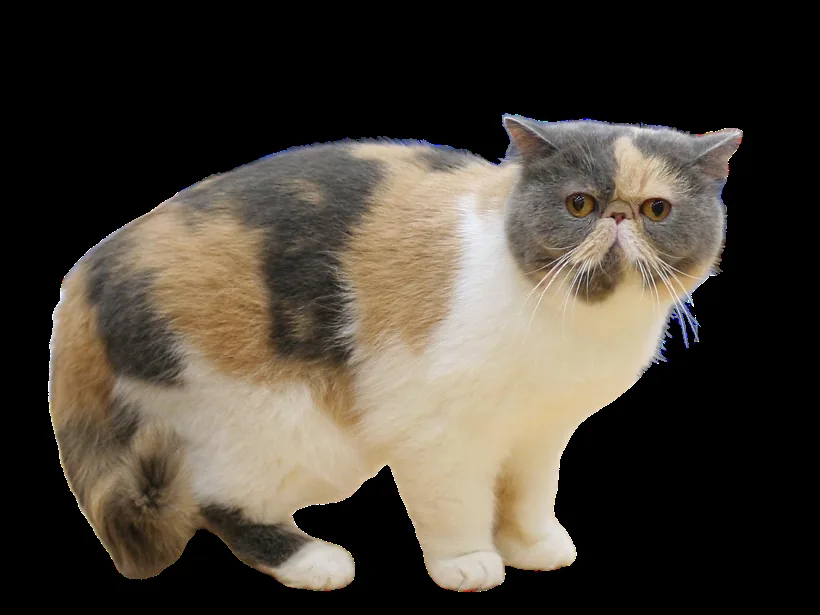
The result is a cobby, low-slung cat with a round head, small ears set wide and low, a flat profile and large round eyes. Weight runs 3.2-6 kg, heavier than it looks because the body is dense and the coat thick. The coat is short but double-layered and plush, far denser than an American Shorthair's, which is why it still tangles behind the ears, under the front legs and around the ruff if it is skipped for a week.
The breed is a compromise: less coat work than a Persian - ten minutes of combing three or four times a week plus a bath every few weeks - but the same flat face and the same consequences. Tear ducts drain poorly, so the eyes run and stain; nostrils may be pinched; teeth are crowded in a short jaw. Exotics are quiet, placid and unusually tolerant, good with children and other animals, and happiest in a calm home with a warm windowsill rather than a busy one.
Care essentials
- Grooming
- Comb three or four times a week with a steel comb, working the ruff, armpits and behind the ears where the coat mats. Bathe every 3-4 weeks and dry thoroughly, especially in skin folds. Wipe the eyes daily with a soft damp pad - tear staining is constant - and clean the facial fold and nose crease with a vet-approved wipe.
- Exercise & play
- Low. Ten to fifteen minutes of gentle play a day plus a scratching post is usually enough; encourage movement with a wand toy at floor level and food puzzles rather than expecting it to run.
- Feeding
- Easy to overfeed - these cats are inactive and food-motivated. Measure portions, use wet food for water intake, and weigh monthly. Flat-faced cats eat slowly and gulp air; a shallow, wide bowl helps.
- Home setup
- Cool, calm and quiet. Flat faces overheat and struggle in humid weather, so keep the room ventilated and avoid hot afternoons by a window. Low furniture, rugs and soft beds suit a cat that does not jump well.
Health
- Brachycephalic airway syndrome - pinched nostrils, elongated soft palate and noisy, laboured breathing; worse in heat and stress
- Polycystic kidney disease (PKD) - inherited; a PKD1 DNA test lets breeders screen it out
- Epiphora, tear staining and eye infections from blocked tear ducts; corneal ulcers in bulging eyes
- Dental crowding, malocclusion and heavy tartar in a short jaw
- Dystocia - large-headed kittens frequently require caesarean section
Ask for PKD1 and PRA-rdAc (progressive retinal atrophy) DNA results plus current kidney values. Never buy a kitten that breathes with its mouth open or snores loudly at rest. Keep the face and eyes clean daily, weigh monthly, and have a vet check the airway before summer.
Health information here is general and not a substitute for veterinary advice. If your cat shows symptoms, contact a vet.
Frequently asked
Do Exotic Shorthairs have breathing problems?
Many do, to some degree. The flat face means narrow nostrils and a long soft palate, so you may hear snoring, snorting or noisy breathing, especially in heat. Severe cases need surgery; ask to see the parents breathing at rest before buying.
How often should I brush an Exotic Shorthair?
Three or four times a week with a steel comb, ten minutes a session, focusing on the ruff, armpits and behind the ears. Despite the short coat it is dense and mats quickly. Add a bath every three to four weeks.
Are Exotic Shorthairs lazy?
They are low-energy rather than lazy - happy to sleep 16 hours a day and play in short bursts. That makes them good flat cats, but it also means you must control portions, because they gain weight easily.
Do Exotic Shorthairs get along with dogs?
Usually yes, with calm dogs. They are tolerant and rarely start conflict, but they cannot outrun a boisterous puppy and their eyes and flat face are vulnerable. Introductions should be slow and supervised.