Mekong Bobtail
湄公短尾猫 · Shorthair · pointed bobtail (Southeast Asia) · Thailand / Southeast Asia (standardised in Russia)
The Mekong Bobtail is the pointed, kinked-tail cat of Southeast Asia, shown in the West for most of the last century as the Thai Bobtail and renamed in 2004 after the river running through its homeland.
Quick facts
- Weight
- 8–10 lb (3.6–4.5 kg)
- Length
- Body 15–18 in (38–45 cm); tail under a quarter of body length, 3+ vertebrae
- Lifespan
- 15–18 years
- Typical price
- $700–1,600 where available; cheapest in Russia, seldom exported
Temperament & lifestyle
About the breed
The Mekong Bobtail is the pointed, kinked-tail cat of Southeast Asia, shown in the West for most of the last century as the Thai Bobtail and renamed in 2004 after the river running through its homeland. Siamese royal cats with short, kinked tails are said to have reached the Russian court as gifts from King Chulalongkorn to Tsar Nicholas II, and Russian breeders built the modern breed from those cats and later imports. O. S. Mironova wrote the standard in 1994; the World Cat Federation recognised the breed in August 2004 and changed its name at the same time.
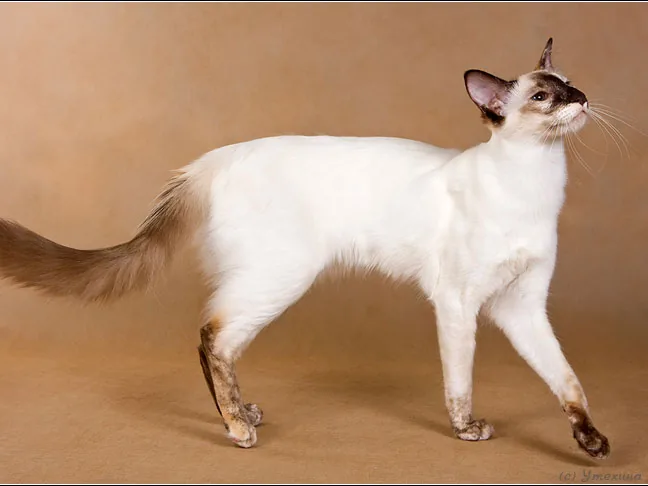
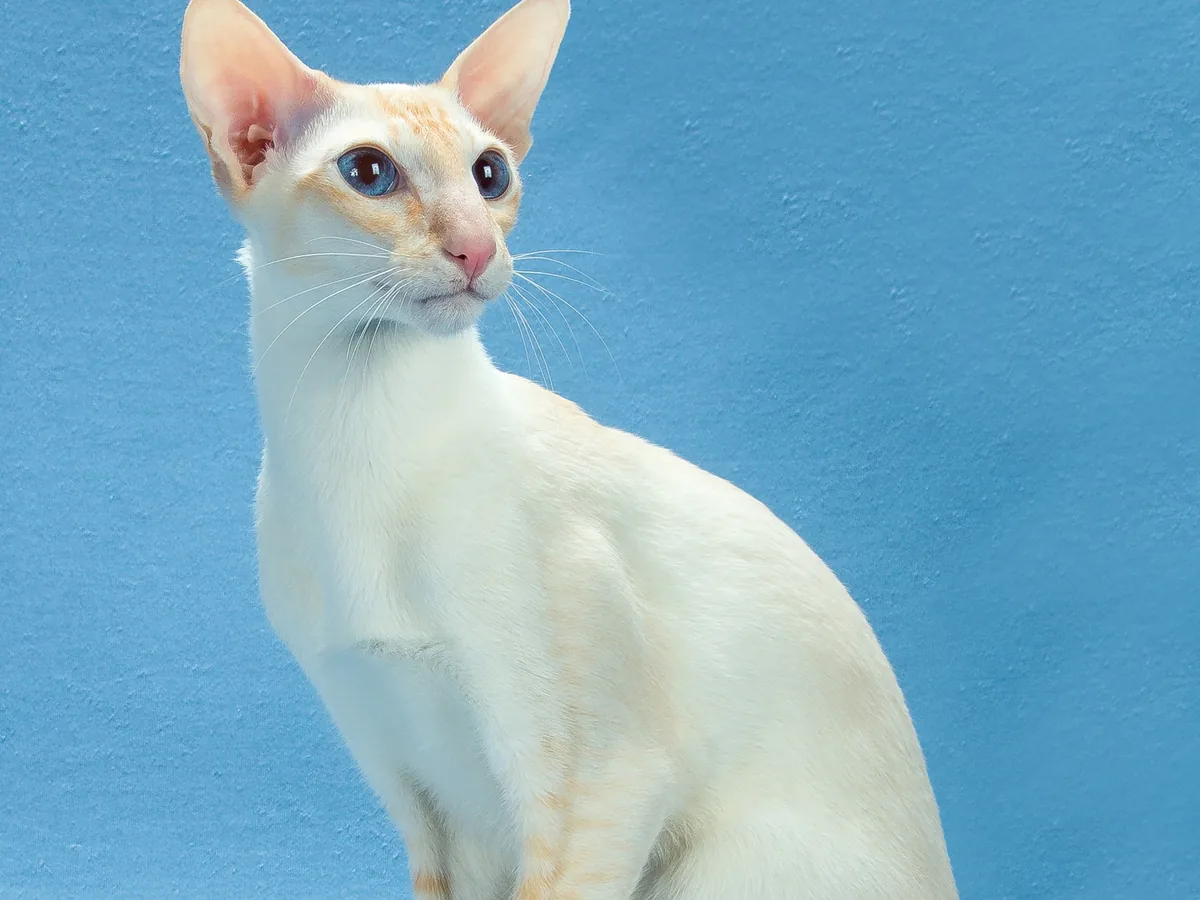
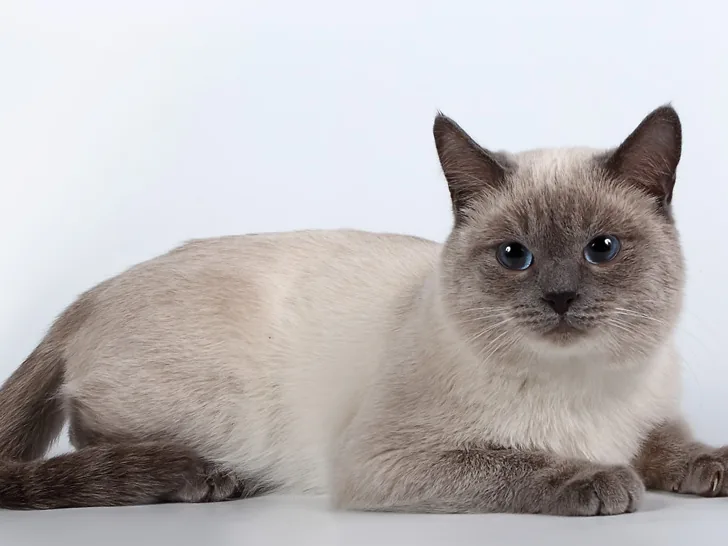
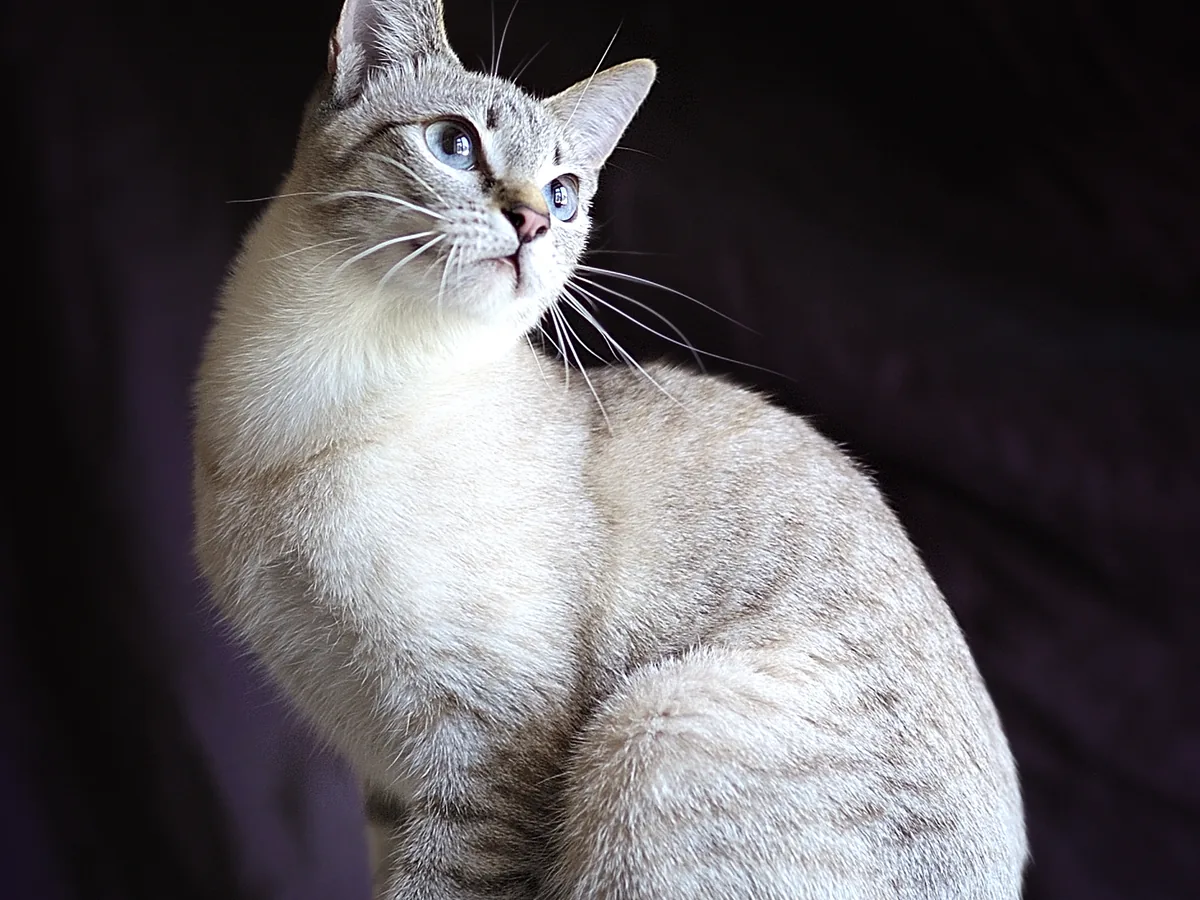
The build is Siamese-derived but not Siamese: a slightly rectangular, muscular body with the rump a little higher than the shoulders, 3.6–4.5 kg, a glossy short coat with almost no undercoat, and deep blue eyes. Only pointed colours without white are accepted. The tail is the point of the breed — at least three vertebrae, kinked, knotted or bent, and shorter than a quarter of the body length.
It is a talking cat. Mekong Bobtails answer when spoken to, follow their people around, learn to fetch, and complain loudly about closed doors. They are also firmly heat-seeking and will find the one warm spot in a cold room.
Care essentials
- Grooming
- Two minutes with a rubber mitt once a week — the coat has little undercoat and barely mats. Check ears weekly, since the sparse covering lets wax build up visibly.
- Exercise & play
- High for a medium cat: two proper play sessions plus a vertical route around the room. Fetch up and down a hallway is its preferred sport, and it will demand repeats.
- Feeding
- Lean build, fast metabolism, but the pointed coat can hide a paunch. 50–65 g of dry food or 4–5 oz wet daily; split into two or three meals to blunt the begging.
- Home setup
- Warm, busy households suit it. It wants a heated bed, a high perch and company; a closed door is treated as a personal insult, so plan for a cat that sleeps on the pillow.
Health
- Periodontal disease — the Siamese-family jaw and tight tooth row make tartar build-up common; brushing matters more than in a round-faced breed
- Hypertrophic cardiomyopathy (HCM) — reported in Oriental-type lines; ask for parental echocardiograms
- Feline asthma — Oriental and Siamese-related breeds are over-represented; chronic cough needs investigation, not air freshener
- Low body fat — runs cold, and loses weight quickly during illness; weigh monthly
The breed has a small gene pool and no published health survey, so screening rests on the breeder. Ask about HCM, PRA and dental history in the line, and confirm the kitten's tail has been x-rayed or at least examined for a normal number of vertebrae. Any new cat should be FeLV/FIV tested before joining a multi-cat house.
Health information here is general and not a substitute for veterinary advice. If your cat shows symptoms, contact a vet.
Frequently asked
Is the Mekong Bobtail a Siamese with a short tail?
It shares Siamese ancestry and the pointed pattern, but it is a separate breed with a rectangular, slightly cobby body, a rump higher than the shoulders, and a tail of at least three kinked vertebrae under a quarter of body length. The coat is also glossier and flatter than a Siamese's.
Which registries recognise the Mekong Bobtail?
The World Cat Federation recognised it in August 2004, when the name changed from Thai Bobtail; WCF remains the main registry. CFA, FIFe and GCCF do not recognise it, so pedigrees and health records come almost entirely from Russian and Eastern European catteries.
Are Mekong Bobtails noisy?
Yes — one of the more vocal breeds, with a low, raspy voice used for commentary rather than distress. They answer questions, announce arrivals and object to closed doors. That suits talkative households and irritates light sleepers, especially since they like to sleep on the bed.