Lykoi
狼猫 · Partial hairlessness · recessive mutation (USA) · United States
The Lykoi is a natural mutation, not a wolf hybrid — DNA testing at UC Davis confirmed the cats carry none of the genes behind Sphynx hairlessness or the Devon and Selkirk curls, and no canid ancestry is involved.
Quick facts
- Weight
- 6–12 lb (2.7–5.5 kg)
- Length
- Body 14–18 in (36–45 cm), tail 10–12 in (25–30 cm)
- Lifespan
- 12–15 years, based on a breed still under 20 years old
- Typical price
- $1,500–$3,500 in the US, usually via waiting list
Temperament & lifestyle
About the breed
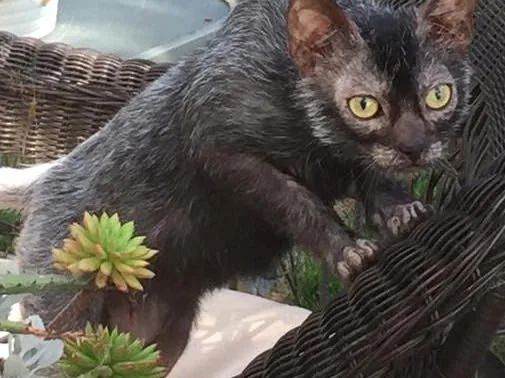
The Lykoi is a natural mutation, not a wolf hybrid — DNA testing at UC Davis confirmed the cats carry none of the genes behind Sphynx hairlessness or the Devon and Selkirk curls, and no canid ancestry is involved. The name is Greek for wolf, and the look earns it: a mask of bare skin around the eyes, nose and muzzle, sparse bristly fur over a roan coat of mixed white and coloured hairs, and a habit of moulting in patches that owners call "wolfing out". Two unrelated groups of stray cats, found in Virginia in 2010 and Tennessee in 2011, founded the breed; Patti Thomas named it, and Johnny and Brittney Gobble bred the first intentional litter in 2011. The gene is recessive, so two coated carriers can produce bald-faced kittens.
Coat coverage swings widely between individuals and across the year — some cats are nearly furred, others almost bare — and the skin is the trade-off. Lykoi are prone to cysts, blackheads and folliculitis, produce more sebum than an ordinary cat, burn in direct sun and feel the cold.
Personality is more dog than wolf: busy, curious, attached to their person, usually easy with other animals. CFA accepted them for championship in 2023–24; TICA got there in 2017.
Care essentials
- Grooming
- Wipe down with a warm damp cloth weekly and bathe every four to six weeks with a gentle degreasing shampoo — the skin is oily and exposed, and cysts form where sebum collects. Never use harsh brushes on bare patches.
- Exercise & play
- Twenty minutes of chase-and-pounce play daily, plus a heated bed and vertical space. It is more active than its fragile look suggests and needs an outlet or it will hunt ankles.
- Feeding
- Normal portions for its size — about 1/2 cup dry or 5 oz wet a day — but keep it lean; extra fat shows immediately under a sparse coat and stresses the skin. Add omega-3 if the coat looks flaky.
- Home setup
- Indoor only, warm, and draught-free: this cat has little insulation and sunburns. Provide a covered heated bed, a sunny but screened window, and soft fabrics — bare skin against rough upholstery causes abrasions.
Health
- Follicular cysts and blackheads — extremely common, mostly cosmetic but sometimes infected
- Lymphocytic mural folliculitis — a 2020 study found it in all surveyed Lykoi, leaving the skin in a low-grade inflamed state
- Sunburn and squamous cell carcinoma on exposed skin, especially pale or pink areas
- Cold sensitivity — little coat means little insulation; hypothermia risk in winter or after a bath
- Seborrhoea — overactive sebaceous glands make the skin greasy and prone to odour
This is a young breed with a small gene pool and no long-term health data, so buy only from breeders who keep veterinary records and are honest about skin problems. Ask what they do for cysts, whether any cat has had a carcinoma, and expect to budget for shampoo, medicated wipes and possibly a dermatology visit each year.
Health information here is general and not a substitute for veterinary advice. If your cat shows symptoms, contact a vet.
Frequently asked
Is the Lykoi a wolf cat or a wolf hybrid?
No. The name means wolf in Greek and refers only to the masked, patchy look. UC Davis testing confirmed the cats carry none of the KRT71 mutations responsible for Sphynx hairlessness or Devon and Selkirk curls, and there is no wolf or other canid ancestry — the mutation arose in ordinary domestic shorthairs.
Do Lykoi need baths?
Yes, more than most cats. With little coat to absorb sebum, the skin gets greasy, and that grease feeds cysts and blackheads. Most owners wipe the cat weekly with a warm damp cloth and bathe every four to six weeks with a gentle degreasing shampoo, then dry it thoroughly.
Why does my Lykoi look different every few months?
Because the breed moults in cycles, sometimes losing most of its coat and regrowing it within weeks — owners call it wolfing out. Coverage varies with genetics, hormones, climate and age, so a cat can look nearly furred in winter and almost bare in summer. Both extremes are within the standard.