Korat
呵叻猫 · Shorthair (natural breed) · Thailand (Phimai, Nakhon Ratchasima province)
The Korat is one of the oldest natural cat breeds.
Quick facts
- Weight
- 6–10 lb (2.7–4.5 kg)
- Length
- 14–16 in (36–41 cm) nose to tail base
- Lifespan
- 12–15 years
- Typical price
- $500–$1,000 (scarce outside Thailand)
Temperament & lifestyle
About the breed
The Korat is one of the oldest natural cat breeds. It appears in the Tamra Maew, the Thai poems about cats written centuries ago, under the name si-sawat — the color of a silver seed — and it comes from the Phimai district of Nakhon Ratchasima province, Korat for short. In Thailand it is a talisman: a pair of Korats was traditionally given to a bride as a wish for prosperity, and the cats were never sold, only given. The first pair reached the United States in 1959, and the CFA recognized the breed in 1966.
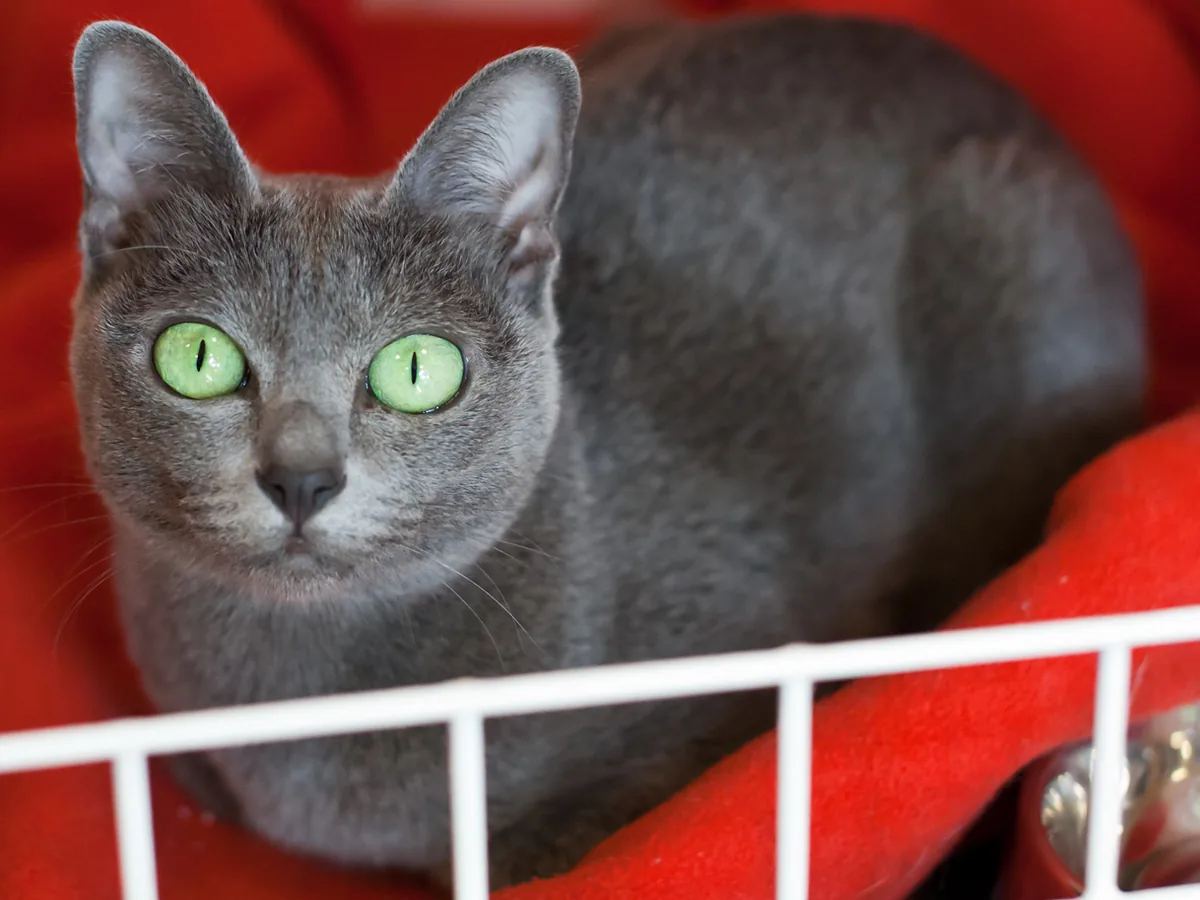
The physical standard is exact. The coat is single — no downy undercoat — which makes the Korat unusually low-shedding and gives it a painted-on look: one shade of blue-grey, each hair silver-tipped so the coat shimmers instead of looking flat. The head, seen from the front, is a heart: broad brow tapering to a strong chin, with large, luminous green eyes that take about two years to reach full color. The ears are large and set high. The body is muscular and heavier than it looks.
Korats are intelligent and deliberate. They play hard as kittens and keep playing as adults, learn household routines, open doors and remember which cupboard holds the treats. They are not a solitary breed — a Korat left alone all day becomes unhappy and loud about it — and they usually attach to the whole family rather than one person. The voice is soft but used often, especially at mealtimes.
Care essentials
- Grooming
- One minute with a rubber glove or a chamois cloth, weekly, is genuinely enough. The single coat has no undercoat, so there is little loose hair and almost no matting; over-bathing dulls the silver sheen. Check ears and teeth rather than spending time on the coat.
- Exercise & play
- Moderate. Two play sessions of 15 minutes, one of them chasing a toy up a cat tree. Korats like games with a plan — fetch, hide-and-seek, puzzle feeders — and will lose interest in repetitive wand flicking.
- Feeding
- Measured portions, two meals a day; the breed is stocky and gains weight on free-feeding. 1/3 to 1/2 cup of dry food daily for an average adult, or the wet equivalent. Some Korats bolt food and vomit; a slow feeder helps.
- Home setup
- Indoor only, with vertical space and a warm sleeping spot — the thin single coat means it seeks heat. It wants company and a stable routine; avoid a home where it will be alone ten hours a day. Keep breakables off shelves it can reach.
Health
- GM1 and GM2 gangliosidosis — rare inherited neurological disease, fatal in young kittens; DNA tests exist
- Hypertrophic cardiomyopathy — low incidence, but responsible breeders screen
- Patellar luxation, occasionally reported
- Stress-related cystitis in cats left alone too much
- Dental tartar, common in the breed after age five
The gangliosidosis tests matter more than anything else: affected kittens appear normal at birth and decline within months, and carriers show no signs, so ask for DNA results on both parents. The breed's gene pool is small worldwide, so ask about inbreeding coefficients and demand an echocardiogram on breeding cats. Not hypoallergenic, despite the low shedding.
Health information here is general and not a substitute for veterinary advice. If your cat shows symptoms, contact a vet.
Frequently asked
Are Korat cats hypoallergenic?
No. Korats shed little because they have no undercoat, and some allergy sufferers cope better with them, but they produce the same Fel d 1 allergen as any other cat. Low shedding is not the same as low allergen.
Do Korats shed much?
Very little. The single coat has no downy underlayer, so loose hair stays in the coat until groomed out, and you will find few hairs on furniture. A weekly rub with a damp hand removes most of it.
Why are Korats so hard to find?
Few breeders work with them anywhere, litters are small, and in Thailand the cats have traditionally been given rather than sold. Waiting lists of six to eighteen months are normal, and some breeders will not ship.
Are Korats good apartment cats?
Yes, provided they get play time and company. They are quiet, moderate in activity and clean, but they are sociable and become stressed and vocal if left alone for long stretches in a small flat.