Khao Manee
考曼尼猫 · Shorthair · natural breed (Thailand) · Thailand
The Khao Manee is Thailand's white cat; the name translates as "white jewel", and older texts call it Khao Plort, "complete white".
Quick facts
- Weight
- 6–10 lb (2.7–4.5 kg)
- Length
- Body 15–18 in (38–46 cm), tail 10–12 in (25–30 cm)
- Lifespan
- 10–14 years
- Typical price
- $1,500–$4,000 in the US; rarely available outside Thailand
Temperament & lifestyle
About the breed
The Khao Manee is Thailand's white cat; the name translates as "white jewel", and older texts call it Khao Plort, "complete white". It appears in the Tamra Maew, the illustrated cat-book poems copied at Wat Arun and now held in the National Library of Thailand, and was traditionally kept by Siamese royalty. For most of the twentieth century it stayed in Thailand — only a handful of lines reached the West in the 1990s and 2000s — and it remains one of the rarest recognised breeds, with a small global breeding population and long waiting lists.
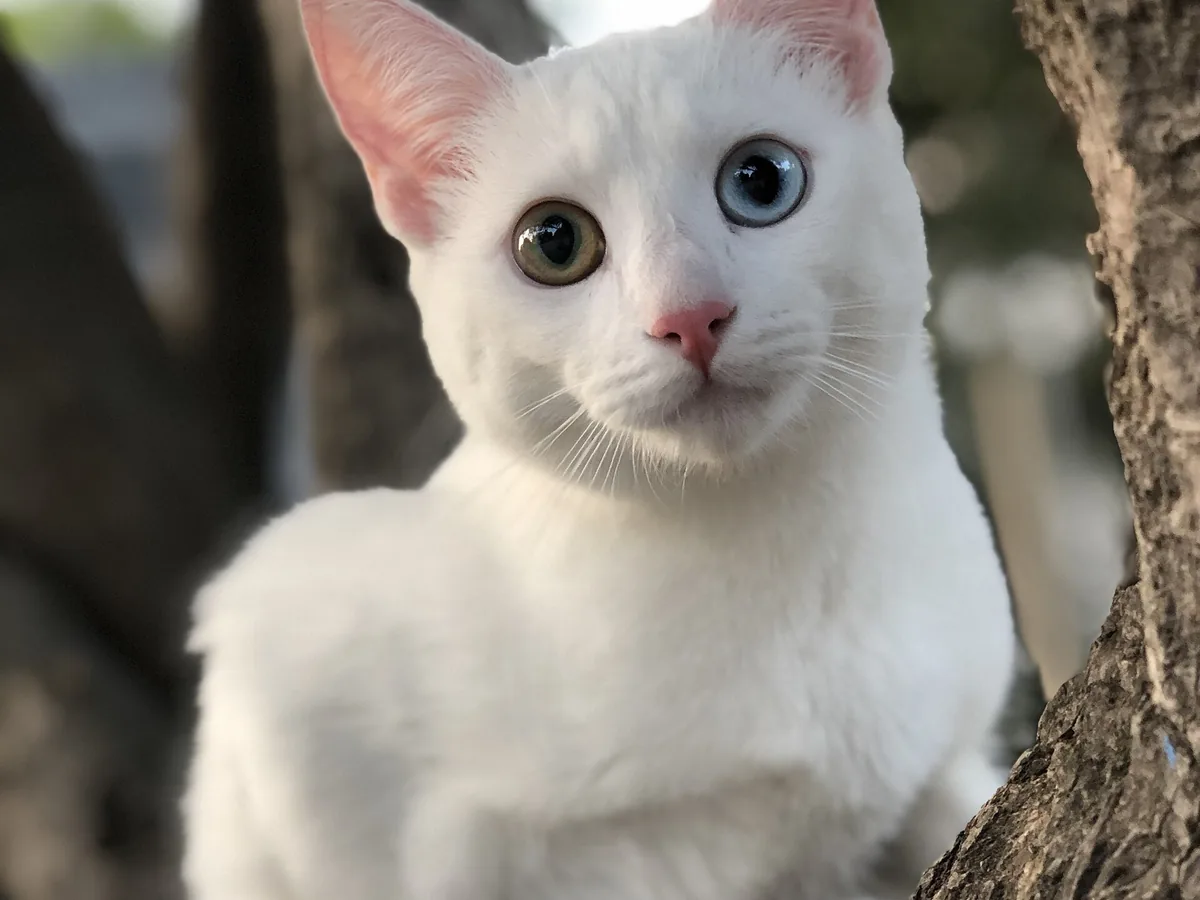
The look is compact and muscular with a heart-shaped head, short pure-white coat, medium ears and no extremes anywhere. The eyes are the point: deep blue, amber-gold, or one of each. Odd-eyed cats are the most prized and the trait is common enough that a good share of litters produce it.
The catch is hearing. The dominant white gene that produces the coat also affects the cochlea, so blue-eyed whites are frequently deaf and odd-eyed cats may be deaf on the blue side. Reputable breeders BAER-test kittens before placing them. A deaf Khao Manee is still a confident, capable pet, but it must live indoors and be trained with hand signals and vibration.
Care essentials
- Grooming
- A rubber curry once a week is plenty; the short coat has little undercoat and self-grooms well. White coats show dirt and tear stains, so wipe the face and check ears weekly.
- Exercise & play
- Two short play sessions a day plus a tall cat tree. Fetch and puzzle feeders suit it; a bored Khao Manee will climb curtains rather than sit still.
- Feeding
- Easy keeper with a tendency to thicken at the waist once neutered: 1/3–1/2 cup dry or 4–5 oz wet daily, split into two meals. Weigh monthly, since the white coat hides a lot.
- Home setup
- Indoor only, both for the deafness risk and because white skin burns and this is a valuable, theft-prone breed. Provide a sunny window with a screen, vertical territory and a quiet corner it can retreat to.
Health
- Congenital sensorineural deafness — strongly associated with blue eyes; odd-eyed cats are often deaf on the blue side only
- Sun-related skin damage — squamous cell carcinoma on white ear tips and nose in outdoor cats
- Obesity — a compact, food-motivated indoor cat that gains quietly under all that white
- No breed-wide hereditary disease is documented beyond deafness, but the gene pool is tiny
Ask for a BAER (brainstem auditory evoked response) certificate on the kitten and, ideally, on both parents — it is the only reliable way to know whether a white cat hears, since deaf cats compensate well and owners often do not notice for months. Keep the cat indoors, screen sunny windows, and have any new lump or scab on ear or nose checked early.
Health information here is general and not a substitute for veterinary advice. If your cat shows symptoms, contact a vet.
Frequently asked
Will my Khao Manee be deaf?
Not necessarily, but the risk is real and follows eye colour: blue-eyed whites are the most likely to be deaf, odd-eyed cats may be deaf on the blue side, and gold-eyed cats usually hear normally. Only a BAER test proves it — ask for the certificate rather than judging by whether the kitten startles.
Can a deaf cat live a normal life?
Yes, indoors. Deaf cats compensate with sight and vibration, learn hand signals quickly and are often more bonded to their owners. The non-negotiables are a secure home, never free-roaming outdoors, and waking the cat by touch or floor vibration rather than from behind.
Why is the Khao Manee so expensive and hard to find?
Because the breeding population is genuinely small: a handful of lines left Thailand, litters are modest, and every white breeding cat should be BAER-tested before use. Most kittens are placed through waiting lists, and prices in the US typically run from about $1,500 to $4,000.