Havana Brown
哈瓦那棕猫 · Shorthair · Siamese × domestic brown (United Kingdom) · United Kingdom
The Havana Brown was made in 1950s London by a group of breeders who first called themselves the Havana Group, later the Chestnut Brown Group.
Quick facts
- Weight
- 6–10 lb (2.7–4.5 kg)
- Length
- Body 14–17 in (35–42 cm), tail 9–11 in (22–28 cm)
- Lifespan
- 12–16 years
- Typical price
- $500–$1,500; in China ¥4,000–12,000
Temperament & lifestyle
About the breed
The Havana Brown was made in 1950s London by a group of breeders who first called themselves the Havana Group, later the Chestnut Brown Group. Their recipe: a Siamese carrying chocolate, a black domestic shorthair carrying chocolate, and later an Oriental-type Russian Blue. The aim was a solid chestnut-brown cat of foreign type. The name comes from the colour of a Havana cigar, though an older theory points to the Havana rabbit. CFA granted championship status in 1959.
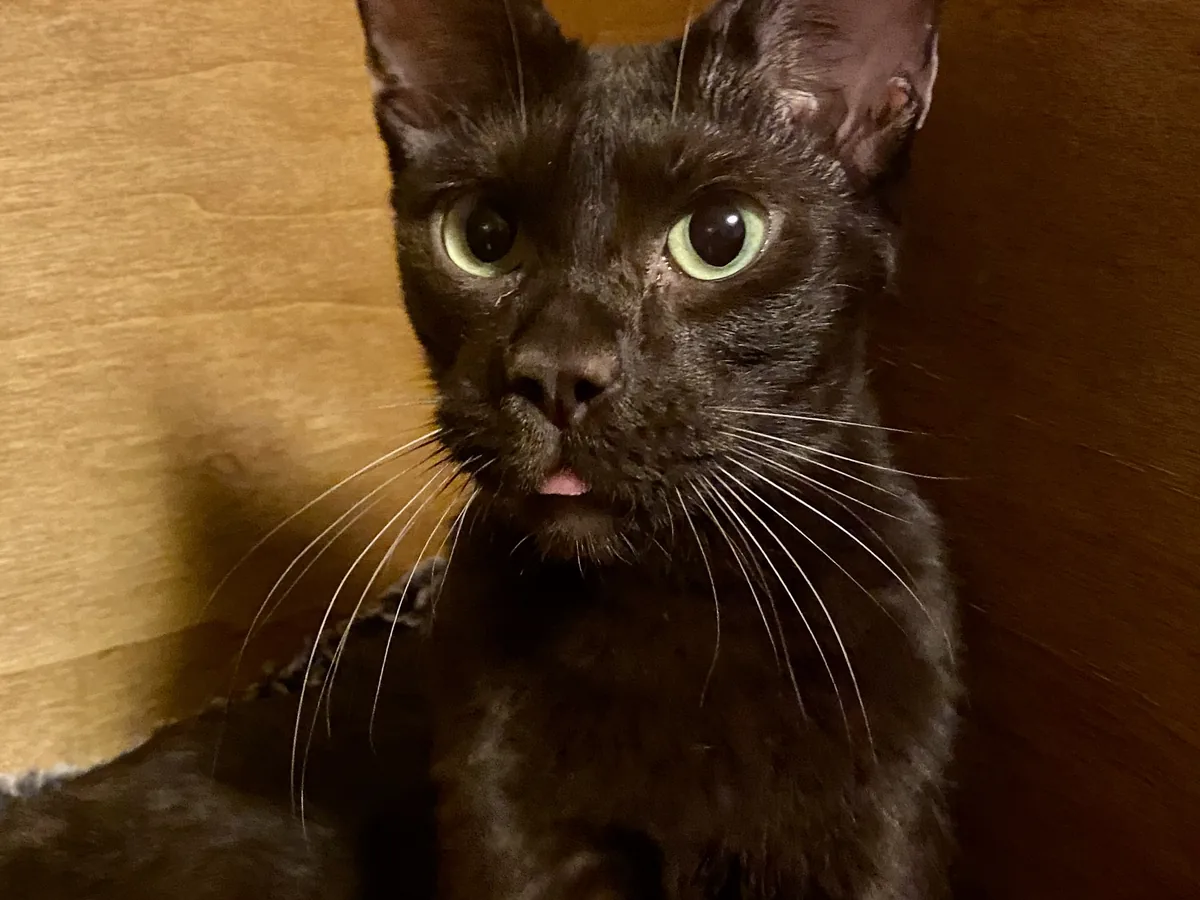
It is the only breed required to be solid brown from nose to tail tip: brown whiskers, brown nose leather, brown paw pads, no tabby markings and no white. The head is longer than it is wide, with a distinct "whisker break" where the muzzle meets the cheek, and large flaring ears. The coat is short, tight and glossy, the eyes green. Weight is modest, 6–10 lb, on a muscular slender frame.
Havana Browns are busy, social cats that examine objects with both paws, carry toys, travel well and chirp rather than yowl. They are less intense than a Siamese but need the same involvement, and they do badly when left alone for long stretches.
Care essentials
- Grooming
- Wipe with a damp cloth and brush once a week; the short coat sheds little and has no undercoat to mat. Check teeth weekly — the mouth is this breed's weak point.
- Exercise & play
- Moderate: 15 minutes of fetch or puzzle play twice a day. It uses its paws like hands, so cupboards and boxes are more interesting than a running wheel.
- Feeding
- 1/3 to 1/2 cup dry or 3–4 oz wet daily, split into two meals; it begs convincingly, so keep treats under ten percent of intake.
- Home setup
- Adapts to flats and to travel, but wants to be in the same room as its people. Provide a perch by a window and a box of objects it is allowed to explore.
Health
- Hypertrophic cardiomyopathy (HCM) — the main inherited concern; echo-screen breeding cats
- Periodontal disease and tooth resorption — gingivitis appears earlier than in most breeds
- Obesity — a food-motivated cat that begs convincingly
- Chronic kidney disease — screen seniors with bloodwork and SDMA from age seven
The gene pool is very small and traces to a handful of post-war British lines, so inbreeding matters more than the short list of diseases suggests. Ask for a cardiology scan on both parents, and start annual dental checks at two years rather than waiting for bad breath.
Health information here is general and not a substitute for veterinary advice. If your cat shows symptoms, contact a vet.
Frequently asked
Why is the Havana Brown called "Havana" if it is British?
The name refers to colour, not place — the coat matches a Havana cigar, and an older theory points to the Havana rabbit. The breed itself was developed in London in the 1950s from Siamese and black shorthair stock.
What is a "whisker break" on a Havana Brown?
It is the slight pinch where the muzzle meets the cheek, giving the profile a squared-off look, and it is written into the breed standard. Whiskers must also be brown, not white — the only breed with that requirement.
Are Havana Browns rare?
Yes, genuinely rare, with small litters and few active breeders worldwide. Expect to wait for a kitten, and treat a cheap, immediately available Havana Brown as a warning sign rather than a bargain.