American Wirehair
美国硬毛猫 · Shorthair · mutation breed (United States) · United States
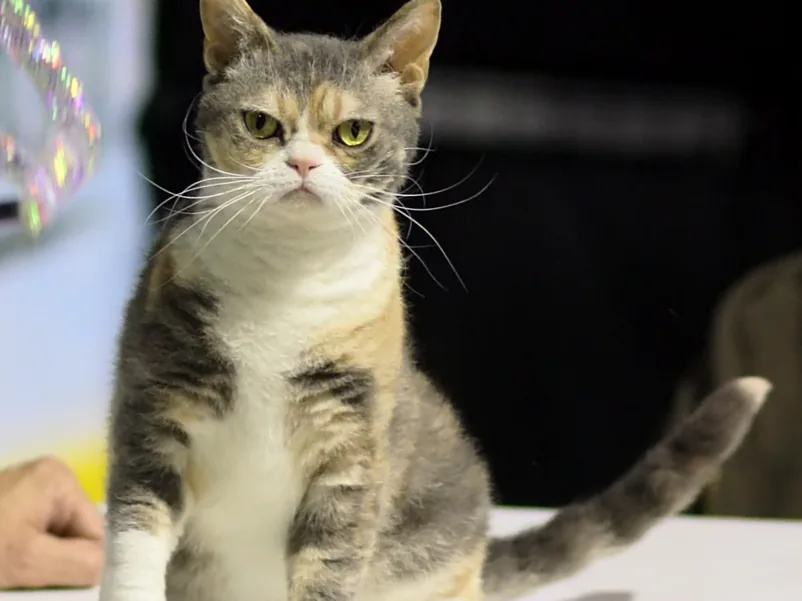
In 1966 a red-and-white tabby kitten named Council Rock Farm Adam was born on a farm in Verona, New York, in a litter of ordinary American Shorthairs — but his coat was stiff, crimped and stood away from the body like steel wool.
Quick facts
- Weight
- 6–12 lb (2.7–5.5 kg)
- Length
- Body 15–18 in (38–46 cm), tail 10–13 in (25–33 cm)
- Lifespan
- 12–15 years
- Typical price
- $800–$2,000; in China ¥6,000–15,000
Temperament & lifestyle
About the breed
In 1966 a red-and-white tabby kitten named Council Rock Farm Adam was born on a farm in Verona, New York, in a litter of ordinary American Shorthairs — but his coat was stiff, crimped and stood away from the body like steel wool. Every hair was hooked or bent, including the whiskers and the tufts inside the ears. Breeders mated him back to his mother and to local cats; the trait behaved as a simple recessive and has never been recorded in another breed.
The American Wirehair is the rarest of CFA's recognised breeds and still rests on a narrow gene pool, so outcrosses to American Shorthairs are permitted. The body is the American Shorthair's: muscular, medium to large, 6–12 lb, with a rounded muzzle and wide-set eyes. The coat is dense and springy under the hand; kittens look almost smooth at birth before the crimp develops, and some adults lose texture with age or in summer.
Temperament is steady rather than theatrical. Wirehairs supervise whatever their people are doing, head-butt every member of the household, learn to open cupboards, and are content alone for a working day. They are gentle with children and other pets, only moderately vocal, and wholehearted once a game starts.
Care essentials
- Grooming
- Hand-brush once a week at most, and never scrub — over-brushing breaks the hooked hairs and dulls the coat. Bathe every six to eight weeks if the skin is greasy, and dry thoroughly.
- Exercise & play
- Moderate: one 15-minute wand session plus a puzzle feeder daily. It is athletic but happy to nap, so scheduled play matters more than a large space.
- Feeding
- Feed measured meals, about 1/2 cup dry or 5 oz wet a day for an average adult; the breed gains weight easily after neutering.
- Home setup
- Indoor only — the coat offers little protection and the skin reacts to irritants. Provide a scratching post, a window seat and a quiet corner; it tolerates apartments and children well.
Health
- Sensitive skin — contact dermatitis and allergic reactions to litter, shampoo or plants
- Hypertrophic cardiomyopathy (HCM) — echocardiogram breeding cats
- Hip dysplasia — occasionally reported on the American Shorthair side
- Obesity — a calm indoor cat with a good appetite
CFA records no condition specific to the breed, but the coat sits directly on sensitive skin, so itching and scurf are usually environmental rather than infectious. Ask breeders about heart and hip screening of the parents and use unscented, dust-free litter.
Health information here is general and not a substitute for veterinary advice. If your cat shows symptoms, contact a vet.
Frequently asked
Do American Wirehairs need much grooming?
Less than the coat suggests — a weekly hand-brush is enough, and rough brushing damages the crimp. Bathe every six to eight weeks only if the skin turns greasy, and dry the coat completely to avoid fungal problems.
Why is the American Wirehair so rare?
The coat gene is recessive, so both parents must carry it, and the breed began with one kitten in 1966. Litters are small and breeders keep a limited number of lines, which is why CFA lists it among its rarest recognised breeds.
Is the wiry coat hypoallergenic?
No. The texture does not change the allergen, which is a protein in saliva and skin secretions spread by grooming. People allergic to cats will still react; the breed sheds normally, so loose hair is not reduced either.