Ocicat
欧西猫 · Shorthair (spotted) · United States (Michigan), 1964; CFA recognition 1987
The Ocicat looks wild and is not.
Quick facts
- Weight
- 6–15 lb (2.7–6.8 kg), males larger
- Length
- 15–18 in (38–46 cm) nose to tail base
- Lifespan
- 12–15 years
- Typical price
- $800–$2,000
Temperament & lifestyle
About the breed
The Ocicat looks wild and is not. It carries no ocelot, leopard or any other wildcat DNA; the name was a joke. In 1964 Virginia Daly of Michigan crossed an Abyssinian with a Siamese and produced a spotted kitten that her daughter called an "Ocicat". American Shorthairs were later added for bone and body, which brought the silver color and the large spots of the classic variety. The CFA recognized the breed in 1987, and it remains one of the few spotted breeds that is entirely domestic in origin.
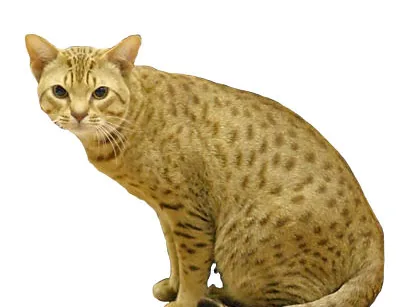
The look is a large, athletic shorthair, six to fifteen pounds, with a broad wedge head, large almond eyes and clearly defined thumbprint-shaped spots arranged in rows along the flanks. Every hair is banded, giving a shimmer like polished bronze. Accepted colors are tawny, chocolate, cinnamon, blue, lavender and fawn, plus the silver "classic" — black spots on a pale silver ground — which requires American Shorthair ancestry. The coat is close-lying and needs almost no grooming.
Temperament is the reason people get hooked. An Ocicat greets visitors at the door, follows them around, talks in a raspy voice, and learns to fetch, walk on a leash and come when called. It is sociable to the point of neediness: left alone in an empty house it becomes bored and inventive, and "inventive" means curtains and cupboards. It usually gets on well with dogs and children, and does best with another cat or an owner who is home most of the day.
Care essentials
- Grooming
- Nearly nothing. A rubber brush once a week, more in spring, is all the coat needs; the short close-lying hair sheds modestly and does not mat. Check ears and teeth instead — dental disease is more likely than any coat problem.
- Exercise & play
- High. Thirty minutes of active play daily, split into two sessions, plus a cat tree and puzzle feeders. A bored Ocicat will climb curtains, open cupboards and knock things off shelves, so exercise is behavioral management, not a luxury.
- Feeding
- Measured meals, two a day. The breed is active but food-driven and will overeat if given the chance; 1/2 to 3/4 cup of dry food daily for an average adult, adjusted to condition. Wet food helps with hydration and dental health.
- Home setup
- Indoor only, or a secure catio. It needs company and stimulation: a second cat, a window with a view, shelves to patrol, toys rotated weekly. Not suited to a household that is empty twelve hours a day unless someone visits midday.
Health
- Hypertrophic cardiomyopathy (HCM) — the main concern; DNA test and echocardiogram screening
- Progressive retinal atrophy (PRA) — DNA test available
- Renal amyloidosis — reported in the breed, usually in middle-aged adults
- Patellar luxation, occasionally seen
- Dental tartar and gingivitis
Ask for HCM and PRA test results on both parents — the DNA tests are cheap and a breeder without them is cutting corners. Renal amyloidosis is the harder one: it shows up as weight loss and thirst in a cat of five to eight years, and there is no screening test, so watch kidney values on annual bloodwork. Average lifespan 12–15 years with routine care.
Health information here is general and not a substitute for veterinary advice. If your cat shows symptoms, contact a vet.
Frequently asked
Is the Ocicat a wild cat?
No. It has no wildcat ancestry at all — the breed was created from Abyssinian, Siamese and American Shorthair crosses. The spots come from tabby genetics, and the name was borrowed from the ocelot for marketing.
Are Ocicats hypoallergenic?
No. They have a short, close-lying coat and shed relatively little, but they produce the same Fel d 1 allergen as every other cat. Anyone promising an allergen-free Ocicat is misinforming you.
Do Ocicats need a lot of exercise?
Yes, more than most shorthairs. Plan on two daily play sessions and vertical space. Without it they redirect the energy into climbing curtains, opening cupboards and waking you at 4 a.m.
How much does an Ocicat cost?
Roughly $800–$2,000 in the US. The silver classic and show-quality kittens sit at the top of that range. Prices under $500 usually mean a spotted mixed breed sold as an Ocicat — ask for registration papers and parent health tests.