Burmese
缅甸猫 · Shorthair, foreign type · Myanmar / United States and Britain
The Burmese exists because of one cat.
Quick facts
- Weight
- 3.5-6 kg, denser than it looks
- Length
- Body 38-46 cm; slender tail
- Lifespan
- 16-18 years, often longer
- Typical price
- US$600-1,500
Temperament & lifestyle
About the breed
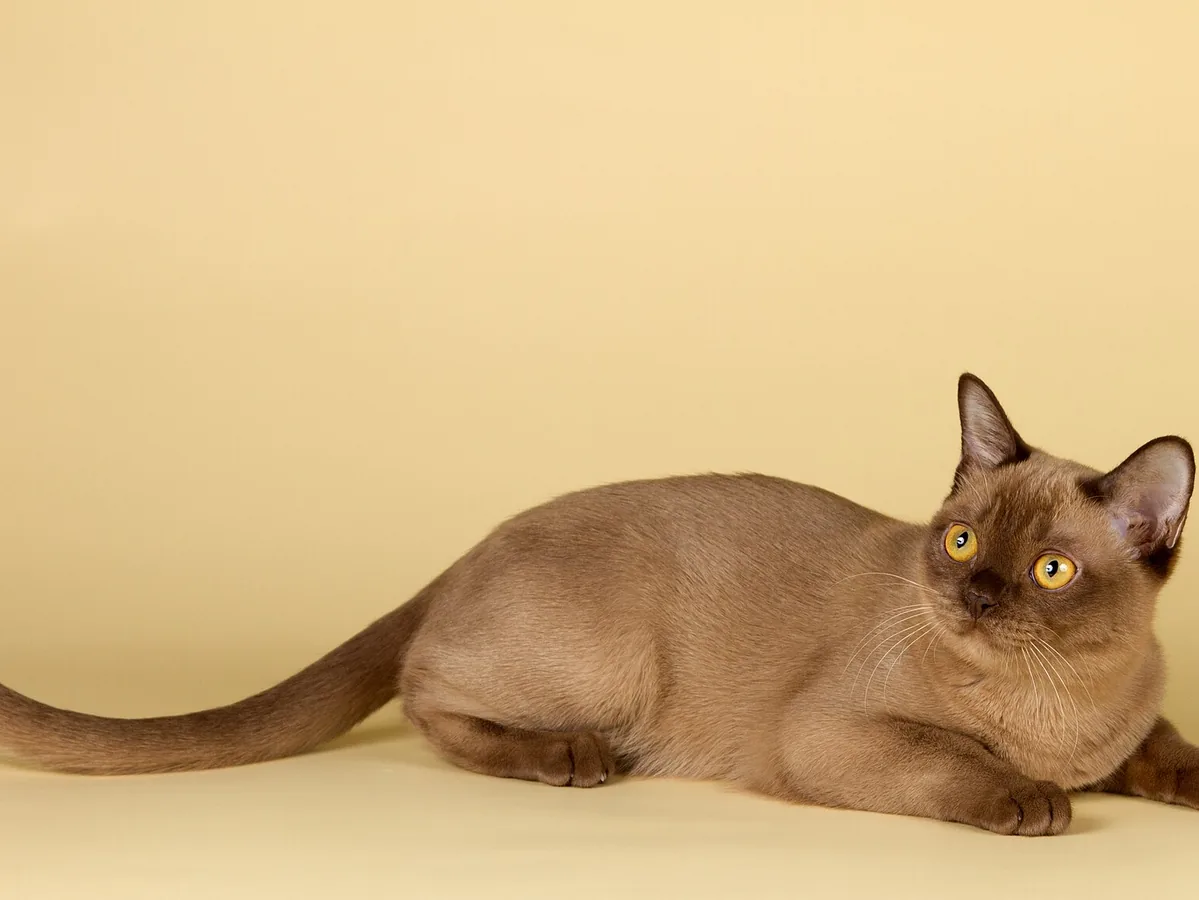
The Burmese exists because of one cat. In 1930 a brown female named Wong Mau arrived in San Francisco from Burma with Dr. Joseph Thompson, who bred her to a Siamese and then worked through the offspring to establish a distinct solid-brown breed rather than a colour variant of the Siamese. The Cat Fanciers' Association recognised it in 1936. British breeders started again from a different imported cat after the war, which is why European and American Burmese differ today: the American type is softer and rounder, the European type closer to the Siamese in bone.
The coat is short, fine and satin-smooth, lying flat against the body with almost no undercoat - which is why the Burmese feels like warm silk and sheds surprisingly little. Sable, a rich seal-brown, is the classic colour, but blue, chocolate, lilac, red, cream and tortoiseshell are all accepted. The body is muscular and heavier than the slim outline suggests; a Burmese picked up for the first time feels like a bag of sand. Weight runs 3.5-6 kg, and the breed routinely reaches 16-18 years.
Temperament is the whole point. Burmese are intensely social, talkative, tactile and persistent: they want to be on you, in your conversation, and involved in whatever you are doing. They are also clever enough to open doors and demanding enough to comment on your schedule. Of all the breeds here, this is the one most likely to greet a stranger, supervise the shower, and complain loudly when a door is closed. They do poorly when left alone for long days.
Care essentials
- Grooming
- Minimal. A weekly rub with a rubber brush or damp hand removes the little loose hair there is; the coat has almost no undercoat, so mats are rare. Bathing is seldom necessary. The real maintenance is dental: brush teeth several times a week, because this breed is prone to gum disease, and check ears monthly.
- Exercise & play
- Active but not frantic. Two play sessions a day, a tall cat tree and a few puzzle toys keep a Burmese fit. They like interactive games with rules - fetch, hide-and-seek, treat hunting - more than solitary toys. Because they are stocky, watch weight rather than mileage; a lean Burmese should still show a waist.
- Feeding
- High-protein, moderate-calorie food, measured into two or three meals. Burmese beg convincingly and are skilled at extracting extra food from multiple people in the house. Wet food daily is worth it for hydration. Avoid free-feeding entirely - this breed gains weight quickly and carries it badly.
- Home setup
- Happy in a flat with company. Burmese want to be where the people are, so give them access to the main rooms rather than a closed-off utility room. Provide high perches and a warm bed near yours. They are heat-seekers and will sleep under blankets; check before sitting down.
Health
- Familial episodic hypokalemia - muscle weakness and neck ventroflexion in young cats; a DNA marker exists
- Burmese head defect - rare congenital skull deformity in kittens, mainly in European lines
- Diabetes mellitus - higher incidence than in most breeds; keep weight down
- Orofacial pain syndrome - episodic jaw and mouth pain, more common in this breed
- Gingivitis and periodontal disease - common, needs home brushing
Hypokalemia is the breed-specific one to know: a young Burmese that suddenly cannot hold its head up needs a vet and a potassium check, not watchful waiting. Ask breeders about it and about diabetes in the lines. Because the breed lives 16-18 years, dental care from kittenhood prevents the most common cause of later problems.
Health information here is general and not a substitute for veterinary advice. If your cat shows symptoms, contact a vet.
Frequently asked
Why is my Burmese cat so talkative?
It is bred that way. Burmese are one of the most vocal shorthairs and use meows, chirps and trills as constant social contact rather than only to demand food. If the volume has suddenly increased, check for hunger, a dirty litter tray, a closed door or pain - a change in vocalisation is often the first sign of illness.
Do Burmese cats have health problems?
Several breed-specific ones worth knowing. Familial episodic hypokalemia causes sudden weakness in young cats and is testable. Burmese head defect appears in newborns. Diabetes and gum disease are more common than average. Most Burmese still live 16-18 years, so screening and weight control matter more than fear.
Are Burmese cats good for beginners?
Yes, with one condition: you must be home enough. They are easy to groom, sociable, tolerant and quick to bond, which makes them ideal first cats. But they are needy in the literal sense - left alone ten hours a day they become vocal, destructive and depressed. A household with someone around, or a second cat, is essential.
Burmese vs Siamese - what is the difference?
The Burmese is a solid-colour cat with a rounded head, heavier body and satin coat; the Siamese is a pointed cat with a wedge head, larger ears and a thinner frame. Both talk constantly, but the Burmese voice is softer and lower. Burmese are more relaxed with strangers; Siamese are more demanding and more territorial.