Asian Tabby
亚洲虎斑猫 · Shorthair · Burmese-family breed (United Kingdom) · United Kingdom
The Asian Tabby exists because of a mistake.
Quick facts
- Weight
- 7–12 lb (3.2–5.5 kg)
- Length
- Body 15–18 in (38–46 cm), tail 11–13 in
- Lifespan
- 12–16 years
- Typical price
- $800–$2,000 in the US and UK; scarce, so waitlists are common
Temperament & lifestyle
About the breed
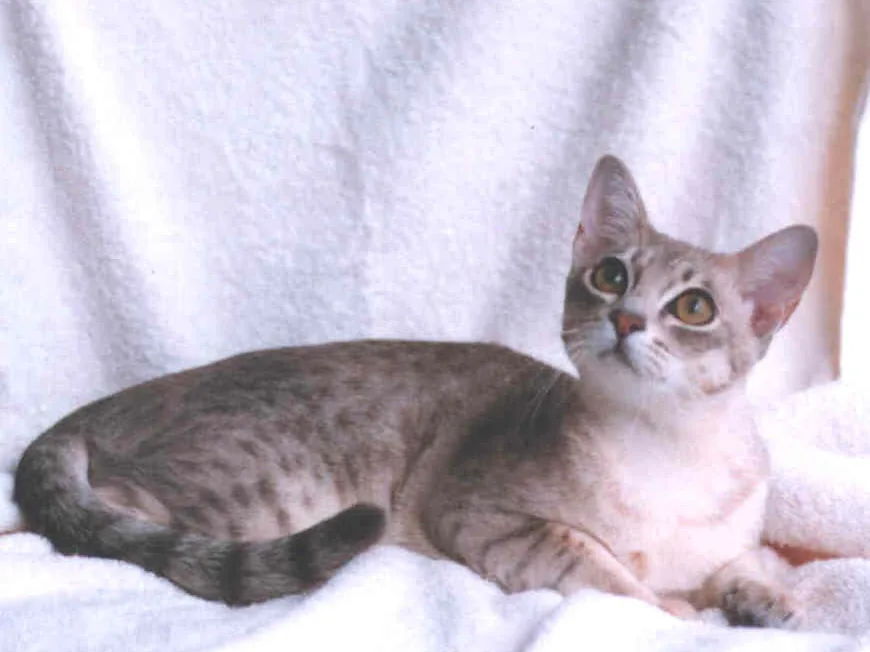
The Asian Tabby exists because of a mistake. In 1981 a lilac Burmese queen in Britain was mated by accident to a chinchilla Persian stud, and the four kittens that resulted convinced Baroness Miranda von Kirchberg to build a breed around them. The Burmilla came first; the Asian Tabby is the spotted variety of the same family — a Burmese body wearing an Ocicat-like pattern of clear spots on a ticked agouti ground. The GCCF gave the whole Asian group championship status in 2003, and it is still genuinely rare: in 2023 only 160 Asian-group kittens were registered with the GCCF.
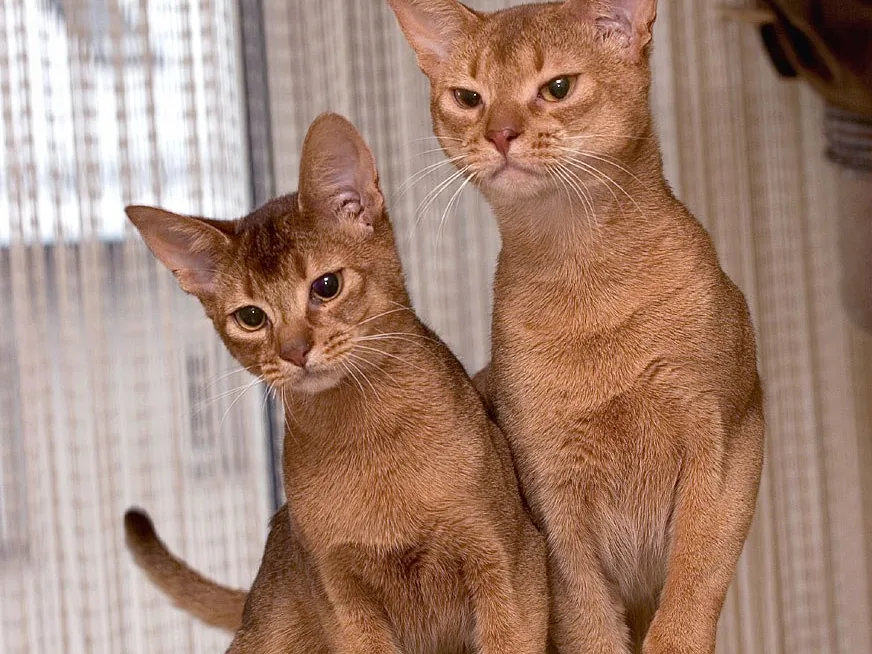
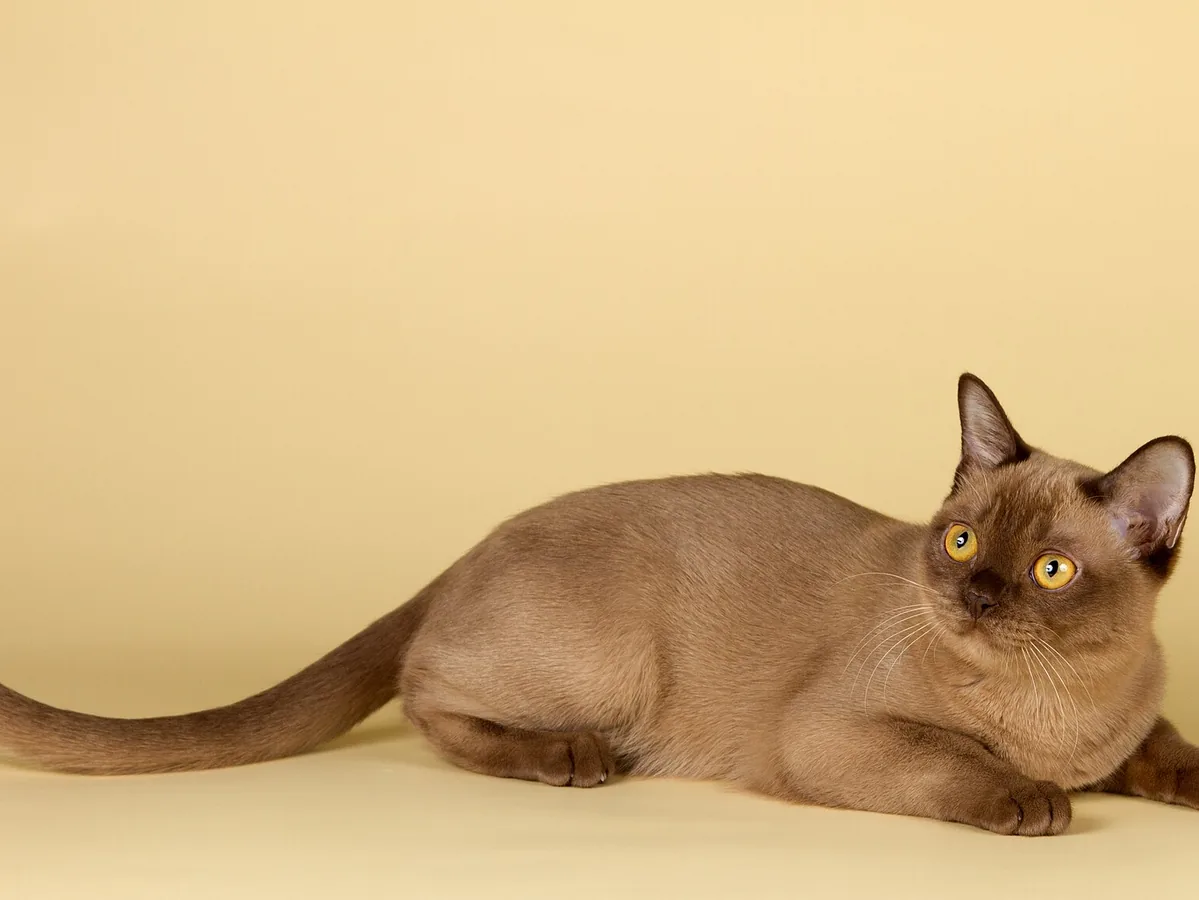
What you get is a medium, foreign-type cat of 3.2–5.5 kg with a fine, glossy, close-lying coat and almost no undercoat, large ears set wide, and green eyes that tip towards yellow-green in some colours. The spots should be crisp and evenly spaced rather than marbled, and the tail is ringed with a dark tip.
Asian Tabbies are sociable in the Burmese manner: they follow people between rooms, answer when spoken to, and want to be in the middle of whatever is happening. They are less velcro-like than a Burmese, though, and settle well with another cat for company. They climb, they open cupboards, and they keep playing hard into middle age.
Care essentials
- Grooming
- A rubber grooming glove or soft bristle brush once a week is enough; the coat is single, fine and close-lying, with little undercoat to mat. Shedding is modest and fairly constant rather than a heavy seasonal blow.
- Exercise & play
- Fifteen minutes of wand-and-pounce play a day, plus vertical space. Asians climb rather than sprint, so a tall cat tree and a shelf route matter more than a running wheel.
- Feeding
- Burmese-family cats are food-motivated and prone to middle-aged spread. Measure meals — roughly 1/2 cup dry or 5 oz wet a day for an average adult — and use puzzle feeders to slow eating.
- Home setup
- They want company and something to watch. A companion cat, a window perch and a predictable routine suit them; a silent flat with an owner out twelve hours a day does not.
Health
- Congenital hypokalaemia — inherited through Burmese lines; DNA testing exists and affected cats need potassium supplementation
- Burmese head defect — a rare inherited craniofacial abnormality in the Burmese family; ask whether a line has produced it
- Diabetes mellitus — Burmese-family cats are over-represented; keep weight down and screen after middle age
- Gingivitis and tartar — small mouths with crowded teeth; annual dental checks
The Asian group is small and closed, so ask for the parents' actual test results rather than the breeder's assurances: hypokalaemia DNA status, a recent dental check, and heart auscultation. With such a narrow gene pool, inbreeding coefficients are also worth asking about.
Health information here is general and not a substitute for veterinary advice. If your cat shows symptoms, contact a vet.
Frequently asked
Is the Asian Tabby just a spotted Burmese?
In body and temperament, essentially yes — the Asian group was built to be a Burmese in more colours and patterns, and the tabby variety adds spots on a ticked ground. The difference is registration: the GCCF treats it as part of the Asian group, and not every registry recognises the spotted pattern at all.
How rare are they, and what does that do to the price?
Very rare. In 2023 the GCCF registered only 160 kittens across the entire Asian group, so a tabby kitten can mean a wait of a year or more. Prices of $800–$2,000 reflect scarcity rather than difficulty of care, and outside Britain most buyers import.
Do Asian Tabbies get on with children?
Usually yes, because they are sociable and forgiving, but they dislike rough handling and will walk away rather than scratch. School-age children who let the cat choose the lap do well; toddlers need supervision.