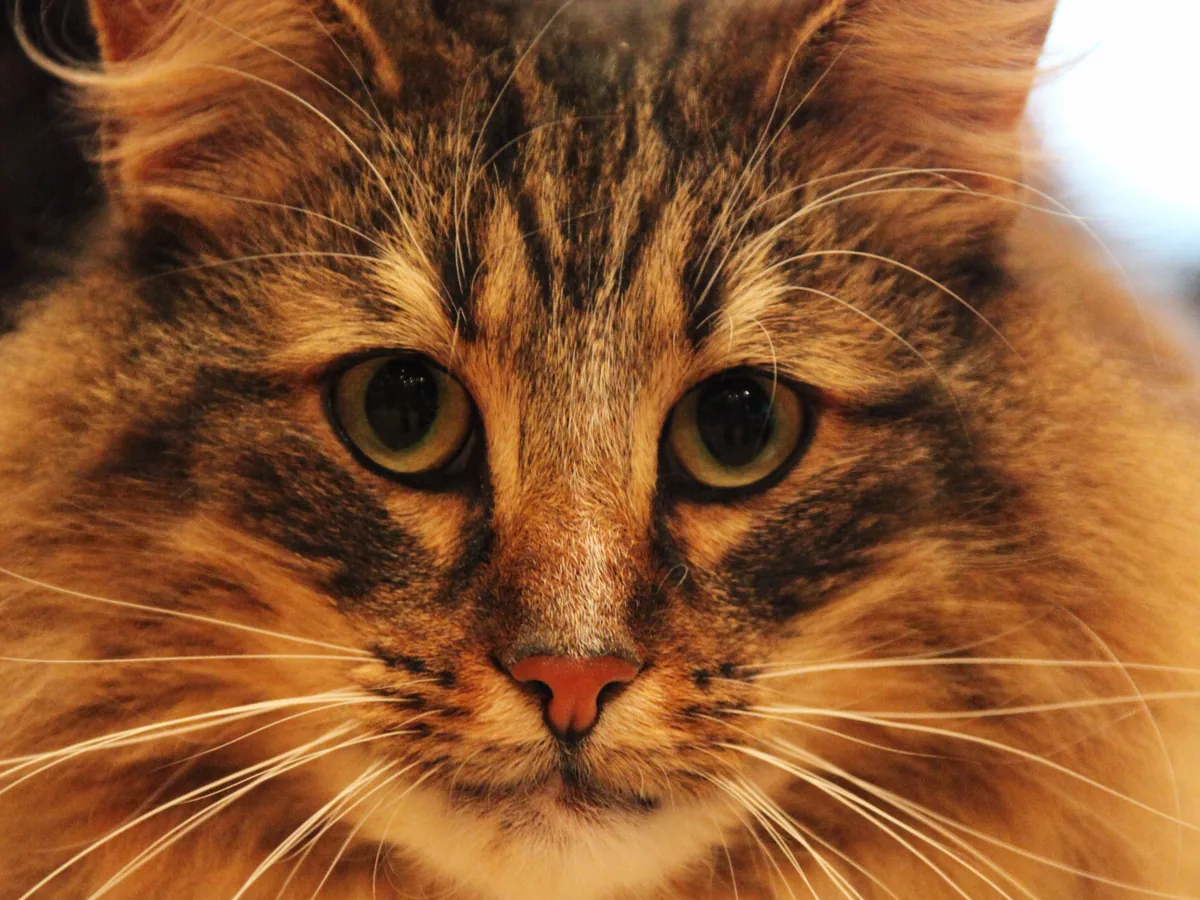
Tiffanie
蒂法尼猫 · Semi-longhair · Asian group (United Kingdom) · United Kingdom
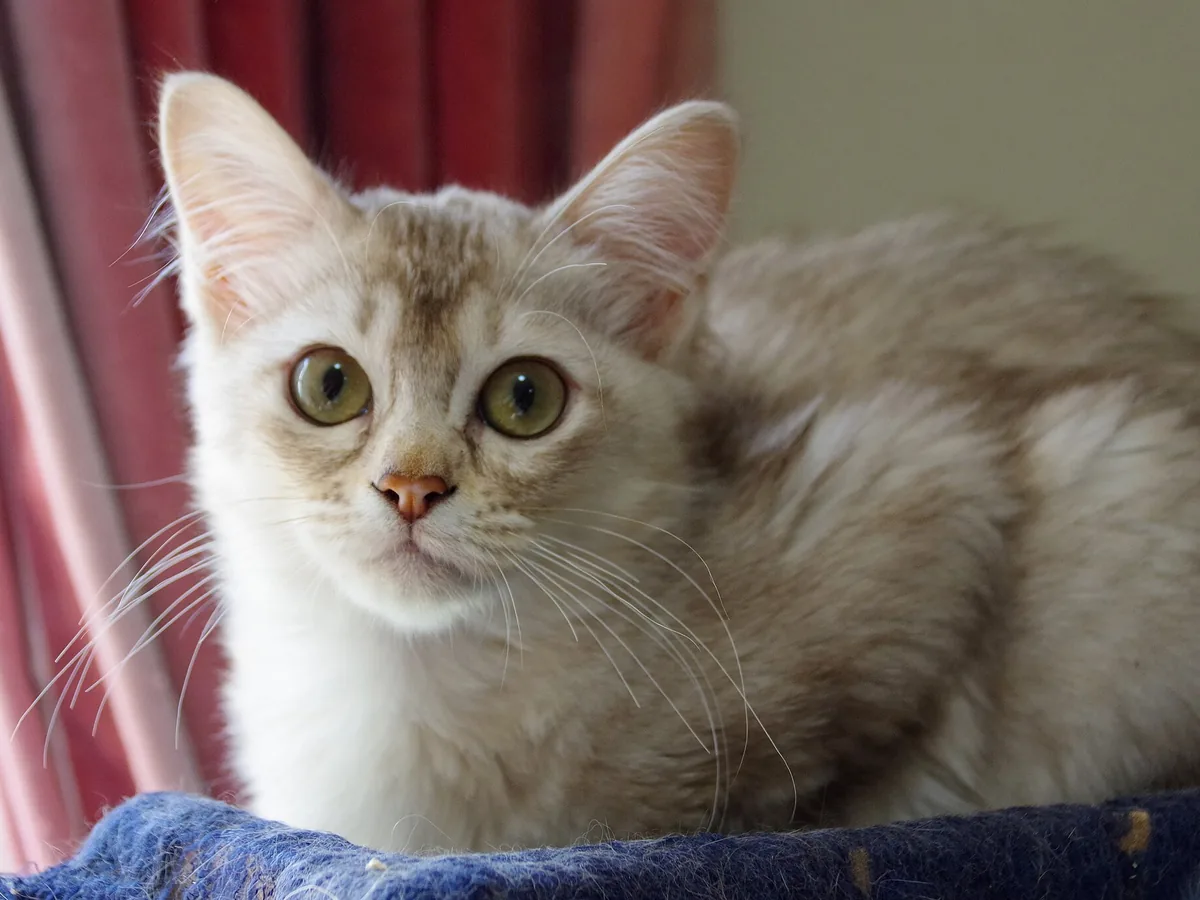
The Tiffanie is the semi-longhaired member of the Asian group — the family of cats British breeders built in the 1980s by crossing a chinchilla Persian with a Burmese.
Quick facts
- Weight
- 7–13 lb (3.2–6 kg)
- Length
- Body 15–18 in (38–46 cm), tail 11–13 in (28–33 cm)
- Lifespan
- 12–16 years
- Typical price
- £600–1,200 in the UK ($800–1,600); almost never sold in the US
Temperament & lifestyle
About the breed
The Tiffanie is the semi-longhaired member of the Asian group — the family of cats British breeders built in the 1980s by crossing a chinchilla Persian with a Burmese. The shorthaired result became the Asian Shorthair; the same cats with a longer, silky coat became the Tiffanie, and GCCF gave it separate breed recognition in 1999. The spelling with "ie" was chosen deliberately to separate it from the American Chantilly-Tiffany, an unrelated chocolate-brown longhair breed that is now effectively extinct.
Recognition is thin outside Britain. GCCF registers it as code ASL and the Australian Cat Federation also accepts it; CFA and FIFe do not recognise it at all, and TICA allows registration without championship status. That matters if you plan to show or breed — most kittens are sold in the UK.
Physically it is a Burmese-shaped cat in a silky coat: medium build with fine bone, long legs, a wedge head with large ears, and a coat that lies flat with little undercoat, feathered tail and breeches. All Asian and Burmese colours are accepted, including silver shaded and tipped, and the eyes are usually gold, amber or green.
Care essentials
- Grooming
- Comb three times a week with a steel comb, paying attention to the armpits, the ruff and the feathering behind the thighs, where the silky coat tangles into small knots. The light undercoat means it dries fast after a bath.
- Exercise & play
- Active and vertical: it wants a tall tree and a route over the furniture. Two wand sessions a day plus a food puzzle, or it will redesign your shelves.
- Feeding
- Lean Burmese-style metabolism, but the semi-long coat hides a thick waist. 50–65 g of dry food or 4–5 oz wet daily; keep treats under a tenth of intake.
- Home setup
- Warm, social houses with someone home part of the day. It likes a heated bed and a high shelf, and it will complain loudly about a closed door.
Health
- GM1 and GM2 gangliosidosis — inherited neurological disease in the Burmese/Asian family; DNA tests exist and both parents should be tested clear
- Pyruvate kinase deficiency (PKDef) — causes anaemia; a simple DNA swab test
- Progressive retinal atrophy — the rdAc and Rdy variants circulate in Asian and Burmese lines; test breeding cats
- Periodontal disease — the Burmese jaw shape packs teeth tightly, so tartar starts early
The Asian group is one of the better-served breeds genetically: GM1, GM2, PKDef and PRA all have commercial DNA tests, and GCCF's outcross rules require tested-clear partners for exactly this reason. Ask for certificates rather than assurances, and have the kitten's eyes checked at the first vaccination visit.
Health information here is general and not a substitute for veterinary advice. If your cat shows symptoms, contact a vet.
Frequently asked
Is the Tiffanie the same as a Tiffany or Chantilly-Tiffany?
No. The Tiffanie is a British semi-longhair from the Asian group, recognised by GCCF since 1999. The Chantilly-Tiffany was a separate North American breed of chocolate-brown longhair cats that is now effectively extinct; the similar name is a historical accident, and some registries also use "Tiffany" for a longhaired Burmese.
Which registry recognises the Tiffanie?
GCCF in the UK, where it is registered under code ASL and shown in the Asian section, and the Australian Cat Federation. TICA offers registration only, without championship status, and CFA and FIFe do not recognise the breed — so a "Tiffanie pedigree" from those registries does not exist.
Does the semi-long coat mean a lot of grooming?
Less than a Persian, more than a shorthair: three combings a week, with extra attention behind the thighs and under the arms, where the fine coat knots. There is little undercoat, so shedding is moderate and the coat does not mat into solid felt.
Care and health guides
Similar breeds
All breeds →
%22/><g fill=%22none%22 stroke=%22%23B98A5E%22 stroke-width=%226%22 stroke-linecap=%22round%22 stroke-linejoin=%22round%22 opacity=%220.55%22><path d=%22M150 150c0-28 22-50 50-50s50 22 50 50%22/><path d=%22M150 140l-14-34 34 14%22/><path d=%22M250 140l14-34-34 14%22/><circle cx=%22182%22 cy=%22146%22 r=%224%22 fill=%22%23B98A5E%22/><circle cx=%22218%22 cy=%22146%22 r=%224%22 fill=%22%23B98A5E%22/><path d=%22M200 162c6 6 12 6 18 0%22/></g><text x=%22200%22 y=%22230%22 text-anchor=%22middle%22 font-family=%22system-ui,sans-serif%22 font-size=%2230%22 font-weight=%22700%22 fill=%22%23A9764B%22 opacity=%220.75%22>YC</text></svg>)