Manx
曼岛猫 · Shorthaired / Tailless · Isle of Man, Irish Sea
The Manx comes from the Isle of Man, where tailless cats were recorded by the 1800s and probably arrived with ships.
Quick facts
- Weight
- 3.6-5.4 kg (8-12 lb), males heavier
- Length
- Compact and deep-chested, about 40-45 cm nose to tail base
- Lifespan
- 9-14 years
- Typical price
- USD 800-2,000; rumpy kittens cost most, tailed (longy) kittens least
Temperament & lifestyle
About the breed
The Manx comes from the Isle of Man, where tailless cats were recorded by the 1800s and probably arrived with ships. The trait is a mutation affecting the T-box region that patterns the spine's tail section. It is inherited as an incomplete dominant, and embryos that carry two copies die in the womb, which is why every Manx kitten has at least one tailed parent in its pedigree.
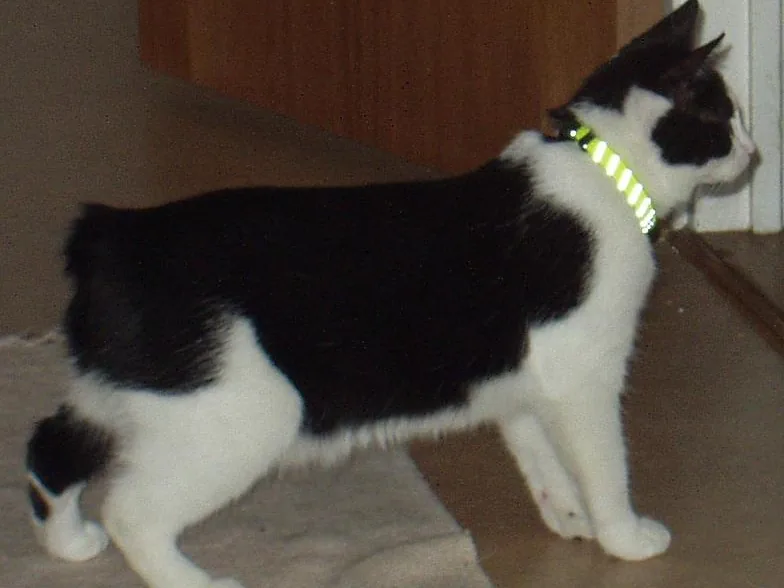
Tail length varies: rumpy (no tail, a dimple where it should be), rumpy-riser (a knob of cartilage), stumpy (one to three movable vertebrae) and longy (a full tail - not showable but essential to breeding). The rest of the cat is solid: a short deep body, heavy hindquarters with rear legs noticeably longer than the front, a round head and a double coat in all colours. Weight is 3.6-5.4 kg, and at speed the gait can look faintly rabbit-like.
The shortened spine is not always cosmetic. The same gene that removes the tail can leave the lower spinal cord malformed - Manx syndrome - causing incontinence, hind-limb weakness or paralysis, and it affects a meaningful minority of rumpies. Good breeders have kittens checked and will not sell a rumpy-riser unseen. Manx cats are calm, dog-like and strong jumpers despite the short back; they need scratch posts and weight control, because every extra kilo lands on hind joints whose mechanics are already altered.
Care essentials
- Grooming
- Comb twice a week with a steel comb; the double coat sheds heavily in spring and autumn, so daily combing helps then. Check the rear end and tail area weekly - rumpies and stumpies can collect stool there and need wiping. Bathe only when needed.
- Exercise & play
- Moderate to high. Fifteen to twenty minutes of active play daily, plus climbing furniture and a tall scratch post. Jumping is fine, but repeated drops from height should be discouraged in heavier cats.
- Feeding
- Prone to obesity, and extra weight worsens hind-limb joint strain. Feed measured meals, use wet food, and keep an eye on body condition monthly. High-fibre food and plenty of water help prevent constipation.
- Home setup
- Sturdy, low furniture with ramps where possible, a large litter box with low sides, and a warm bed. Keep the cat indoors - the coat is not built for cold, wet weather and the tailless spine should not risk falls.
Health
- Manx syndrome (sacrocaudal dysgenesis) - spina bifida-like malformation causing incontinence, hind-limb weakness or paralysis; highest risk in rumpies
- Chronic constipation and megacolon from nerve deficits to the hind gut
- Degenerative joint disease and arthritis in the hind limbs, worsened by altered gait and obesity
- Obesity, which compounds every hind-end problem
- Breeding lethality - two tailless parents produce non-viable embryos
Before buying, watch the kitten walk, jump and use the litter box, and ask whether a vet has checked the rear end. A bunny-hop gait, urine staining or a permanently soiled backend are reasons to walk away. Never breed rumpy to rumpy.
Health information here is general and not a substitute for veterinary advice. If your cat shows symptoms, contact a vet.
Frequently asked
Do all Manx cats have no tail?
No. Litters routinely contain longies with full tails and stumpies with a short tail, alongside rumpies with none. Only rumpies and rumpy-risers can be shown, but tailed Manx are normal members of the breed and are needed for breeding.
What is Manx syndrome?
A malformation of the lower spine and spinal cord that leaves kittens incontinent, weak in the hind legs or paralysed. It is linked to the tailless gene and is most common in rumpies. Signs usually appear within the first months of life, so ask for a vet check.
Are Manx cats good family pets?
Yes, for families that can handle a solid, playful cat and accept the health screening. They are patient, dog-like and good with children. Avoid very boisterous toddlers around the hind end, and keep the cat's weight down.
Can you breed two Manx cats together?
Two tailless Manx must never be bred together - the homozygous embryos die before birth, so litters are small and losses high. Breeders pair a tailless cat with a tailed longy, which is why every pedigree includes tailed cats.