American Bobtail
美国短尾猫 · Shorthair & Longhair · mutation breed (United States) · United States
The American Bobtail began with a single stray.
Quick facts
- Weight
- 7–16 lb (3.2–7.3 kg)
- Length
- Body 17–20 in (43–51 cm), tail 1.5–4 in (4–10 cm)
- Lifespan
- 12–15 years
- Typical price
- $800–$2,500; in China typically ¥6,000–18,000
Temperament & lifestyle
About the breed
The American Bobtail began with a single stray. In the late 1960s John and Brenda Sanders, on holiday in Arizona, adopted a short-tailed brown tabby they called Yodie and bred him to a seal-point Siamese. The short tail proved dominant, and it comes from a different mutation than the Manx one — a brachyury (T-gene) defect rather than the sacral deformity behind Manx syndrome. TICA recognised the breed in 1989; CFA later granted championship status, and it is still uncommon.
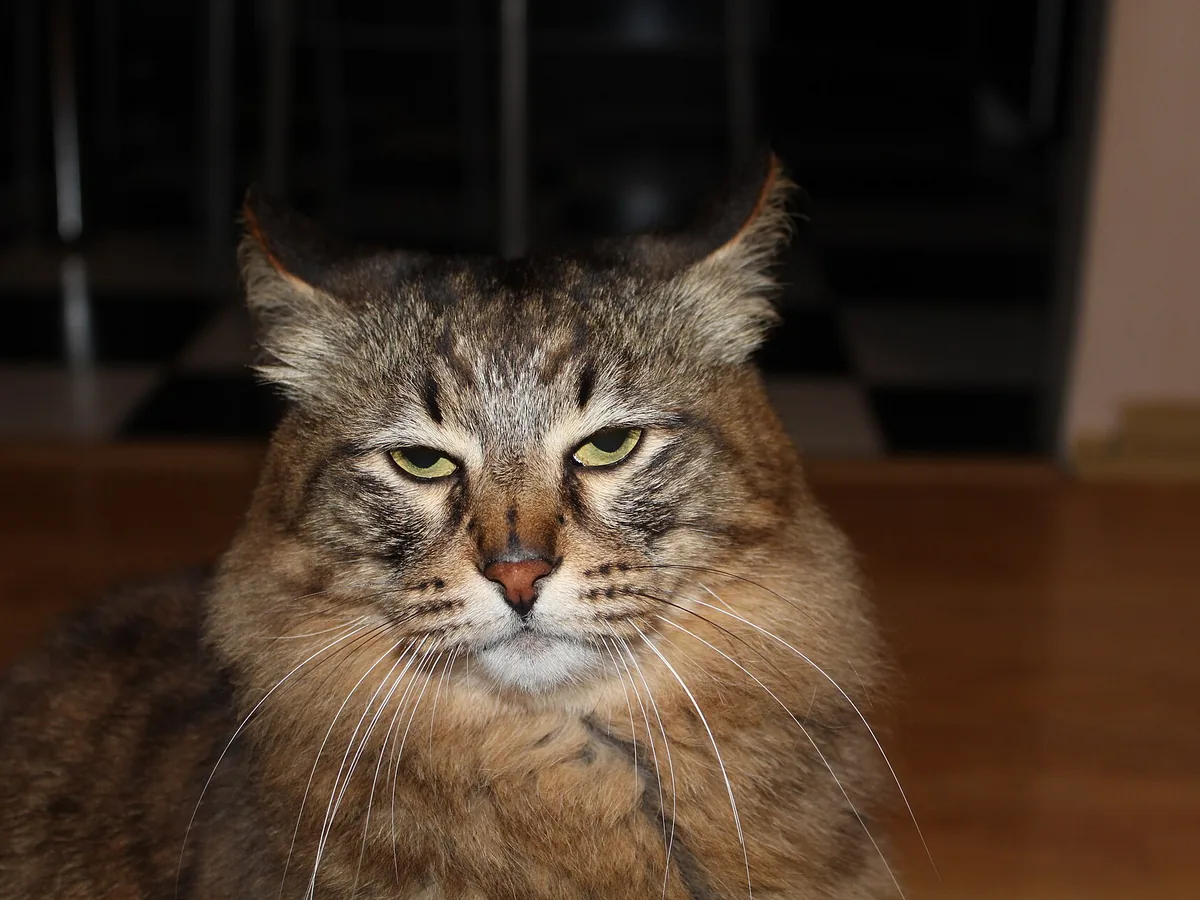
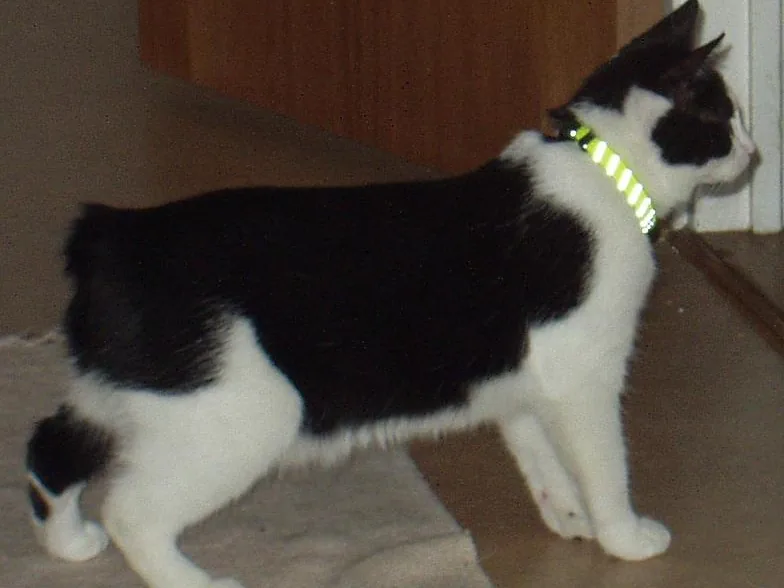
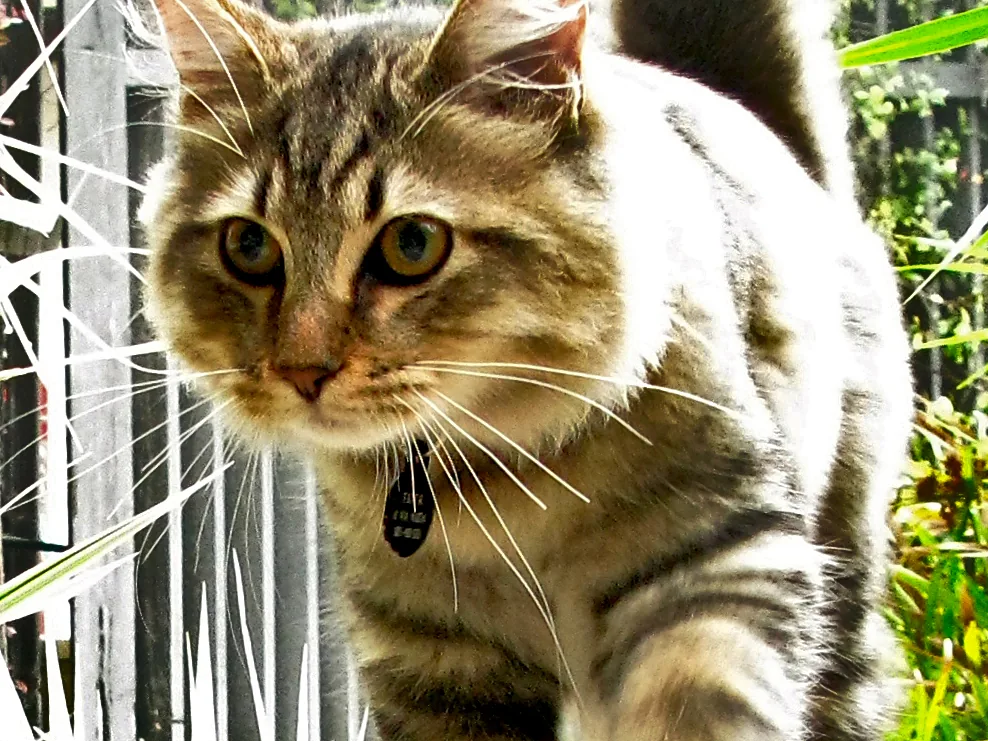
The tail is the signature: one-third to one-half normal length, often kinked or knotted, carried straight up when the cat is confident. The coat is shaggy rather than plush, in shorthair and longhair, any colour, with ticked or lynx-like tabby patterns favoured in the show ring. The body is long and substantial, the hind legs slightly longer than the front, and the cat takes two to three years to mature.
Character is where the breed surprises people. It is famously dog-like: greeting visitors at the door, fetching, learning to walk on a harness, going limp when lifted. Bobtails are sociable without being frantic, and they handle children, dogs and house moves better than most cats.
Care essentials
- Grooming
- Brush or comb once a week; the shaggy coat, including the longhair version, mats behind the ears and under the tail if skipped. A bath every two to three months is enough.
- Exercise & play
- Needs real play: two 15-minute wand sessions a day plus a tall cat tree. This is a strong jumper that will climb door frames if nothing higher is offered.
- Feeding
- Prone to weight gain once past three years — measure 1/2 to 3/4 cup dry or 5–6 oz wet daily and cut roughly 10 percent after neutering.
- Home setup
- Indoor with a window perch and a scratching post it can stretch on; a secure balcony or harness walk satisfies the hunting drive. It copes with children and cat-friendly dogs.
Health
- Hip dysplasia — reported in the breed; screen breeding cats by radiograph
- Hypertrophic cardiomyopathy (HCM) — echocardiogram breeding stock
- Polycystic kidney disease — DNA test available, inherited from outcross lines
- Obesity — a large, calm cat that gains easily indoors
The short tail does not carry the Manx spinal risk, but the gene pool is small and early lines were lost, so ask for hip and heart screening on the parents. Any kitten with a tail longer than half normal length or with rear-leg weakness should be assessed before purchase.
Health information here is general and not a substitute for veterinary advice. If your cat shows symptoms, contact a vet.
Frequently asked
Is the American Bobtail related to the bobcat?
No. The name and the lynx-like tabby pattern encouraged the story, but no wild cat is involved; the tail is a spontaneous dominant mutation in domestic cats. It is also genetically distinct from the Manx and Japanese Bobtail mutations.
Does the short tail cause health problems like Manx syndrome?
Not the same ones. Manx taillessness shortens the spine and can cause sacrocaudal dysgenesis; the American Bobtail's brachyury mutation does not carry that risk. Breeders still screen for hip dysplasia, which is a separate concern.
How much exercise does an American Bobtail need?
Two interactive sessions of about 15 minutes a day, plus vertical space. They are strong jumpers and learn fetch quickly, so a tall tree and a puzzle feeder do more than a single long play session.