Cymric
长毛曼岛猫 · Longhair · Manx variant (Isle of Man / Canada) · Isle of Man / Canada
The Cymric is a Manx with a long coat; apart from hair length the two are the same cat, and long-haired kittens still appear in Manx litters.
Quick facts
- Weight
- 8–13 lb (3.6–6 kg); males up to 14 lb
- Length
- Body 14–18 in (36–46 cm), tail 0–3 in (0–8 cm)
- Lifespan
- 12–16 years
- Typical price
- $700–$1,800; in China ¥5,000–13,000
Temperament & lifestyle
About the breed
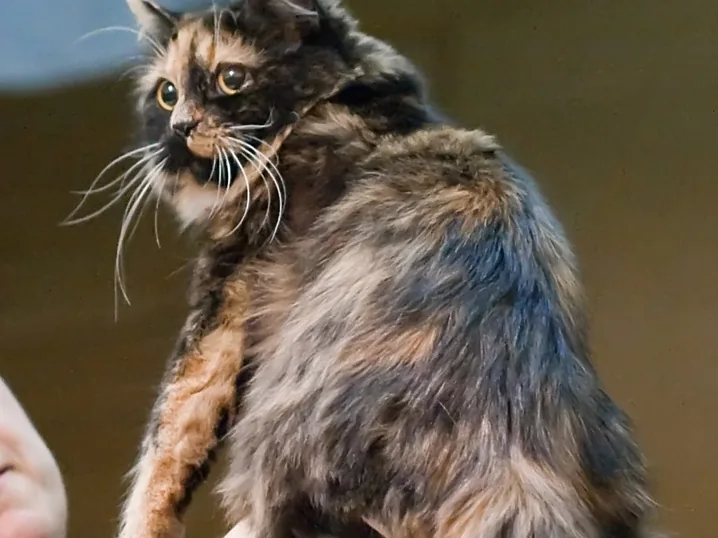
The Cymric is a Manx with a long coat; apart from hair length the two are the same cat, and long-haired kittens still appear in Manx litters. On the Isle of Man they were treated as faults and quietly kept out of breeding. In the 1960s Canadian breeders kept them instead, and the name comes from Cymru, the Welsh word for Wales, although no Welsh stock was involved. CFA, TICA and FIFe recognise the Cymric; some registries list it as a semi-longhaired Manx.
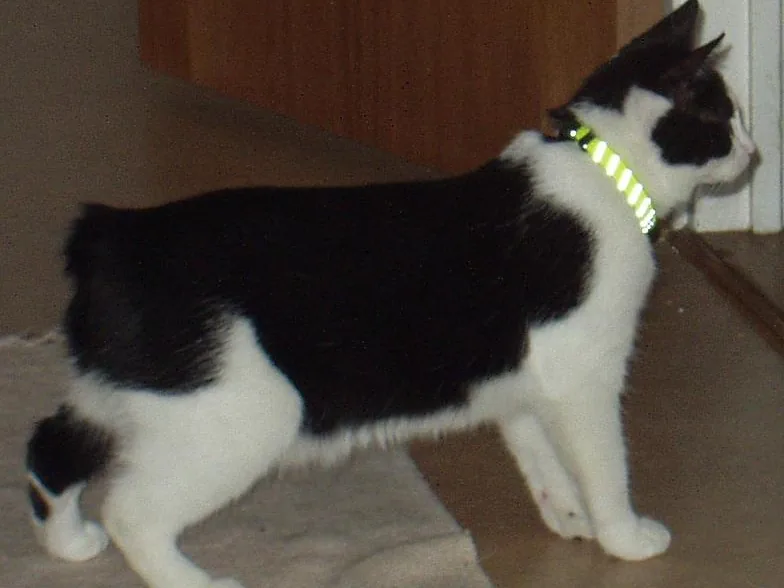
Taillessness is the point. The trait is dominant and comes with a shortened spine, so Cymrics are classed as rumpy (no tail), rumpy-riser (a small bony rise), stumpy (1–3 inches) or longy. Only rumpies and rumpy-risers are shown, and breeders avoid mating two rumpies because the spinal defect worsens with dose. The body is compact and heavy-boned, the hindquarters higher than the shoulders, and the coat a soft double coat with a full ruff and breeches.
Cymrics are calm, people-oriented cats that dislike long isolation, trill rather than meow, and learn fetch and tricks. They are steady with children and dogs but poor jumpers compared with other breeds.
Care essentials
- Grooming
- Comb three or four times a week with a steel comb; the double coat mats in the armpits, behind the ears and under the tail. Expect heavier shedding in spring and a daily comb for two weeks then.
- Exercise & play
- Moderate: two 10–15 minute play sessions and a low, stable cat tree. It jumps poorly, so put perches at step height rather than ceiling height.
- Feeding
- Easy keeper — 1/2 cup dry or 4–5 oz wet a day, measured, because the compact body hides weight gain. Fiber helps if constipation appears.
- Home setup
- Indoor, with soft bedding and a litter tray it can step into easily. It wants company and dislikes being alone all day; a second cat suits it.
Health
- Manx syndrome — sacrocaudal dysgenesis, spina bifida and fused vertebrae; severity rises with shorter tails
- Hypertrophic cardiomyopathy (HCM) — echocardiogram breeding cats
- Corneal dystrophy — ask for an ophthalmology exam on breeding cats
- Megacolon and constipation — linked to nerve supply at the tail base
- Obesity — a compact, inactive frame that hides fat
Buy from a breeder who mates rumpy to non-rumpy and can show you the litter's tail types; two rumpies doubles the risk of spinal defects. Have a kitten's rear end, gait and litter-tray habits checked at the first vaccination visit, and screen the heart by two years.
Health information here is general and not a substitute for veterinary advice. If your cat shows symptoms, contact a vet.
Frequently asked
Is a Cymric just a long-haired Manx?
Genetically yes — the same mutation, the same body, and long-haired kittens can appear in either litter. Registries differ: CFA, TICA and FIFe list the Cymric separately, others call it a semi-longhaired Manx.
Do all Cymrics have no tail at all?
No. Tail length varies from none (rumpy) through a small bony rise and a 1–3 inch stub to a near-normal longy. Only rumpies and rumpy-risers are shown, and longer-tailed cats are usually sold as pets.
What is Manx syndrome?
A set of spinal and nerve defects — sacrocaudal dysgenesis, spina bifida, fused vertebrae — that can cause incontinence, hind-leg weakness and constipation. It is more severe in cats with the shortest tails, which is why breeders avoid rumpy-to-rumpy matings.