Chartreux
沙特尔猫 · Shorthair · natural breed (France) · France
The Chartreux is France's blue cat, and its origin story is mostly legend: monks of the Grande Chartreuse, so the tale goes, bred silent, mouse-hunting cats at the monastery.
Quick facts
- Weight
- 7–15 lb (3.2–7 kg)
- Length
- 16–19 in body (41–48 cm), tail 11–13 in
- Lifespan
- 12–15 years
- Typical price
- $800–$2,000; in Europe typically €700–1,500
Temperament & lifestyle
About the breed
The Chartreux is France's blue cat, and its origin story is mostly legend: monks of the Grande Chartreuse, so the tale goes, bred silent, mouse-hunting cats at the monastery. What is documented: blue cats of this type were kept in French cities and religious houses for centuries, and a French breed standard was written in the 1930s. The Second World War left very few animals; breeders rebuilt the breed after 1945, later using British Shorthair and Persian outcrosses in the 1970s and 80s. CFA recognised the Chartreux in 1987.
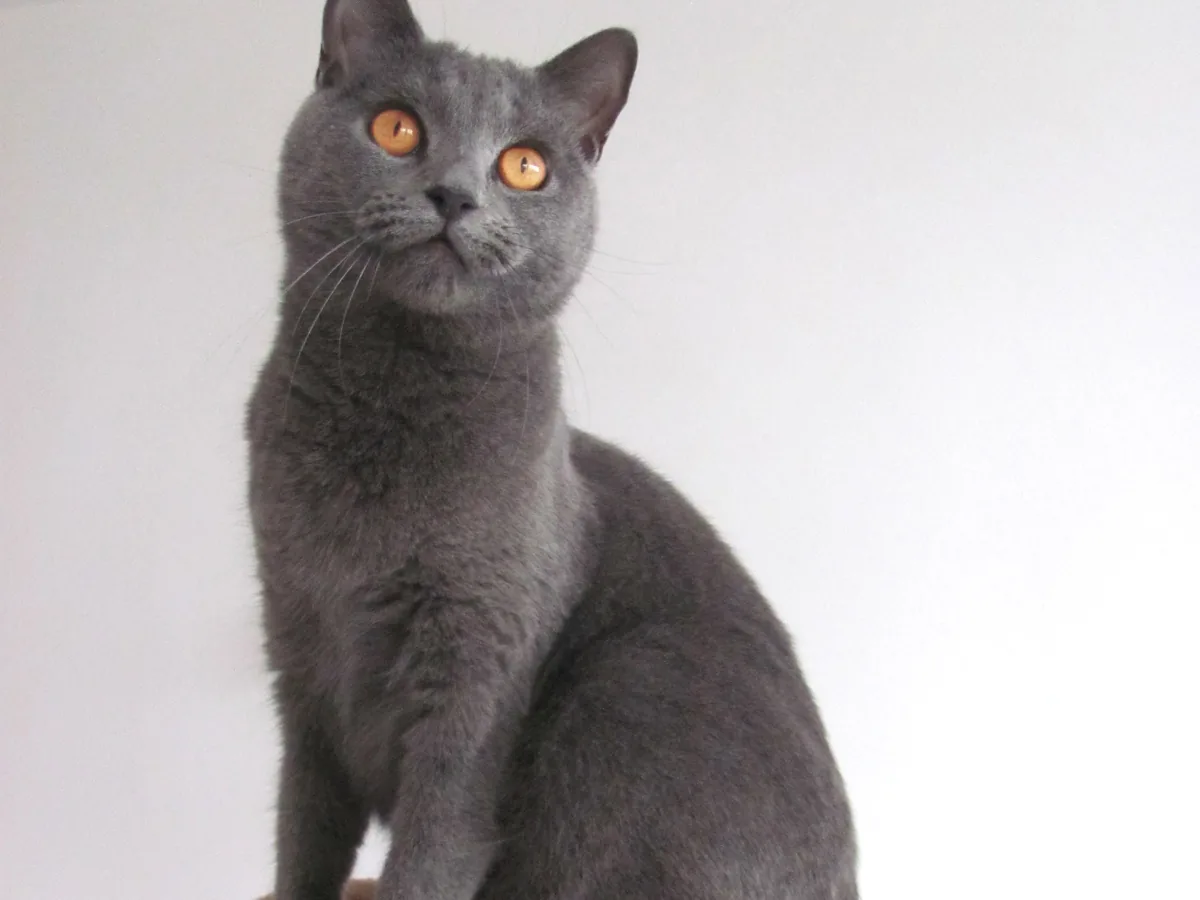
It is a big, solid cat standing on surprisingly slender, fine-boned legs — that mismatch is the surest way to tell it from a British Shorthair, which stands on thick, blunt legs. The head is a rounded trapezoid with a narrow muzzle and a slight smile at the corners. The coat is dense, woolly and faintly crimped, blue-grey with a silvery sheen; kittens carry ghost tabby markings that fade with age, and the copper-orange eyes take up to two years to reach full depth. Males reach 10–15 lb (4.5–7 kg).
The Chartreux is famously quiet — among the quietest breeds, prone to chirps and trills instead of meows, which suits flats and light sleepers. It hunts with real intent, stalking and pouncing on toys as its ancestors worked granaries, but off duty it is calm and unobtrusive, content to supervise from a windowsill. It is affectionate without being demanding, tolerant of children and other pets, and it dislikes loud chaos. Expect a slow-maturing cat that is still filling out at three.
Care essentials
- Grooming
- Brush once or twice a week with a slicker or rubber curry; the woolly double coat sheds moderately and can felt under the belly and behind the legs if ignored. Expect loose fibres on furniture — this is not a self-cleaning coat.
- Exercise & play
- Not high-energy, but a genuine hunter: ten to fifteen minutes of wand-and-pounce play daily keeps weight down and the mind occupied. It will not run laps on its own.
- Feeding
- Prone to obesity — measured meals, about 1/2 to 3/4 cup dry or 5–6 oz wet a day, and food puzzles to slow eating. Neutered males need roughly a fifth less than the packet suggests.
- Home setup
- Quiet households with routine. It wants a high windowsill, a sunny patch and a scratching post it can lean into; loud children and constant commotion stress it. Two Chartreux generally coexist peacefully.
Health
- Patellar luxation — well documented in French lines; watch for a skip or hop in a hind leg
- Hypertrophic cardiomyopathy (HCM) — reported in the breed; echo-screen breeding cats
- Polycystic kidney disease — legacy of the 1970s–80s Persian outcrosses; DNA testing is available
- Obesity — a sedentary indoor cat with a large appetite
The breed's gene pool passed through a severe post-war bottleneck, which makes screening and honest pedigree records matter more than usual. Ask specifically about kneecaps, hearts and PKD status; all three are testable or examinable.
Health information here is general and not a substitute for veterinary advice. If your cat shows symptoms, contact a vet.
Frequently asked
Are Chartreux cats really quiet?
Yes — among the quietest breeds. Most chirp or trill instead of meowing, and some owners hear a full meow only a few times a year. That suits flats, but it also means pain or illness can go unnoticed, so watch behaviour rather than listening for complaints.
What is the difference between a Chartreux and a British Blue?
Build and coat. The Chartreux is rangier than it looks, standing on fine, short legs, with a narrower muzzle and a woolly, slightly crimped coat; the British Shorthair is thick-legged and blunt, with a rounder head and a denser, crisper coat.
Do Chartreux cats need much grooming?
A brush once or twice a week. The double coat is dense and woolly and will felt under the belly and behind the legs if ignored. Expect heavier shedding in spring and autumn, and some woolly fibres on the sofa year-round.
Are Chartreux prone to joint problems?
Patellar luxation is the breed's best-documented issue — the kneecap slips out of place, causing a skip or a brief hop in the hind leg. Ask breeders about screening and have any gait abnormality examined while the cat is young.