Russian Blue
俄罗斯蓝猫 · Shorthair (Russian group) · Russia (Arkhangelsk region)
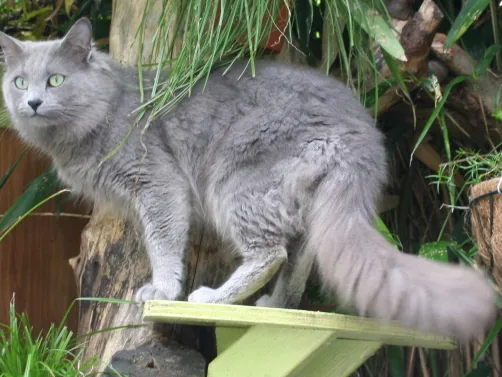
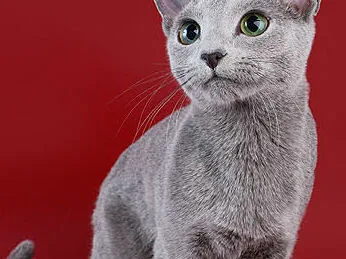
The Russian Blue is a study in restraint: a long, fine-boned body, a wedge-shaped head with a straight nose, large pointed ears set wide, vivid green eyes, and a short double coat of even silvery blue tipped with silver.
Quick facts
- Weight
- 3.0–5.0 kg (6.5–11 lb)
- Length
- Body 38–46 cm (15–18 in), tail 28–33 cm
- Lifespan
- 15–20 years
- Typical price
- $800–$2,500
Temperament & lifestyle
About the breed
The Russian Blue is a study in restraint: a long, fine-boned body, a wedge-shaped head with a straight nose, large pointed ears set wide, vivid green eyes, and a short double coat of even silvery blue tipped with silver. The fur looks and feels like plush, and in some lines a faint darker "zipper" stripe runs down the back. Kittens are born with ghost tabby markings that fade by about four months.
The origin story most often told is the port of Arkhangelsk in northern Russia, where the cats were kept by fur traders and later carried on ships to Britain in the 1860s. The breed was shown in England before 1900, nearly vanished during the two world wars, and was rebuilt after 1945 from a small number of British and Scandinavian lines. That bottleneck is why the modern gene pool is narrow, and why serious breeders still manage pairings carefully rather than chasing colour.
Russian Blues are quiet, tidy and reserved with strangers. They bond strongly to one or two people, greet them with a soft chirp, and withdraw when guests arrive. They are playful without being destructive, prefer routine, and are unusually sensitive to loud noise and disruption. They do not like being carried; they like being near. For a calm apartment and an owner who wants company without noise, few breeds fit better.
Care essentials
- Grooming
- Brush once or twice a week with a rubber brush; the dense double coat sheds moderately and mostly self-maintains. Bathe rarely, every 2–3 months at most. Check ears weekly and trim nails every 2 weeks; teeth need brushing several times a week.
- Exercise & play
- Two 15–20 minute play sessions a day, plus a tall tree and window access. They are not demanding athletes, but they do become bored and overweight without daily interaction.
- Feeding
- Easy keepers that gain weight in middle age; measure portions and weigh monthly. High-protein food, wet food for hydration. Some lines have sensitive digestion — change food gradually.
- Home setup
- Quiet homes, predictable schedules, no loud music or frequent parties. They like a high perch to observe from and a hiding box for when guests come. Fine in apartments; keep windows screened.
Health
- Progressive retinal atrophy (PRA) reported in some lines
- Obesity in middle age, especially in indoor cats
- Dental disease and tartar build-up
- Psychogenic alopecia and overgrooming under stress
- Generally one of the healthier pure breeds
Ask about PRA in the pedigree and keep the cat slim — this breed's main practical health risk is weight gain, not hereditary disease. It is also notably sensitive to routine change, so boarding and moves should be introduced gradually.
Health information here is general and not a substitute for veterinary advice. If your cat shows symptoms, contact a vet.
Frequently asked
Are Russian Blue cats hypoallergenic?
Not reliably. Some individuals produce less of the Fel d 1 allergen, and anecdotal reports are common, but no registry recognises the breed as hypoallergenic and reactions vary by cat.
Do Russian Blue cats get along with other cats?
Usually yes. They are gentle and non-confrontational, and a calm second cat is good company. They are slower to accept a boisterous newcomer and need a gradual introduction.
How much do Russian Blue cats weigh?
Three to five kilograms for most adults, with males at the upper end. They look heavier than they are because of the dense double coat.
Why do Russian Blue kittens have stripes?
Ghost tabby markings are normal in the breed. The faint stripes and rings fade by about four months as the adult coat comes in, leaving the even silver-blue colour.