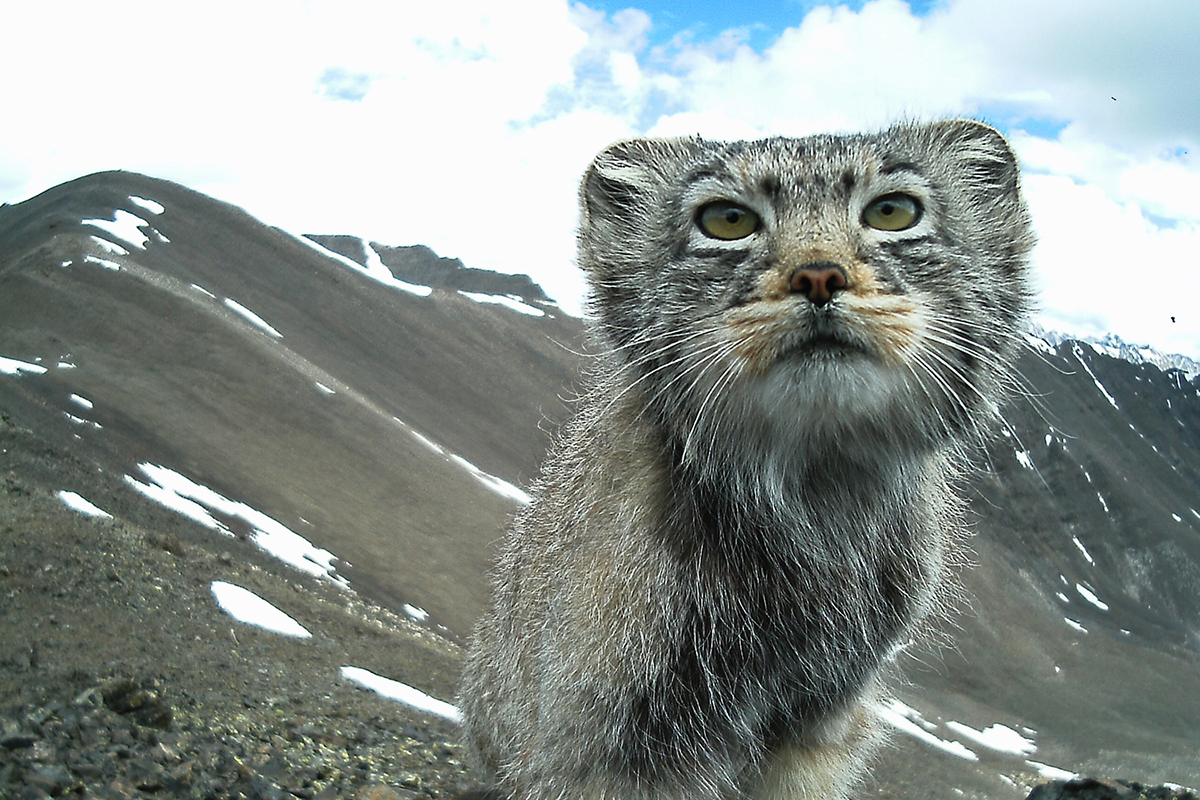
A manul – also called a Pallas’s cat – roams a mountain ridge used by snow leopards in Altai Biosphere Reserve in south-central Russia. (Credit: S. Spitsyn)
MISSOULA – In the cloudy mountain forests of Costa Rica’s Cordillera de Talamanca, University of Montana researcher Amaia Autor tracked one of the world’s smallest cats. For three months, she saw neither head nor tails of it
On the verge of giving up, she got a notification that something had triggered one of her traps. She raced through the trees from her field station to the trap’s location and there it was: a tiny black cat with white feet. She named him “calcetines,” the Spanish word for “socks.” The GPS collar was too long for calcetines – Autor had to guess what size to order since so little is known about the species – so she poked a new hole in it like a belt. With the collar fitted around his neck, she set calcetines free, hoping she would hear from him again through her GPS tracker
She is likely the first researcher to ever capture and collar this species
Big cats like lions and tigers are icons of wildlife conservation, but their smaller relatives get much less attention. Many small wild cats are poorly understood and difficult to study, leaving scientists unsure of how to protect them. At UM, researchers are investigating two of these overlooked felines by asking fundamental questions about where they liv