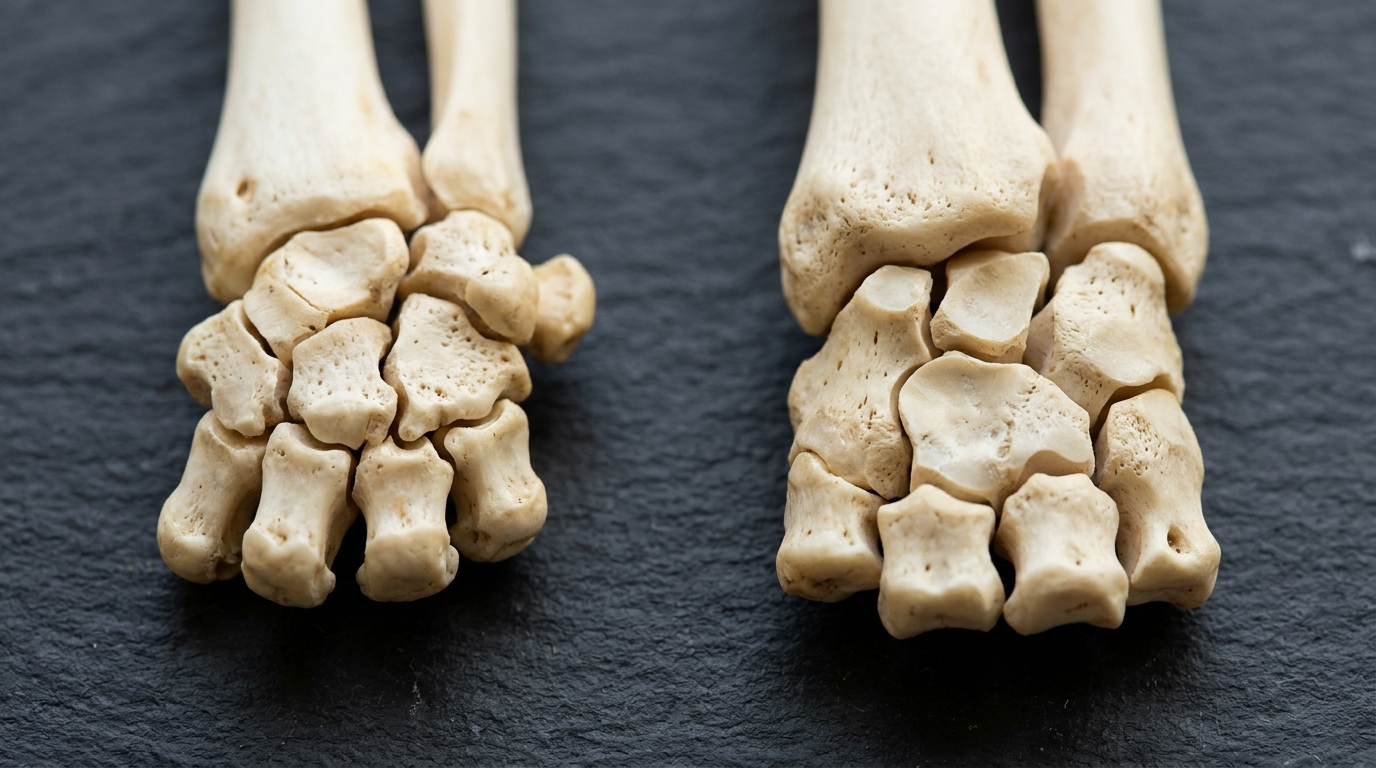
A comparative microcomputed tomographic investigation has revealed that domestic cats possess a markedly denser, thicker, and structurally distinct carpal bone architecture compared to toy breed dogs of matching body weight. In an examination of eighty carpal joints collected from twenty feline and twenty toy canine cadavers, researchers determined that feline carpal bones feature significantly higher bone volume fractions, thicker trabecular struts, and wider inter-trabecular spacing alongside considerably thicker cortical shells. Conversely, toy dogs exhibited a higher total count of individual trabeculae, substantially greater bone surface-to-volume ratios, and elevated connectivity densities across all seven carpal bones. Furthermore, no statistically significant structural variations were identified between the left and right limbs within either species
Carpal joint injuries in cats present challenging clinical conditions characterized by low overall incidence rates between 0.26 and 0.29 percent, yet they carry substantial post-surgical complication frequencies ranging between 25 and 35 percent. Because carnivore carpal anatomy comprises seven distinct bones supported by complex ligamentous structures, severe traumatic injuries often involve simultaneous osseous fractures and ligament ruptures requiring temporary immobilization, ligament reconstruction, or surgi