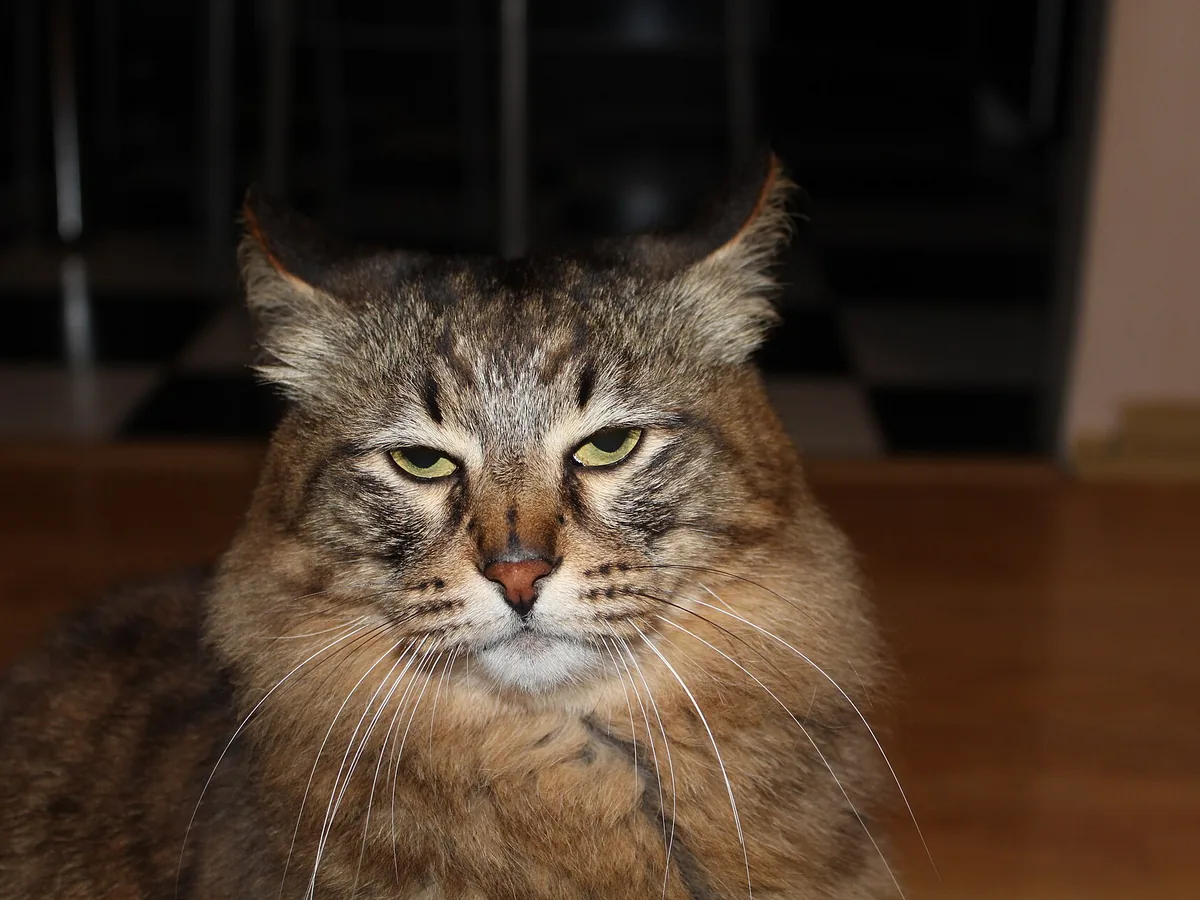
Highlander
高地短尾猫 · Short tail, curled ears · Desert Lynx × Jungle Curl (USA) · United States
The Highlander started as the Highland Lynx, a cross between two experimental American breeds: the Desert Lynx, a bobtailed cat with a wild look, and the Jungle Curl, which carries a loose ear curl.
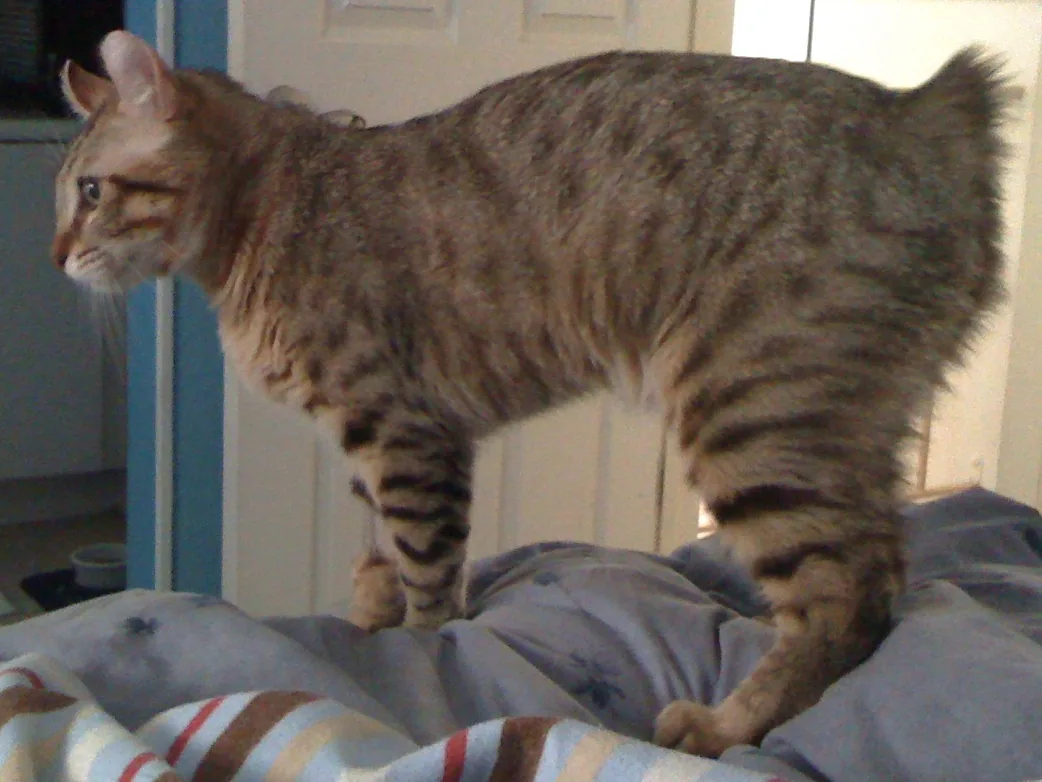
Quick facts
- Weight
- 10–20 lb (4.5–9.1 kg); males reach 15–20 lb
- Length
- Body 17–21 in (43–53 cm), tail 2–6 in (short-tailed)
- Lifespan
- 12–15 years
- Typical price
- $1,200–$3,000 in the US; polydactyl kittens often priced higher
Temperament & lifestyle
About the breed
The Highlander started as the Highland Lynx, a cross between two experimental American breeds: the Desert Lynx, a bobtailed cat with a wild look, and the Jungle Curl, which carries a loose ear curl. Breeders added the curl to the bobtail and ended up with a cat that reads as a small bobcat — long sloping forehead, blunt muzzle, very wide nose, short tail and ears that tip backwards. The name Highlander was adopted in late 2005, TICA accepted the breed in 2008 and moved it to championship status in 2025.
Size is real: females 4.5–6.4 kg, males 6.8–9.1 kg, on a substantial, very muscular frame with large feet. Extra toes are common and permitted, so many Highlanders are polydactyls, and a healthy poly is not a defect. Coats come in tabby, lynx point and pointed colours; bicolours are excluded from the standard.
Despite the wild-cat face, the temperament is domestic and rather dog-like: confident, outgoing, playful well into adulthood, and oriented to people rather than to hiding. They greet strangers, play fetch, and get on with children and cat-tolerant dogs. They are athletic enough to clear a bookshelf and curious enough to try.
Care essentials
- Grooming
- Brush weekly for the shorthair, twice weekly for the longhair variety. The curled ears need the fold checked weekly for wax and debris, and nails — including any extra toes — trimmed monthly.
- Exercise & play
- High. These are athletic jumpers: tall cat trees, shelves, puzzle feeders and daily fetch. A bored Highlander rearranges the house and teaches itself to open doors.
- Feeding
- A large frame with a big appetite, so measure portions and keep the cat lean; extra weight is hard on the joints of a heavy, active cat.
- Home setup
- They want vertical territory and company. A secure garden run or harness walks suit them; keep breakables off high shelves and provide a scratching post they can stand up against.
Health
- Hypertrophic cardiomyopathy — reported in the breed; echo screening for breeding cats
- Patellar luxation — occasional in heavy, athletic cats; watch for skipping on a hind leg
- Ear infections — the curl reduces airflow into the canal; check and clean weekly
- Obesity — a large frame hides weight gain until the joints complain
The breed is young and its health record is thin, so there is no long list of documented diseases — which is not the same as being problem-free. Ask about heart echoes, confirm that any extra toes are evenly formed, and have the tail and spine checked, since short-tailed cats can carry vertebral anomalies.
Health information here is general and not a substitute for veterinary advice. If your cat shows symptoms, contact a vet.
Frequently asked
Is the Highlander a wildcat hybrid?
No. Despite the bobcat look it is a domestic cross of the Desert Lynx and Jungle Curl breeds, with no wild species in its recent background. The short tail and the ear curl are domestic mutations, not hybrid traits.
Why do some Highlanders have extra toes?
Polydactyly is common in the foundation lines and is permitted in the standard. A polydactyl Highlander with healthy, evenly spaced extra toes is normal rather than defective, though the nails on those toes need regular trimming.
Do Highlanders need much exercise?
More than most breeds. They are large, athletic and curious, and do best with tall cat trees, puzzle feeders and daily interactive play; without it they get bored and destructive.
Care and health guides
Similar breeds
All breeds →
%22/><g fill=%22none%22 stroke=%22%23B98A5E%22 stroke-width=%226%22 stroke-linecap=%22round%22 stroke-linejoin=%22round%22 opacity=%220.55%22><path d=%22M150 150c0-28 22-50 50-50s50 22 50 50%22/><path d=%22M150 140l-14-34 34 14%22/><path d=%22M250 140l14-34-34 14%22/><circle cx=%22182%22 cy=%22146%22 r=%224%22 fill=%22%23B98A5E%22/><circle cx=%22218%22 cy=%22146%22 r=%224%22 fill=%22%23B98A5E%22/><path d=%22M200 162c6 6 12 6 18 0%22/></g><text x=%22200%22 y=%22230%22 text-anchor=%22middle%22 font-family=%22system-ui,sans-serif%22 font-size=%2230%22 font-weight=%22700%22 fill=%22%23A9764B%22 opacity=%220.75%22>YC</text></svg>)